Find the right desktop robot for you.
Discover desktop robots, compare what they can actually do, and find the one that fits your life.
What do you want
a robot for?
Start with your
desk.
Tell us what you want from a desktop robot. We’ll narrow the field down based on how you actually plan to use it.
No account. No email required.See what really
sets them apart.
Specs only tell part of the story. Our comparisons focus on the trade-offs that actually matter when choosing a robot for your life.
View all comparisons →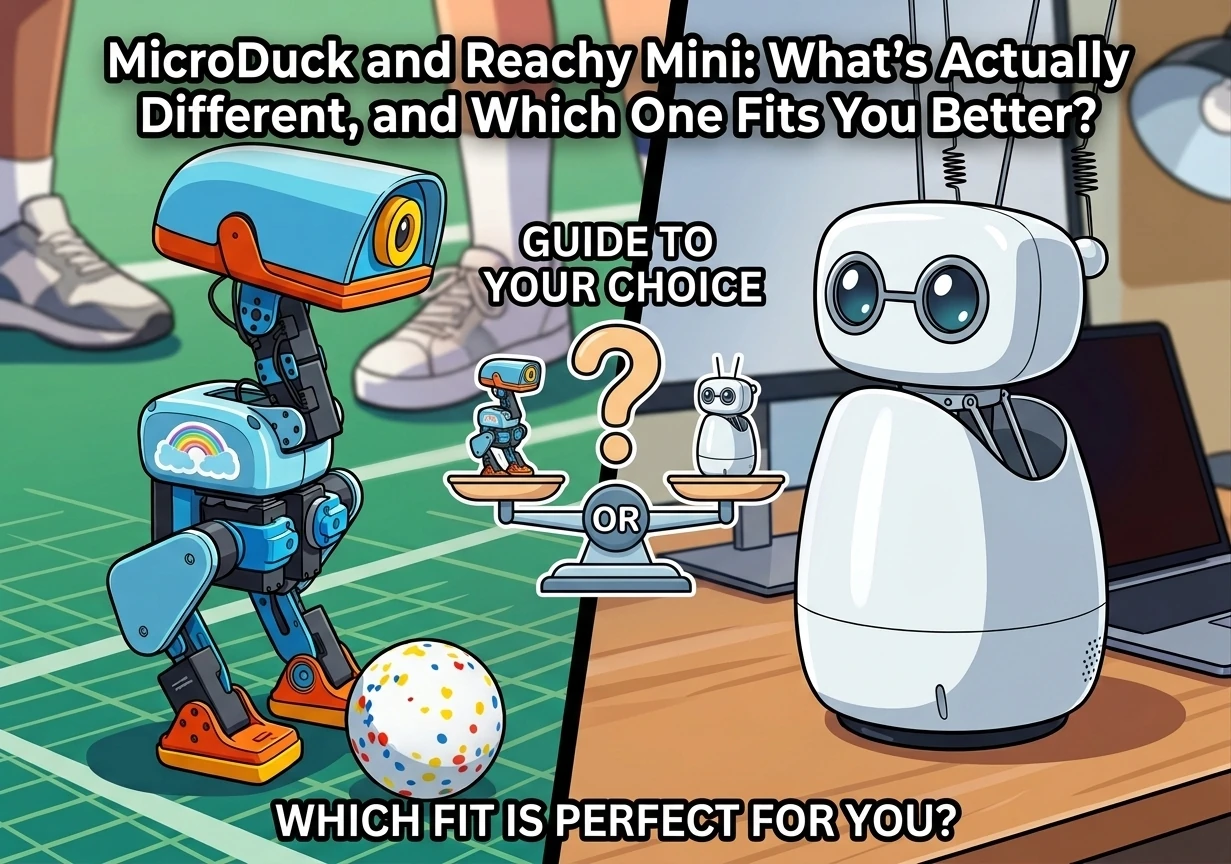
MicroDuck vs Reachy Mini: What's Actually Different?
MicroDuck and Reachy Mini are both open-source desktop robots from Pollen Robotics, but they are not simply two versions of the same product. MicroDuck is built around physical movement and retrainable robot behaviors, while Reachy Mini is built around human-robot interaction, expressive movement, and an expanding AI app ecosystem.
Compare→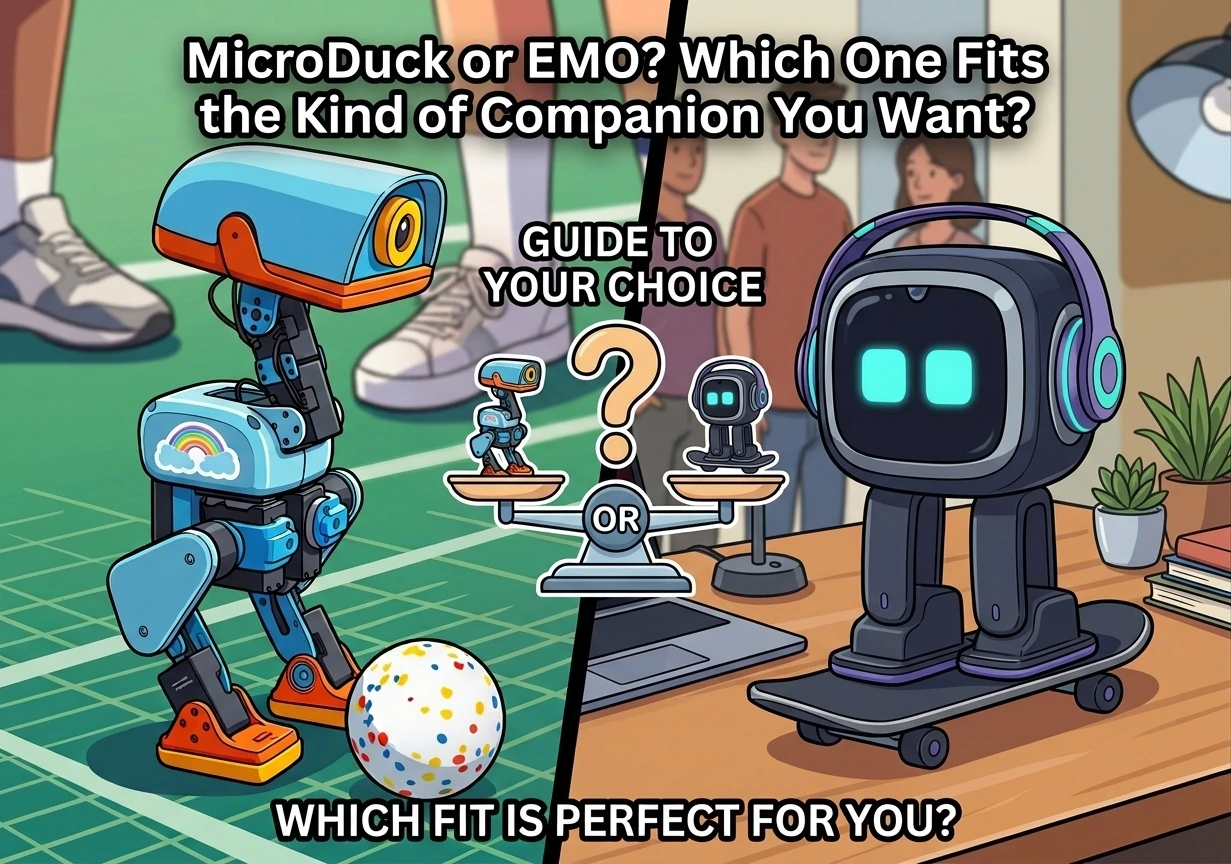
MicroDuck or EMO? Which One Fits the Kind of Companion You Want?
MicroDuck and EMO may appeal to the same person at first glance, but they give you different reasons to keep them on your desk.
Compare→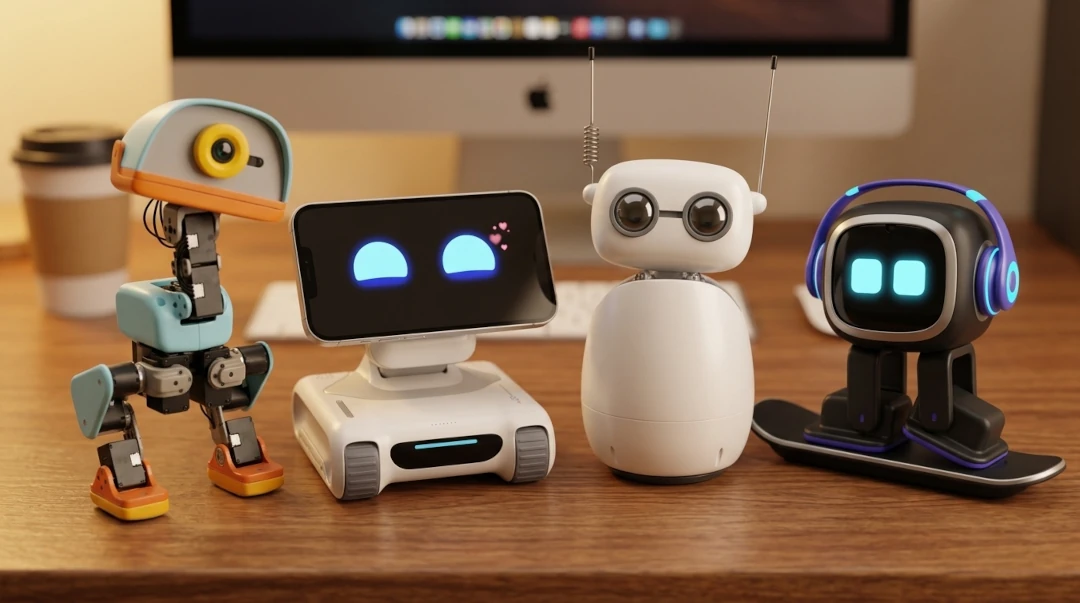
MicroDuck vs EMO vs LOOI vs Reachy Mini: Four Very Different Ideas of a Desktop Robot
MicroDuck, EMO, LOOI, and Reachy Mini may look like competitors, but they are really exploring four different directions for desktop robots: physical behavior, personality, AI interaction, and software.
Compare→Build your
short list.
Before You Preorder MicroDuck, Here Are the Things I'd Check First
MicroDuck is easy to get excited about, but a preorder is still a purchase based partly on what exists today and partly on what the platform may become. Here are the practical things I would check before spending $399.
Read guide→
Does MicroDuck Need Coding? The Answer Depends on What You Want to Do
You do not need to code to use MicroDuck. The more interesting question is how far you want to go: using the robot, experimenting with its software, or training entirely new physical behaviors are three very different experiences.
Read guide→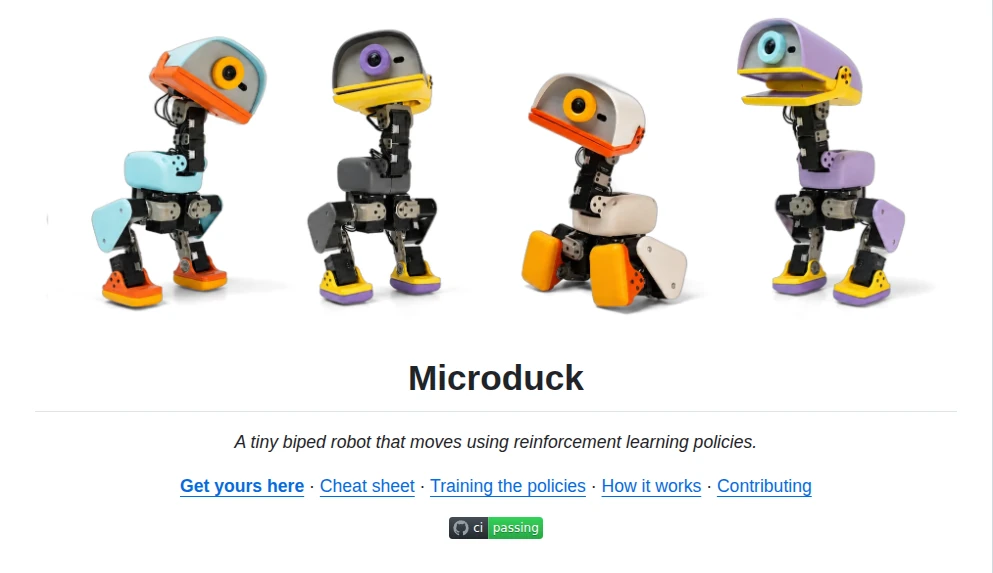
How Open Is MicroDuck Really? What You Can Actually Change
MicroDuck is often described as an open-source robot, but that phrase can mean very different things. Here is what is actually open, what you can modify, how the simulation and training stack fit together, and where the boundaries are.
Read guide→Latest discoveries.
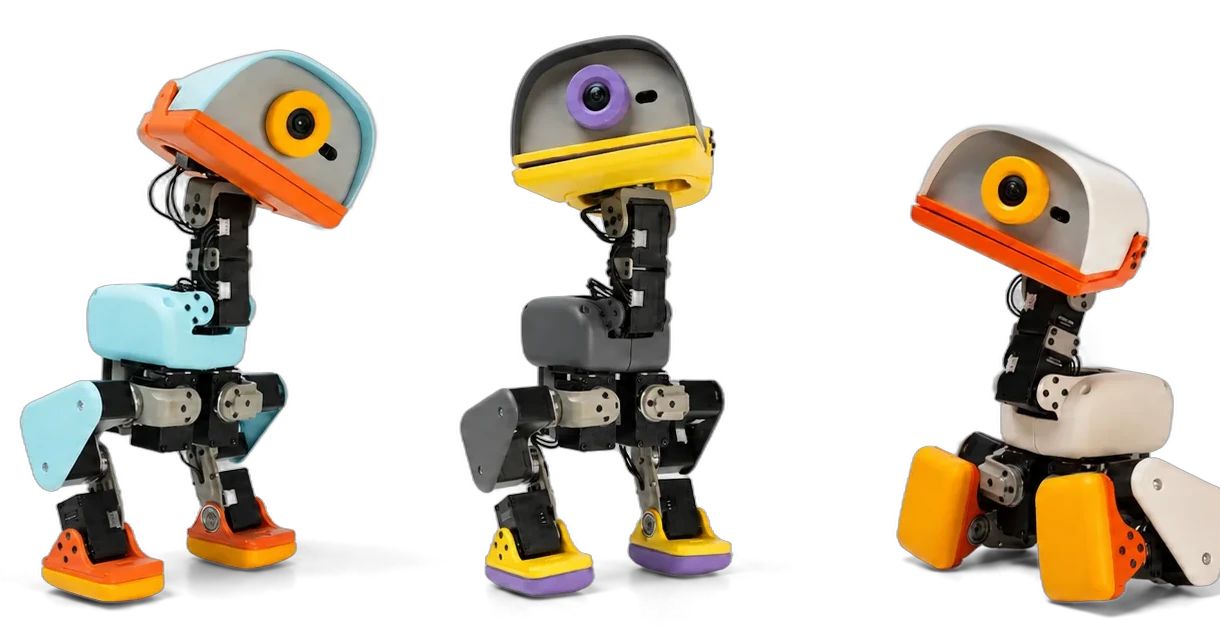
Should You Still Preorder MicroDuck? The Real Bet Is Bigger Than the Robot
MicroDuck is easy to judge as a $399 robot, but that misses the bigger idea. The more important question is whether a programmable physical robot can become more valuable through software, AI, and community-created experiences after it reaches your desk.
Read insight→
Can a Normal Person Actually Have Fun With MicroDuck?
MicroDuck looks highly technical because its open-source stack involves simulation and reinforcement learning. But using the robot and developing the robot are two different experiences.
Read insight→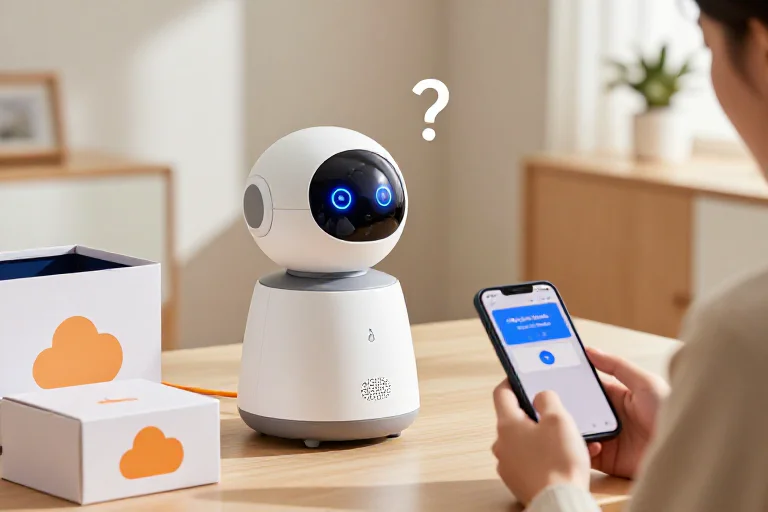
Are AI Robot Subscriptions Becoming Normal? What You're Really Paying For
A robot subscription can feel strange when you've already paid hundreds of dollars for the hardware. But AI robots have an unusual cost structure: their software, cloud services, and AI capabilities may continue using resources long after the robot leaves the factory. The real question isn't whether subscriptions are good or bad. It's what the recurring fee actually gives the owner.
Read insight→