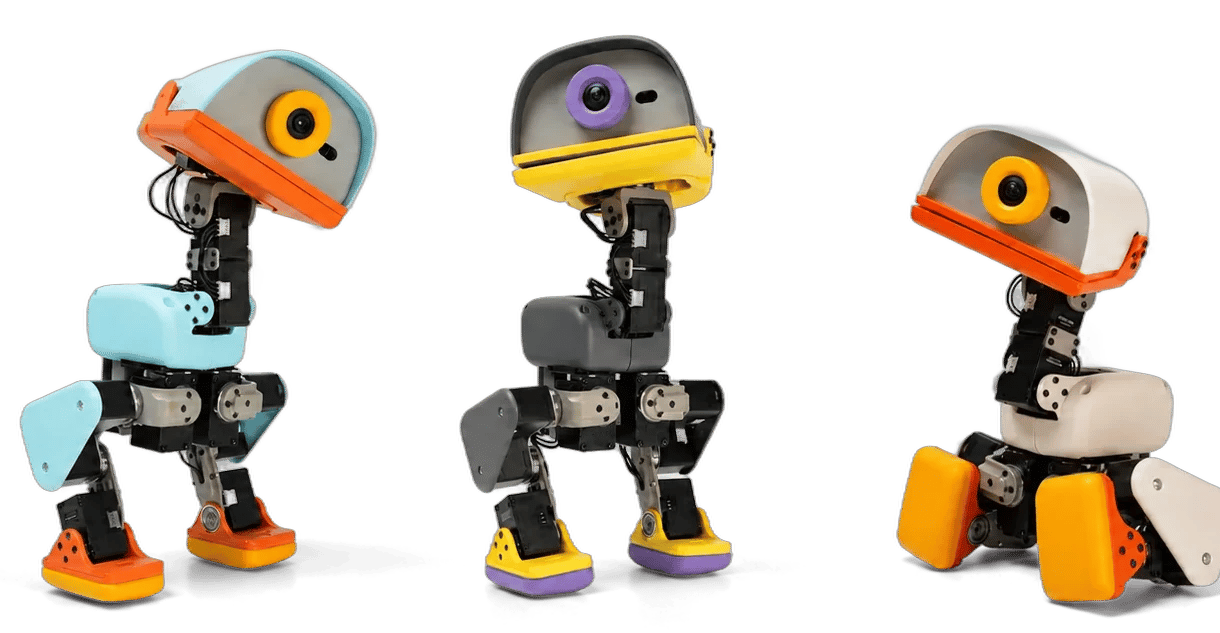
MicroDuck is easy to get excited about.
It is small.
It is physical.
It moves.
It can pick things up.
It can fall and get back up.
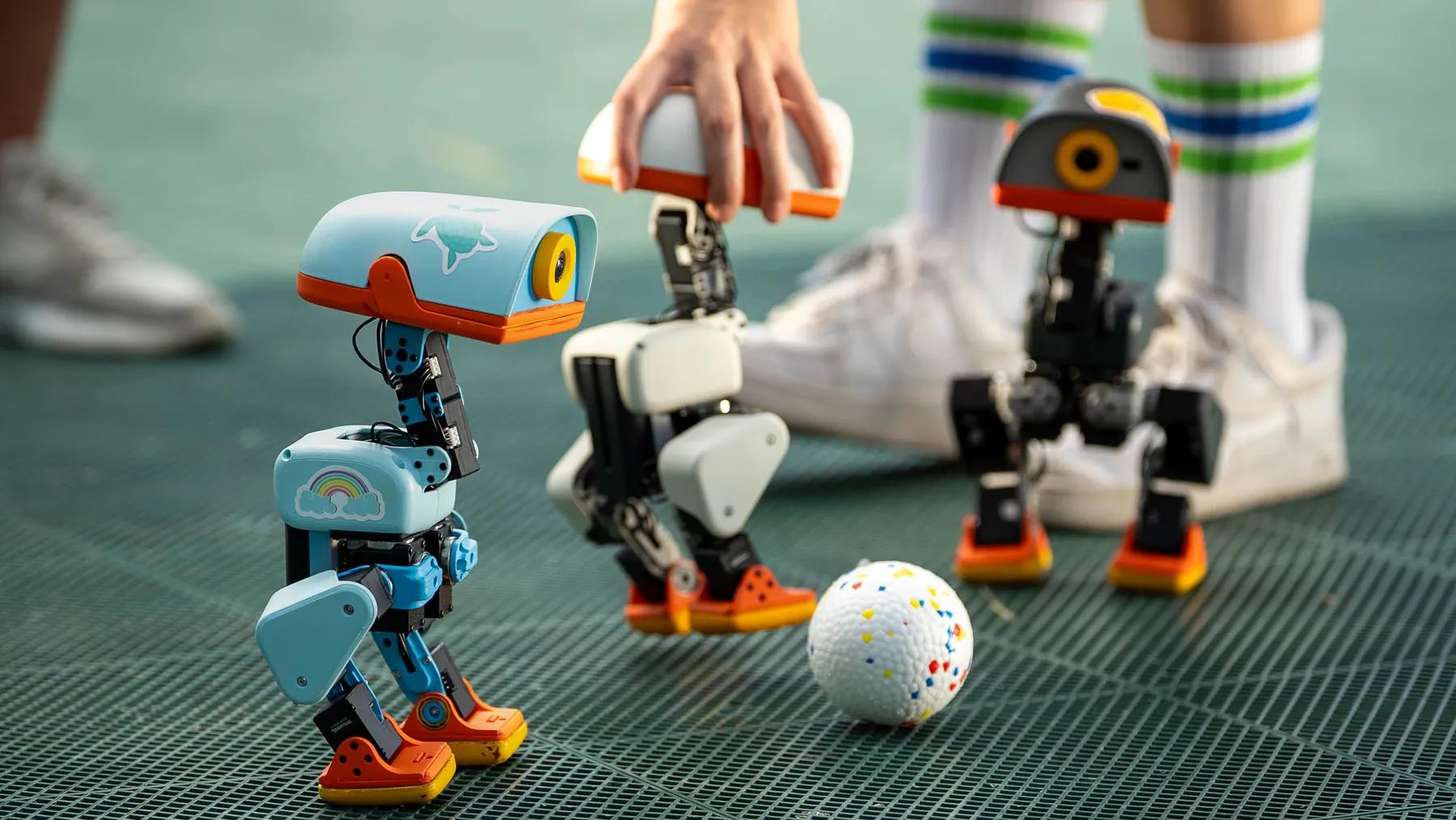
And at $399 before taxes and shipping, it sits in a price range that makes a small physical AI robot feel much more accessible than the research robots most people have seen before. Pollen currently describes it as a 25 cm open-source biped with 15 motors, a camera, LiDAR, two IMUs, an articulated beak, and seven trained behaviors in the box.
But I do not think the most interesting question is:
"Is MicroDuck worth $399?"
The more important question is:
"What happens after this kind of robot reaches your desk?"
Because MicroDuck is part of a much bigger change in how we should think about consumer AI hardware.
The interesting part is no longer simply putting a large language model into another device.
It is giving AI a physical interface.
A body.
Sensors.
A voice.
Movement.
Objects to interact with.
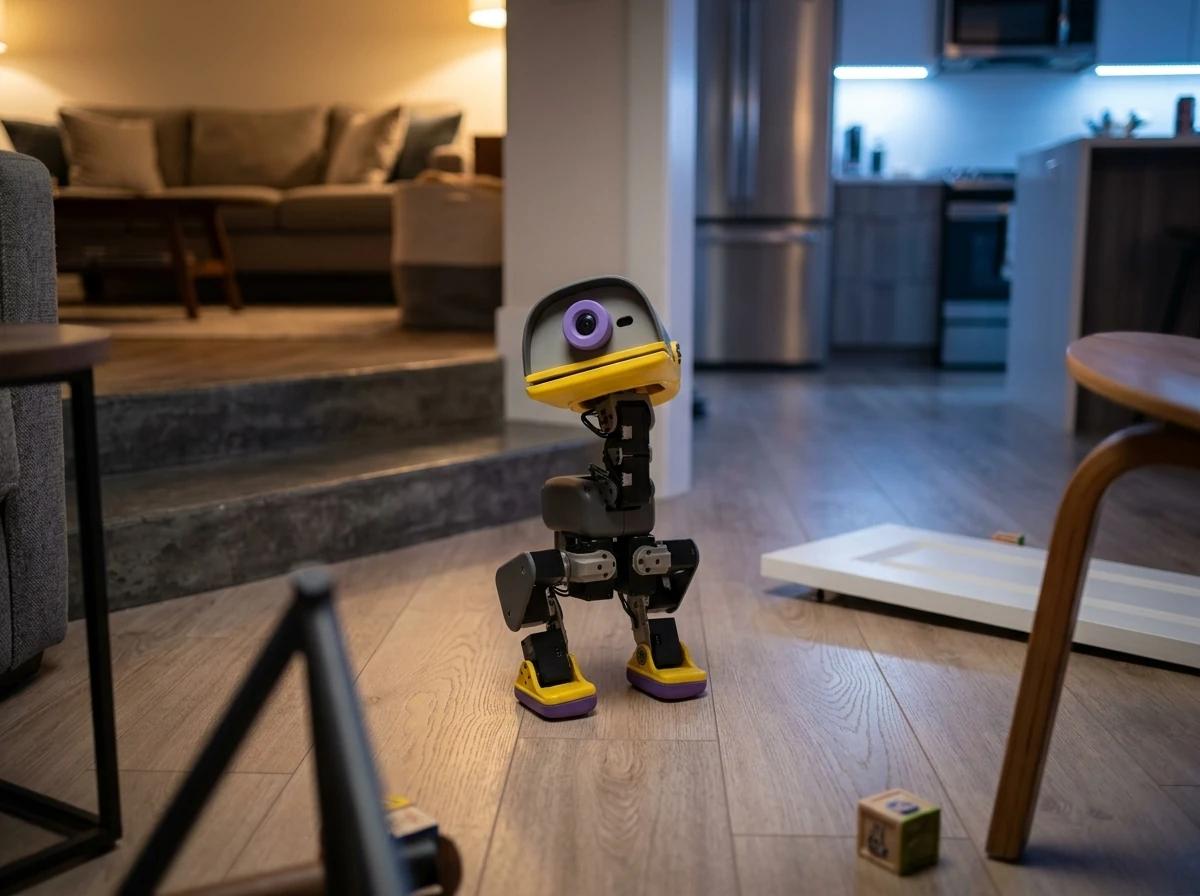
A space to exist in.
That changes the product.
MicroDuck Is Interesting as Hardware
Let's start with what actually exists.
MicroDuck is a small biped designed to be playable out of the box.
Pollen says the robot can walk, sit, crouch, grasp objects, roller-skate, and recover from common falls. It comes with a game controller, so you can interact with the robot without first becoming a robotics developer.
That already makes it different from many AI products.
Most consumer AI still lives behind a screen.
You open an app.
You type.
You speak.
You receive an answer.
The interface is mostly unchanged.
A physical robot changes the interface itself.
Instead of asking:
"What can the AI say?"
you can start asking:
"What can the AI do in the physical world?"
That is a much bigger product question.
But the Hardware Is Not the Whole Product
This is where I become more cautious about preordering.
A robot can have impressive hardware and still become boring.
You can watch it walk twenty times.
You can watch it pick something up twenty times.
You can watch it recover from a fall twenty times.
The first few interactions are almost guaranteed to be interesting.
The harder question is what happens after the novelty disappears.
That is when software becomes much more important than the launch specifications.
Pollen is unusually explicit about this with MicroDuck.
The company is not positioning it as a closed appliance with a fixed set of behaviors.
Its current software stack includes the SDK, simulation environment, and reinforcement-learning training stack. Pollen describes a workflow where behaviors can be trained in simulation, deployed to the physical robot, refined, and shared with the community.
That changes how I think about the product.
The Robot Is the Body. Software Is the Expansion Layer.
Imagine two versions of the same physical robot.
Version one
You buy it.
It has seven behaviors.
You play with them.
You show your friends.
You eventually learn everything it can do.
The experience is largely determined by the hardware and the behaviors that shipped with it.
Version two
You buy the same robot.
But over time:
someone creates a new behavior.
someone builds a better voice interface.
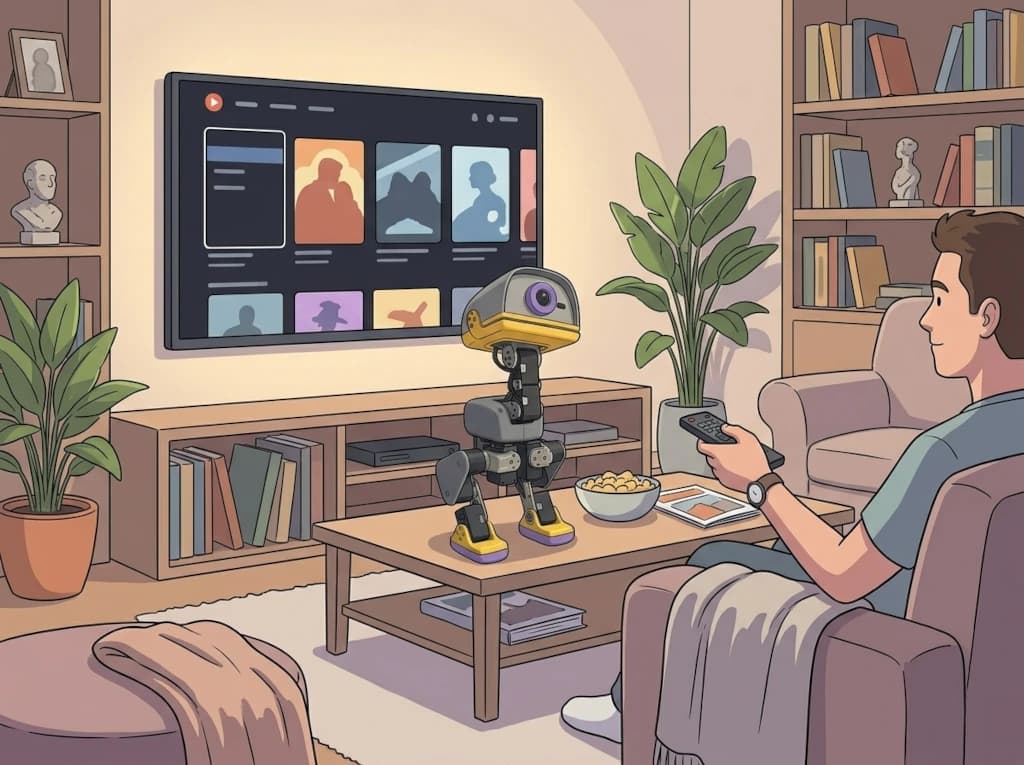
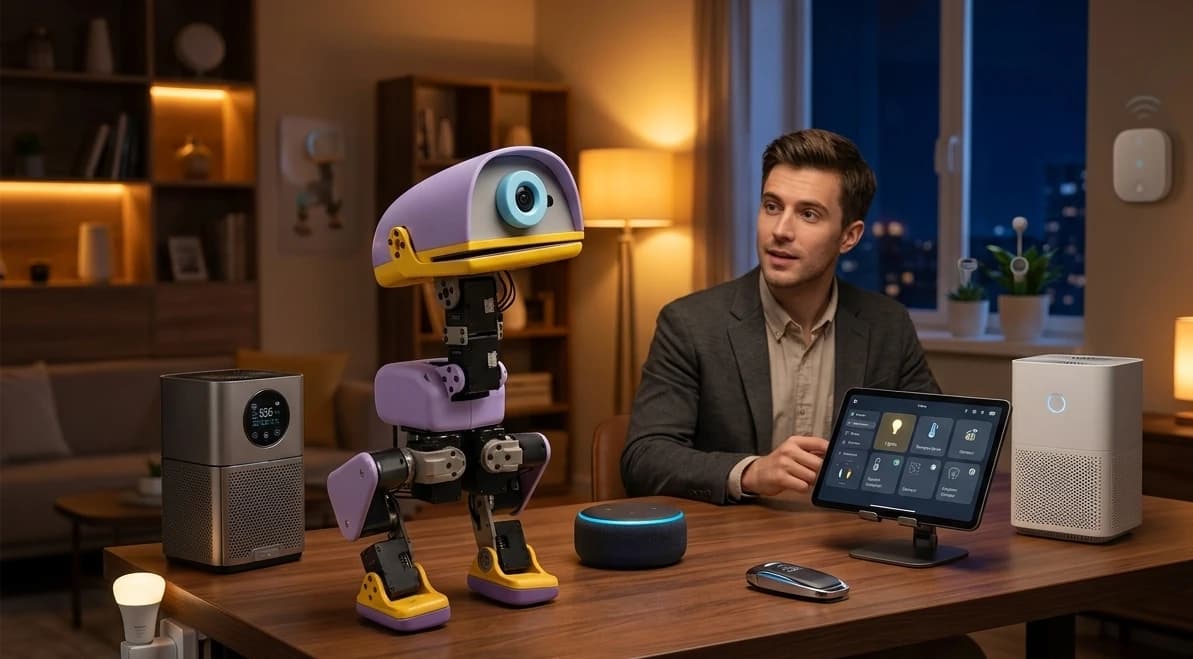
someone connects it to a home automation system.
someone creates a new way for it to interact with objects.
someone builds a memory system.
someone creates an interesting game.
someone connects a stronger AI model.
someone combines several of those things into a completely different experience.
The hardware has barely changed.
The product has.
That is why I think the software layer is the more important part of MicroDuck's long-term story.
Pollen itself says it wants physical behaviors to be easier to modify and share in the same way people build on one another's work with AI models.
This Is Bigger Than MicroDuck
This is also why I would not think about MicroDuck as just another desktop robot.
Look at the broader category.
You now have:
- desktop robots
- expressive AI robots
- AI companions
- wearable AI devices
- robotic toys
- physical AI experiments
- small programmable robots
They can look completely different.
Some have arms.
Some have wheels.
Some have legs.
Some stay on a desk.
Some can move through a room.
Some are worn on your body.
But the product direction is increasingly similar:
Put an AI system into a physical interface and give it access to the real world.
The physical form changes what the product can do.
The AI layer determines how intelligently that form can respond.
And the software determines how much the product can evolve after launch.
That is the category I find more interesting than any individual robot.
MicroDuck is simply a very good example of it.
So What Are You Actually Preordering?
You are not only preordering a small duck-shaped robot.
You are effectively buying three things at once.
The current hardware
This is the part you can evaluate today.
You know approximately what the robot is.
You know its size.
You know its major sensors.
You know the behaviors Pollen ships.
You know the base price.
This is the least uncertain part of the purchase.
The current software platform
This is already more interesting.
Pollen is making its SDK, simulator, and reinforcement-learning training stack available openly, and the seven shipped policies are described as retrainable.
That gives developers something to work with before the hardware becomes the center of their experimentation.
The future ecosystem
This is the real bet.
You are betting that:
- people will build things
- those things will actually be useful or fun
- the community will remain active
- the software will improve
- new AI capabilities will make the physical interface more interesting
- the robot will become more than the collection of behaviors it shipped with
Nobody can know that part with certainty today.
And that is exactly why I would not use the future ecosystem as if it were a current feature.
The Biggest Risk Is Not the Delivery Date
A delayed shipment is annoying.
A robot that arrives on time and sits untouched after three weeks is worse.
That is why I would worry more about the novelty curve than the preorder queue.
Physical AI has a built-in advantage at the beginning.
It is immediately understandable.
A robot moves.
It reacts.
It looks alive.
You can show someone.
You can record a video.
You can physically interact with it.
That gives a robot a very strong first impression.
But strong first impressions are cheap.
Long-term usefulness is much harder.
The software layer is what can potentially reset the novelty curve.
Every genuinely useful new behavior gives you another reason to interact with the same hardware.
Every new AI capability can make the same sensors and actuators more valuable.
Every good community project can effectively extend the product without requiring a new robot.
That is a much more interesting economic model than simply selling another piece of hardware.
Why This Matters Even If You Never Code
There is an easy mistake people make when looking at an open-source robot.
They assume the software ecosystem only matters to developers.
I disagree.
Developers may create the ecosystem.
Consumers benefit from it.
You do not need to train a reinforcement-learning policy to benefit from someone else's work.
If someone creates a better way to control the robot, you can use it.
If someone builds an interesting game, you can play it.
If someone connects the robot to a useful AI service, you can benefit from that integration.
If someone creates a better companion experience, you get the result without writing the code.
That is the same reason software ecosystems matter for ordinary users of phones and computers.
The user does not need to build the software.
The user needs the software to exist.
The same idea becomes much more interesting when the software changes the behavior of a physical machine.
But There Is Still a Hard Question
An open platform is not automatically a successful platform.
Open source does not create a community by itself.
An SDK does not guarantee useful applications.
A simulator does not guarantee that people will train impressive policies.
And a collection of experiments does not automatically become a product.
That is why I would watch what happens after MicroDuck ships.
Not just how many people buy it.
I would watch:
What do people actually build?
Which projects survive longer than a demo?
Do owners keep using their robots?
Do new behaviors spread beyond their creators?
Does the robot become easier to use over time?
Does the software ecosystem make the hardware meaningfully more valuable?
Those answers will tell us much more about MicroDuck than another launch video.
For Developers, Early Access Has a Different Value
This is where my recommendation changes.
A developer does not necessarily lose four months by waiting for hardware.
They can use the time to explore the software stack.
Pollen's current tooling is explicitly built around simulation and sim-to-real development, which means experimentation does not have to begin with a physical robot in your hands.
That makes early participation more valuable.
You are not merely waiting for the product.
You are potentially participating in its development.
You can build an integration.
You can experiment with behaviors.
You can understand the interfaces.
You can create something that becomes useful when the hardware arrives.
For this kind of buyer, being early is part of the product.
For Everyone Else, Waiting Has a Different Value
For a normal buyer, time gives you information.
You get to watch what early owners actually do.
You get to see where the rough edges are.
You get to see which accessories are genuinely useful.
You get to see what people complain about.
You get to see which community projects survive.
You get to see whether the robot remains interesting after the first month.
And you get to see what else appears in the broader physical-AI market.
This last point matters.
The category is moving quickly.
MicroDuck is one approach.
Other robots will take different approaches.
Some will emphasize physical movement.
Some will emphasize personality.
Some will emphasize conversation.
Some will emphasize home interaction.
Some will live primarily on a desk.
Others may move beyond it.
As that category develops, the right choice may become clearer.
So, Should You Still Preorder?
My answer depends on what you are buying.
If you want a fun small robot today
I would first ask whether the current MicroDuck experience itself sounds worth $399.
If walking, grasping, physical interaction, and experimentation already sound fun to you, the current product has a real reason to exist.
Do not require a future ecosystem to justify the purchase.
If you want an open platform to build on
I think the case for buying early is much stronger.
The combination of a physical robot, open software, simulation, and reinforcement-learning tooling gives developers a much more interesting starting point than a closed consumer gadget.
If you mainly want an AI companion
I would wait and compare.
The interesting question is not whether MicroDuck has AI inside it.
The interesting question is how effectively its physical body, sensors, software, voice interface, memory, and AI model work together as one experience.
That is a much higher bar.
If you are interested in the future of desktop robots
Then MicroDuck is worth following even if you never buy one.
Because the important experiment is not:
"Can a small duck robot walk?"
We already know it can.
The more interesting experiment is:
"Can software turn a relatively simple physical platform into something that becomes more useful, more expressive, and more personal over time?"
That question applies far beyond MicroDuck.
The Real Bet
I think the strongest way to understand MicroDuck is this:
The hardware gets the AI into the room.
The sensors let it perceive.
The motors let it act.
The body gives the AI a physical interface.
But software determines how much intelligence that hardware can express.
And that is why I am less interested in asking whether MicroDuck is the best little robot available today.
I am more interested in what happens when the intelligence becomes increasingly software-defined.
A better model can change an interaction.
A better memory system can change continuity.
A better perception system can change what the robot understands.
A better behavior policy can change what the robot can physically do.
A better application can completely change why you use the robot.
That is the bigger category.
MicroDuck is just one of the clearest early examples.
My Take
Would I preorder MicroDuck?
As a developer or someone who specifically wants to experiment with physical AI: yes, the case is strong.
As someone who simply wants a fun desktop robot: I would first make sure the current hardware experience alone is worth the money.
As someone looking for the next generation of AI companions and physical AI products: I would watch the ecosystem and the broader market very closely rather than treating MicroDuck as the final answer.
Because I do not think the long-term question is whether one particular robot wins.
The more interesting question is whether we are moving toward a world where the AI "brain" becomes increasingly interchangeable, while the physical form, sensors, actuators, software, and context determine what each product actually feels like.
If that happens, the most interesting desktop robot may not be the one with the most impressive hardware.
It may be the one with the best software layer.
And that is what I would be watching next.