You buy the robot.
Then you discover there is a monthly fee.
That sentence is enough to make a lot of people angry.
And honestly, I understand why.
A robot is not a streaming service.
You already paid for the physical product sitting on your desk. You own the device. It has motors, cameras, speakers, sensors, a battery, and a real body.
So why should you keep paying?
The answer is not as simple as "because AI is expensive."
There is a real cost behind cloud AI, voice processing, model usage, servers, storage, and ongoing software development.
But that doesn't automatically make every robot subscription reasonable.
The more interesting question is:
What exactly is the monthly fee buying you?
That is where I think AI desktop robots are going to have a serious argument with their customers.
A robot is not finished when the box is opened
Traditional hardware has a relatively simple business model.
You pay once.
The company makes the product.
You take it home.
Maybe there are firmware updates later, but the company's main transaction happened at checkout.
AI robots are different.
A company may continue paying for:
- cloud inference
- speech recognition
- voice generation
- remote services
- storage
- application infrastructure
- AI model access
- software development
- servers that connect the robot to those services
The robot may have left the factory months ago.
The expense did not.
That creates pressure on manufacturers to find recurring revenue.
And I think this is one reason subscriptions are likely to become part of the AI robot market.
Not because robot companies suddenly discovered recurring revenue.
Because some of the things people want these robots to do are themselves ongoing services.
Vector already shows the model very clearly
You don't have to imagine what this looks like.
Vector currently has an official membership system.
Digital Dream Labs says Vector's AI subscription costs $11.99 per month or $99.99 per year when using its ChatGPT backend, or $14.99 per month / $139.99 per year for its Claude backend. The company also states that the membership provides voice commands and AI features, along with new features such as animations, expressions, and games.
That is an important example because the subscription isn't simply:
Pay us every month because we like monthly revenue.
The fee is tied to an ongoing service.
The robot itself is one layer.
The AI service is another.
That's a much easier business model to understand.
But it still creates a difficult customer question:
How much of the robot's identity am I actually paying for every month?
If voice interaction and the AI are central to the product, the answer becomes much more important.
LOOI users are already asking the same question
The discussion isn't limited to one robot.
In August 2026, LOOI users were discussing a possible subscription model after a survey appeared in the LOOI app.
The reaction was mixed.
Some users were open to paying if the subscription brought better reliability and genuinely new features.
Others were asking a much simpler question:
What's in it for me?
One user specifically questioned why they should pay a recurring fee when they already had to provide the phone and other infrastructure required for the robot to function.
I think that question captures the whole problem.
Users don't care about the manufacturer's cloud bill.
They care about what changes for them.
That's the standard a robot subscription will eventually have to meet.
Not all subscriptions are actually the same
This is where discussions about "robot subscriptions" often become confusing.
There are at least three very different things a company might charge for.
1. Access to AI
This is the easiest one to understand.
You are paying for ongoing access to a cloud AI service.
The robot sends something to the company's servers.
The AI processes it.
The result comes back.
The company pays for that infrastructure.
That's basically a recurring AI service attached to a physical device.
Vector is currently an obvious example. Its paid membership is directly connected to AI and voice functionality.
I don't find this model particularly surprising.
The more interesting question is whether the manufacturer makes that dependence clear before someone buys the robot.
2. Premium software features
This is different.
The AI itself might remain available without payment, while certain capabilities become premium.
Maybe advanced applications cost extra.
Maybe a more capable AI model is paid.
Maybe some productivity tools are part of a premium tier.
Maybe the robot gets additional personalities, games, or advanced behaviors.
At that point, a subscription starts looking more like an app ecosystem.
This is where the model from my earlier article about AI desktop robot app stores becomes relevant.
Once robots have lots of third-party software, there is room for developers to charge for software rather than making the robot company carry every cost.
That could eventually be healthier than putting everything behind one manufacturer-controlled subscription.
3. The entire robot experience
This is the version that worries me more.
Imagine paying for a robot and discovering that a large part of its core personality, cloud connection, voice interaction, or AI behavior disappears when the subscription ends.
At that point, you aren't really buying only a robot.
You're buying a hardware device attached to an ongoing service contract.
There is nothing inherently wrong with that model.
But I think companies need to be extremely clear about it.
Because customers usually think:
"I bought this robot."
The company may actually be thinking:
"We sold you a customer relationship that lasts as long as your subscription."
Those are not the same thing.
The $10 monthly fee can look very different depending on the robot
This is where simple comparisons become misleading.
Suppose Robot A costs $400 and has no subscription.
Robot B costs $300 but requires $10 every month.
At first glance, Robot B looks cheaper.
After three years, the recurring fee has added another $360.
But even that calculation doesn't tell you which experience is more sustainable.
What does Robot B provide during those three years?
Does it receive new AI capabilities?
Does it get new applications?
Does the subscription unlock meaningful new behavior?
Does the company actively maintain the backend?
Does your robot become more capable?
Or does the subscription simply keep the same features working?
Those are completely different products.
The recurring payment itself isn't the interesting part.
The value created by the recurring payment is.
A subscription can actually make a robot better
This part gets lost in the usual anti-subscription argument.
A healthy recurring model could be useful.
Imagine that your robot receives:
a better speech model
then:
a better vision model
then:
new applications
then:
improved personalization
then:
better tools
then:
new third-party experiences
A subscription could give the company a reason to keep investing in the product.
That creates an interesting loop:
more revenue → more development → more useful robot → more reason to keep subscribing
That is a real business model.
And potentially a good product model.
The danger is when the loop goes the other direction:
hardware sale → basic features → subscription → barely any meaningful improvement
Then the customer starts feeling like they are renting the robot's intelligence.
That's where the relationship breaks down.
The hardest part may be deciding what should be free
I think this is going to become one of the most important product decisions in the category.
Let's say you buy an AI desktop robot.
What should happen when you cancel the subscription?
Should the robot still:
move?
react?
use basic local behaviors?
run installed software?
access community applications?
remember local data?
respond to simple commands?
And what should disappear?
Maybe:
premium cloud AI
advanced models
remote services
premium applications
additional AI usage
That would be relatively easy to understand.
The more uncomfortable model is:
subscription ends → the robot becomes significantly less like the robot you thought you bought.
Users can tolerate optional extras.
They are much less comfortable with paying a recurring fee to retain the core experience they already associated with the hardware.
This is why software architecture will affect pricing
There is a deeper reason this matters.
Two robots that cost roughly the same to manufacture can have completely different ongoing costs.
Robot A may do most of its basic behavior locally.
Robot B may depend heavily on cloud services.
Robot A can potentially remain useful even if the company reduces its cloud infrastructure.
Robot B needs the company to keep running servers.
That changes the business model.
And it also changes the risk for the owner.
This is one reason I pay more attention to the software architecture behind a robot than I used to.
The question isn't only:
"Is this robot smart?"
It's also:
"Where does that intelligence live?"
That becomes especially important as AI models become larger and more expensive to operate.
The best subscription may not belong to the robot company
This is another possibility I find interesting.
Maybe the future looks less like:
Robot company → one mandatory subscription
and more like:
Robot company → hardware platform
AI provider → AI service
App developer → application
Community → open software
The owner chooses what to use.
That would look much more like the software ecosystem we already understand.
The robot company could still make money.
Developers could make money.
AI providers could make money.
And users wouldn't necessarily have to subscribe to one giant bundle just to make the robot useful.
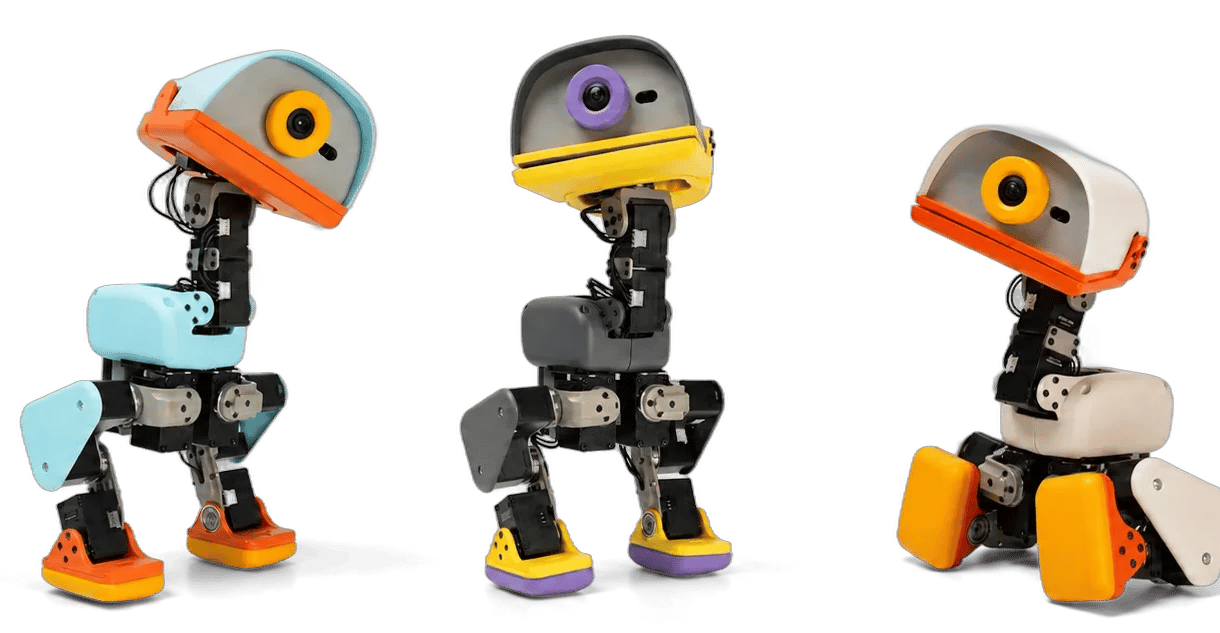
Open platforms such as MicroDuck make this possibility particularly interesting because the software ecosystem does not have to be completely controlled by the hardware manufacturer. Its public development stack gives other developers a path to build around the robot rather than limiting everything to a single consumer application.
That doesn't mean open source automatically produces a better business model.
It just means there are more possible business models.
There is another problem: subscriptions can outlive hardware
This is something consumers should think about.
Imagine subscribing to a robot for three years.
Then the company launches a new model.
What happens?
Do you keep your old subscription?
Do you get a discount?
Does your old robot still receive new software?
Does the company stop updating it?
Can the newer AI models still run on the old hardware?
Now the subscription isn't only about monthly pricing.
It becomes part of the robot's lifecycle.
That's why the software-update question from my previous article matters here too: What Happens When an AI Desktop Robot Stops Getting Software Updates?.
A subscription doesn't automatically guarantee longevity.
In fact, it can make the question even more important.
If you're paying every month, you naturally expect the service to keep moving.
What I would actually want to see from a robot subscription
I don't think the industry needs to eliminate subscriptions.
I think it needs to make them understandable.
I'd want a robot company to explain something like this before I buy:
Included forever
The things the robot can fundamentally do because I bought the hardware.
Optional subscription
The cloud services, premium AI models, advanced tools, or other ongoing services that cost the company money to operate.
Community software
Things other people can build and distribute independently.
What happens when I cancel
This might be the most important box of all.
Not legal language hidden somewhere.
A simple explanation.
If I cancel tomorrow, what can my robot still do?
That single question would make many robot subscriptions much easier to evaluate.
I don't think "no subscription" automatically means better
There is a temptation to turn this into a simple rule:
No subscription = good.
I don't think that's useful.
A company can avoid subscriptions and still provide a weak software experience.
Another company can charge a subscription and keep investing heavily in its platform.
The actual question is:
Does the recurring payment create recurring value?
That's the test I'd use.
If the company keeps adding meaningful capabilities, maintaining the service, supporting developers, and making the robot better, there is at least a reason for the model to exist.
If nothing meaningful changes, people will eventually ask why they are still paying.
And they should.
I think the robot market is heading toward a split
We may eventually see several different business models living next to each other.
One type of robot will be:
buy once, use it as it is
Another will be:
buy hardware, optional AI services
Another might be:
hardware + mandatory cloud membership
And another could become:
open platform + third-party software
There probably won't be one winner.
Different users will tolerate different levels of recurring cost and complexity.
And that is actually good for the market.
The important thing is that the model is visible.
Because a $400 robot and a $400 robot with a $10 monthly service aren't really the same product.
The price on the box only tells you the first part of the story.
The question I would ask before subscribing
Not:
"Do I hate subscriptions?"
And not even:
"Is $10 a month expensive?"
I'd ask:
What will this robot be able to do twelve months from now because I kept paying?
That's a much harder question for a company to answer.
It forces the subscription to have a purpose.
Maybe the answer is:
better AI
Maybe:
new applications
Maybe:
cloud services
Maybe:
continuous software development
Maybe:
access to a growing ecosystem
All of those can make sense.
But "because our servers cost money" is not really a product value proposition.
The owner doesn't buy server capacity.
They buy an evolving robot.
And I think that distinction is going to matter more and more as AI desktop robots become actual products rather than experimental hardware.
The interesting future isn't one where every robot has a subscription.
It's one where the software business model becomes part of how we evaluate the robot itself.
Because once intelligence is delivered continuously, the question is no longer just:
How much does the robot cost?
It becomes:
What kind of relationship am I buying between this robot, its software, and the company behind it?
title: "Are AI Robot Subscriptions Becoming Normal? What You're Really Paying For" slug: "are-ai-robot-subscriptions-becoming-normal-and-what-you-are-paying-for" description: "Are AI robot subscriptions becoming normal? As desktop robots depend more on cloud AI and ongoing software services, the monthly fee may be paying for much more than another app." eyebrow: "Robot Business Models" summary: "A robot subscription can feel strange when you've already paid hundreds of dollars for the hardware. But AI robots have an unusual cost structure: their software, cloud services, and AI capabilities may continue using resources long after the robot leaves the factory. The real question isn't whether subscriptions are good or bad. It's what the recurring fee actually gives the owner." accent: "yellow" kind: "insight" updatedAt: "2026-09-27" robotSlugs: [] image: "/images/blog/are-ai-robot-subscriptions-becoming-normal-and-what-you-are-paying-for.webp"
A robot subscription can look strange at first.
You buy the robot.
Then you discover there is a monthly fee.
That is enough to make a lot of people uncomfortable, and I understand why.
A robot is not a streaming service. You already paid for a physical product. There are motors, cameras, speakers, sensors, a battery, and a real machine sitting on your desk.
So why should you keep paying?
The answer isn't simply "because AI is expensive."
There are real ongoing costs behind cloud AI, speech processing, model access, servers, and software development. But that doesn't automatically make every robot subscription make sense.
The more useful question is:
What exactly is the recurring fee buying you?
That is where I think AI desktop robots are going to have a serious conversation with their customers.
A robot is not necessarily finished when you buy it
Traditional hardware has a relatively simple business model.
You pay once.
The company makes the product.
You take it home.
Maybe there are firmware updates later, but the main transaction happened at checkout.
AI robots are different.
A company may continue paying for:
- cloud inference
- speech recognition
- voice generation
- remote services
- storage
- AI model access
- application infrastructure
- software development
The robot may have left the factory months ago.
The expense did not.
That creates pressure on manufacturers to find recurring revenue.
And I think that is one reason subscriptions are likely to become part of the AI robot market.
Not because robot companies suddenly discovered subscriptions.
Because some of the things people expect these robots to do are themselves ongoing services.
Vector already shows the model clearly
You don't have to imagine what this looks like.
Vector currently has an official membership system.
Digital Dream Labs says Vector's AI subscription costs $11.99 per month or $99.99 per year when using its ChatGPT backend, or $14.99 per month / $139.99 per year for its Claude backend. The company says the membership includes voice commands and AI features, along with new features such as animations, expressions, and games.
That's an important example because the subscription is attached to an ongoing service.
The robot itself is one layer.
The AI service is another.
That makes the business model easier to understand.
But it still creates a customer question:
How much of the robot's identity am I actually paying for every month?
If voice interaction and AI are central to the product, the answer matters.
LOOI users are already asking the same question
The discussion isn't limited to one robot.
In August 2026, LOOI users discussed a possible subscription model after a survey appeared in the LOOI app.
The reaction was mixed.
Some users were open to paying if the subscription brought better reliability and genuinely new features.
Others were asking a much simpler question:
What's in it for me?
One user specifically questioned why they should pay a recurring fee when they already had to provide the phone and other infrastructure required for the robot to function.
I think that question captures the whole problem.
Users don't care about the manufacturer's cloud bill.
They care about what changes for them.
That is the standard a robot subscription will eventually have to meet.
Not all subscriptions are actually the same
There are at least three different things a company might charge for.
Access to AI
The simplest case is ongoing access to a cloud AI service.
The robot sends information to the company's servers.
The AI processes it.
The answer comes back.
The company pays for that infrastructure.
That is essentially a recurring AI service attached to a physical device.
Vector is a clear current example. Its paid membership is directly connected to AI and voice functionality.
Premium software
The AI might remain available without payment while certain capabilities become premium.
Advanced applications could cost money.
A more capable AI model could be paid.
Premium tools or additional robot experiences could sit behind a subscription.
At that point, the model starts looking more like an app ecosystem.
That's where the question from Do AI Desktop Robots Need an App Store? becomes important.
Once robots have enough third-party software, developers themselves could become part of the economic model.
The whole robot experience
This is the model I would examine most carefully.
Imagine paying for a robot and discovering that a large part of its core personality, cloud connection, voice interaction, or AI behavior disappears when the subscription ends.
There is nothing inherently wrong with selling a hardware-plus-service product.
But the company needs to be very clear about it.
Because the customer's mental model is often:
"I bought this robot."
While the company's model may be:
"We sold you a robot connected to an ongoing service."
Those aren't quite the same thing.
A monthly fee can mean very different things
A $10 monthly subscription isn't automatically expensive.
It depends on what happens because you're paying it.
Does the robot receive better AI models?
New applications?
Meaningful software improvements?
Better cloud infrastructure?
A growing developer ecosystem?
Or does the subscription simply keep the same features working?
Those are completely different products.
The recurring payment itself isn't the interesting part.
The recurring value is.
A subscription can make a robot better
This part is easy to overlook.
A healthy recurring model could create an incentive for a company to keep investing in the robot.
Imagine:
better speech
then:
better vision
then:
new applications
then:
better personalization
then:
new tools
then:
new community experiences
The subscription gives the company a reason to keep building.
That can create a useful loop:
more recurring revenue → more software investment → better robot → more reason to stay
The problem appears when the loop doesn't work.
If the product stops improving but the subscription remains, customers naturally start asking why they are paying.
The hard question is what should remain after cancellation
Suppose you buy an AI desktop robot and later cancel the subscription.
What should still work?
I'd expect a meaningful amount of functionality to remain available because I bought the hardware.
The core physical behavior should still exist.
Installed software should ideally remain useful where possible.
Local capabilities should not suddenly become meaningless simply because a billing cycle ended.
Then there can be a clear premium layer:
advanced cloud AI
premium models
remote services
premium applications
That distinction feels understandable.
What feels much less comfortable is:
subscription ends → the robot stops feeling like the robot you thought you bought.
That is when the business model starts becoming part of the product risk.
Software architecture affects the business model
Two robots can have similar hardware and very different ongoing costs.
Robot A might perform much of its basic behavior locally.
Robot B might depend heavily on cloud services.
Robot A can potentially remain useful even if the manufacturer's cloud infrastructure changes.
Robot B needs the company to keep its servers running.
That affects more than engineering.
It affects pricing.
It affects ownership.
It affects how much control the manufacturer has over the product after the sale.
And it makes one question increasingly important:
Where does the robot's intelligence actually live?
That question is closely related to the software ecosystem discussion in What Happens When an AI Desktop Robot Stops Getting Software Updates?.
The subscription may not need to belong entirely to the robot company
There is another model I find interesting.
Instead of:
Robot company → one mandatory subscription
you could eventually have:
Robot company → hardware platform
AI provider → AI service
App developer → applications
Community → open software
The owner chooses what to use.
That would look more like the software ecosystem people already understand.
The robot company could still earn money.
Developers could earn money.
AI providers could earn money.
And the owner wouldn't necessarily have to subscribe to one giant bundle just to make the robot useful.
Open platforms such as MicroDuck make this possibility more interesting because its development stack is publicly accessible, giving outside developers a path to build around the robot rather than putting every software decision behind one consumer application.
Open source doesn't automatically solve the business model.
It simply creates more possible ones.
Subscriptions can outlive hardware
There is another question I would want every robot company to answer.
What happens when the next robot arrives?
Suppose you have paid a subscription for three years.
Then a new hardware generation appears.
Does your old robot keep receiving updates?
Can your existing subscription move to the new robot?
Do advanced AI models still work on the old hardware?
Or does the old robot slowly become a legacy product?
At that point, the subscription isn't only about monthly pricing.
It becomes part of the robot's lifecycle.
That is why a recurring fee should make people think about longevity, not just affordability.
What I would want to see before paying
I don't think the industry needs to eliminate subscriptions.
I think the model needs to be understandable.
I'd want four things clearly explained before buying:
Included with the hardware
What the robot can fundamentally do because you purchased it.
Subscription
Which cloud services, AI models, advanced tools, or premium features require ongoing payment.
Community software
What independent developers can add without depending entirely on the manufacturer.
After cancellation
What still works tomorrow if you stop paying today?
That last question might be the most valuable one.
It tells you what you are actually buying.
"No subscription" is not automatically better
It's tempting to turn this into:
No subscription = good.
I don't think that works.
A robot can have no recurring fee and still have weak software.
Another robot can have a recurring service and keep receiving meaningful improvements.
The better question is:
Does the recurring payment create recurring value?
That's the test I'd use.
If a company keeps adding useful capabilities, maintains its infrastructure, supports developers, and improves the product, there is a reason for the model to exist.
If nothing meaningful changes, customers will eventually ask why they are still paying.
And that is a fair question.
I think the market will split into several models
We will probably see multiple approaches living next to each other.
Some robots will be:
buy once, use as sold
Others:
buy hardware, add optional AI services
Others:
hardware + mandatory cloud membership
And some:
open platform + third-party software
Different products will attract different users.
That's healthy.
What matters is that the business model is visible.
Because a $400 robot and a $400 robot with a $10 monthly service are not really the same product.
The price on the box only tells you the first part of the story.
The question I'd ask before subscribing
I wouldn't ask:
"Do I hate subscriptions?"
And I wouldn't start with:
"Is $10 a month expensive?"
I'd ask:
What will this robot be able to do twelve months from now because I kept paying?
That's a much harder question for a company to answer.
Maybe the answer is better AI.
Maybe it's new applications.
Maybe cloud services.
Maybe continuous software development.
Maybe a growing ecosystem.
All of those can make sense.
But "our servers cost money" is not a product value proposition.
The owner doesn't buy server capacity.
They buy an evolving robot.
And I think that distinction will matter more as AI desktop robots stop being experiments and become real consumer products.
The interesting future isn't one where every robot has a subscription.
It's one where the software business model becomes part of how we evaluate the robot itself.
Because once intelligence is delivered continuously, the question is no longer just:
How much does the robot cost?
It becomes:
What kind of relationship am I buying between this robot, its software, and the company behind it?