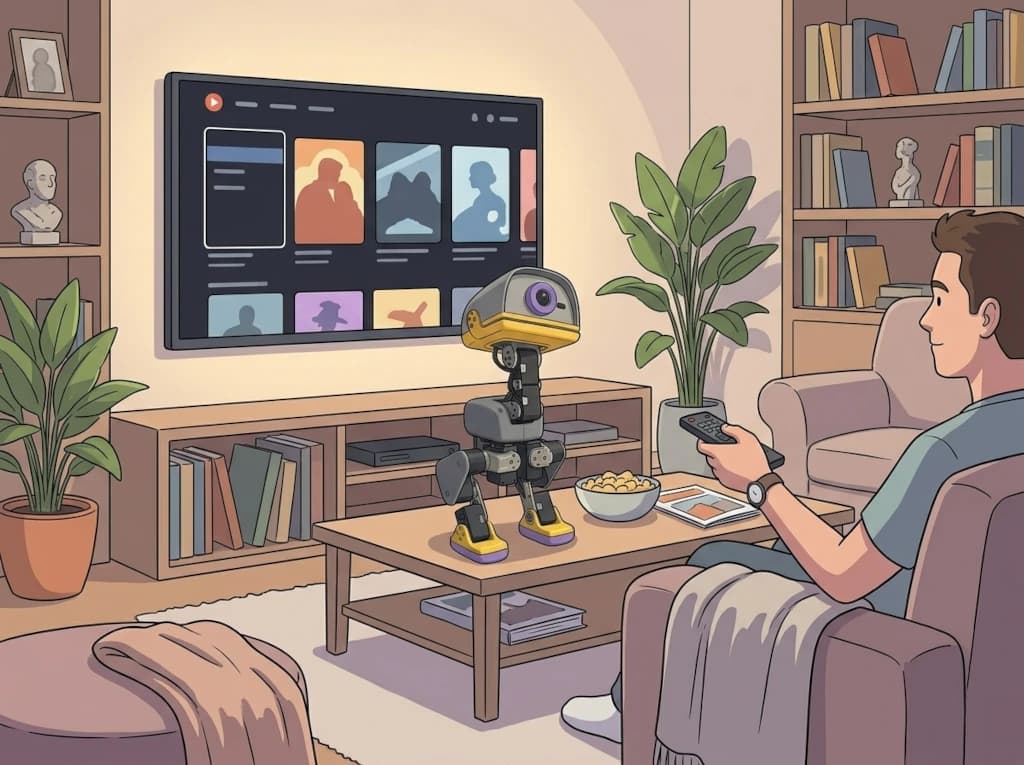
MicroDuck looks like a robotics project.
Search for it and you quickly run into reinforcement learning, simulation, policies, MuJoCo, GitHub repositories, and people talking about training new behaviors.
That can make the robot seem like something you should only buy if you already know how to code.
I do not think that is the right way to look at it.
The better question is:
Can a normal person enjoy MicroDuck without becoming a robotics developer?
Yes.
But there is an important second question:
How deep does that experience go if you never touch the technical side?
That is where things get more interesting.
You Can Use MicroDuck Without Coding
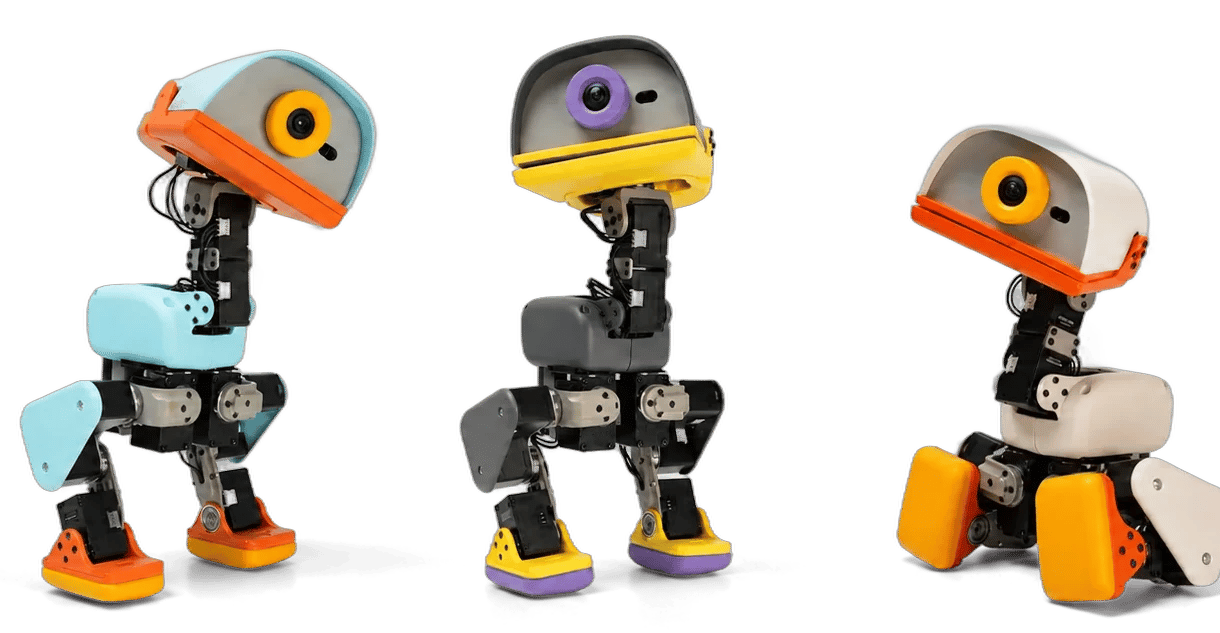
Pollen explicitly describes MicroDuck as playable out of the box.
The standard package includes the robot, battery, USB-C cable, and a game controller, while the robot ships with trained behaviors. (Pollen Robotics)
So your first interaction does not need to look like this:
Clone a repository. Install dependencies. Read a reinforcement-learning paper.
It can simply be:
Turn it on. Pick up the controller. Make it move.
That matters.
A consumer robot should have a low-friction entry point even if a much deeper technical platform exists underneath it.
Using a Robot Is Not the Same as Developing One
This is where MicroDuck can look more intimidating than it actually is.
There are two separate activities:
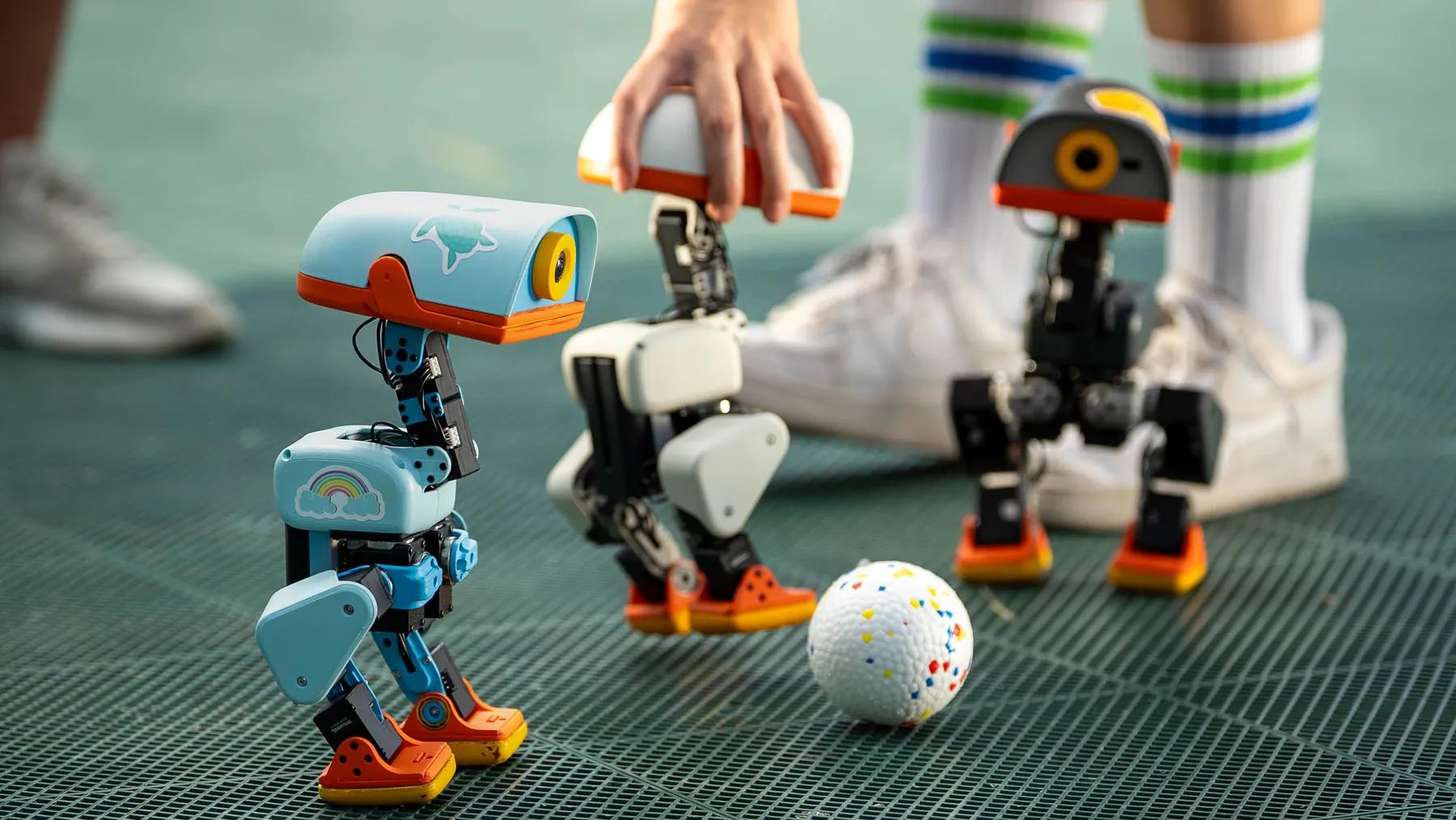
Using the robot
You operate the behaviors that already exist.
You can control the robot.
You can watch it walk.
You can use the roller behavior.
You can interact with its grasping behavior.
You can watch it recover from a fall.
None of that requires you to train a neural network.
Developing the robot
Now the questions change.
You might want to:
- modify an existing behavior
- train a new policy
- change how the robot moves
- experiment in simulation
- connect it to another system
- understand the control stack
- deploy a behavior to the physical robot
That is where the technical requirements become much higher.
Pollen makes this path possible through the open SDK, simulation environment, and reinforcement-learning stack. (Pollen Robotics)
Those are two different user experiences.
The existence of one does not make the other inaccessible.
Think of It as Two Layers
A useful way to understand MicroDuck is to think about the product as having two layers.
The consumer layer
This is the robot as something you can simply own.
You interact with the physical machine.
You try the built-in behaviors.
You create small games.
You show it to people.
You experiment with objects around it.
You see whether you actually enjoy having a little robot moving around your space.
The developer layer
This is the robot as a platform.
You use the SDK.
You work with simulation.
You train behaviors.
You experiment with reinforcement learning.
You deploy those behaviors back to the real robot.
Pollen's current software stack is explicitly built around that second layer. (Pollen Robotics)
You do not have to choose the developer layer just because it exists.
What Can a Non-Programmer Actually Enjoy?
Quite a lot.
A non-programmer can enjoy the physicality of the robot itself.
You can control it.
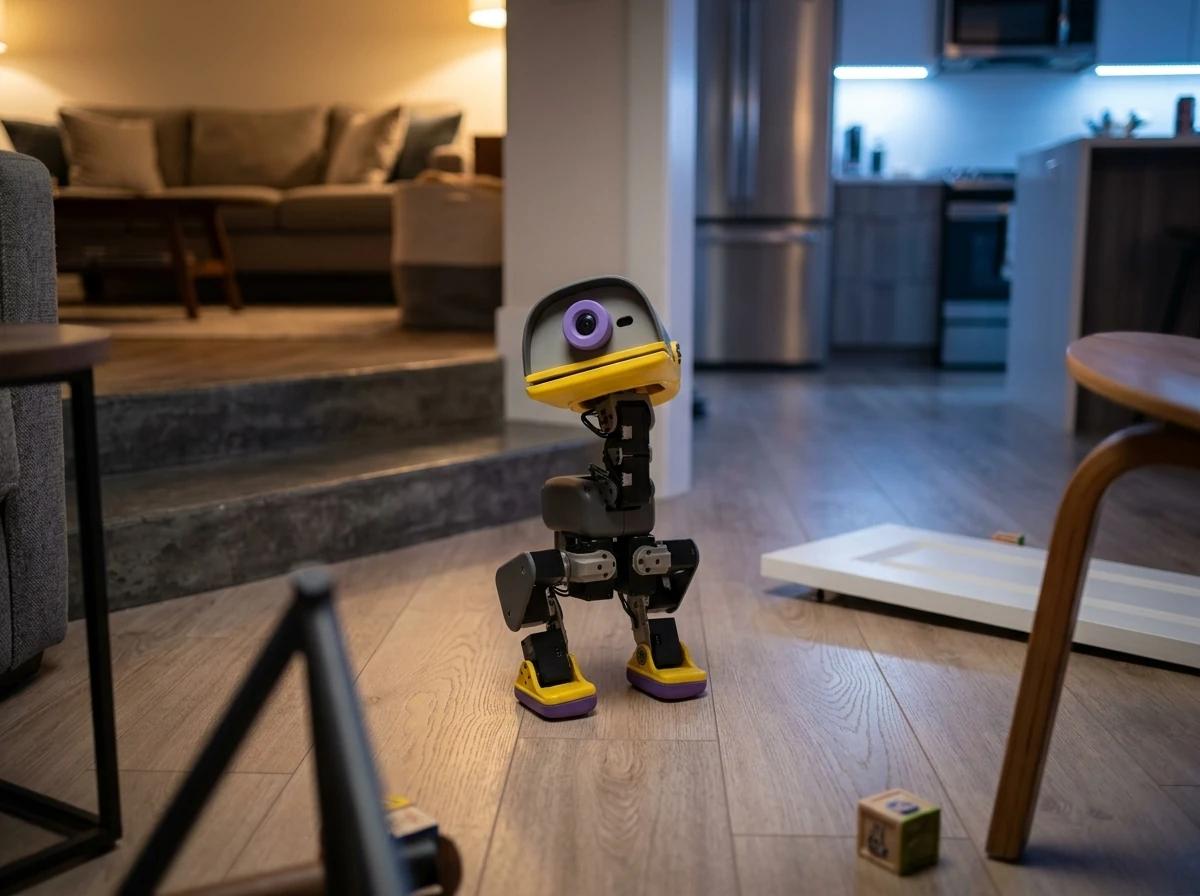
You can watch it move around your desk.
You can experiment with the built-in behaviors.
You can see it interact with objects.
You can make simple challenges.
You can let someone else try the controller.
You can simply watch what happens when the robot moves through a physical space.
The important point is that none of these activities depend on understanding reinforcement learning.
You are interacting with the output of the system rather than building the system yourself.
When Does Coding Actually Become Important?
The boundary appears when your question changes.
At first you ask:
"What can this robot do?"
Then you start asking:
"What can I make this robot do?"
That second question is where the technical work begins.
Maybe the built-in movement is not enough.
Maybe you want a different way for the robot to move.
Maybe you want to train a new behavior.
Maybe you want to test a different control strategy.
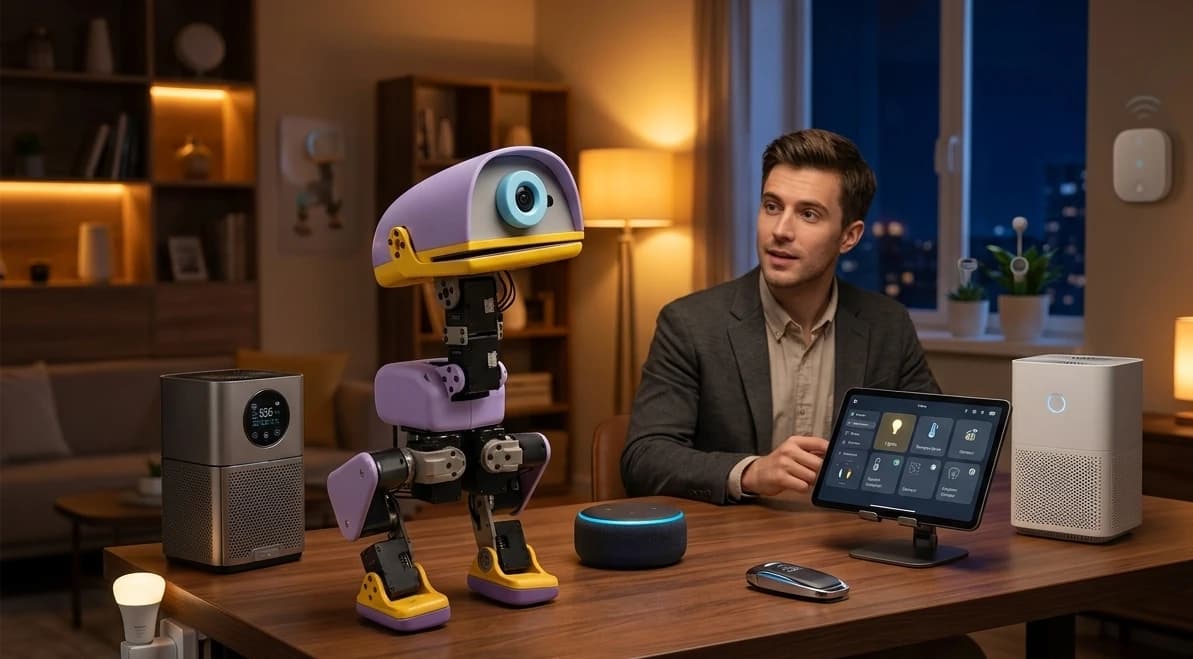
Maybe you want the robot to react to another system.
Those are developer questions.
And MicroDuck is intentionally designed to support them.
That is one of the main reasons to care about the open-source software stack.
This Is Actually One of the Better Things About the Product
A robot with two very different audiences can be difficult to design.
But it can also create an interesting ecosystem.
Developers can experiment with the robot.
Other owners can enjoy the results.
A new behavior does not necessarily need to be useful only to the person who created it.
Imagine someone builds a new movement or interaction and shares the policy.
A technical user gets a project.
A non-technical user gets something new to try.
That is the promise of an open consumer robotics platform.
But it is still a promise.
The software being open does not automatically create a large ecosystem.
Someone still has to build things.
Someone still has to share them.
Someone still has to find them useful or fun.
The Real Question for a Normal Buyer
For most people, I do not think the first question should be:
"Can I code?"
It should be:
"Would I enjoy this robot even if I never wrote a line of code?"
That is much more useful.
If the answer is no, the open-source stack will probably not save the purchase.
If the answer is yes, the software layer becomes a bonus.
And if you later become curious about how the robot works, there is somewhere to go.
Who Is MicroDuck Probably Good For?
I think MicroDuck makes the most sense for someone who falls into at least one of these groups:
- You like physical gadgets and small robots.
- You enjoy experimenting with new technology.
- You want a robot you can interact with rather than only watch.
- You are interested in AI and robotics but do not necessarily want a full research platform.
- You are a developer who wants a physical reinforcement-learning platform.
- You like products that can start simple and become more technical over time.
It makes less sense if you expect:
- a finished household assistant
- a replacement for a conversational AI
- a robot that becomes useful without experimentation
- a completely autonomous general-purpose machine
Those expectations are simply ahead of what the current product is.
The Harder Problem Is Not Coding
For a normal consumer, I think the bigger risk is actually this:
Will there still be something interesting to do after the initial novelty disappears?
A technically sophisticated robot can still become boring.
A simpler robot can remain interesting if it has:
- behaviors you enjoy
- interaction that feels natural
- new things to discover
- customization
- community-created content
- a reason to come back
That is why the software layer matters even to people who never touch the code.
You may not use the development tools.
But the things developers create can eventually affect the experience of ordinary owners.
My Take
You do not need coding skills to enjoy MicroDuck.
But you probably do need some curiosity.
The consumer experience is the first layer.
The open robotics platform is the second.
The first determines whether you enjoy owning the robot.
The second determines whether there is enough room for you to grow with it.
So I would not tell a normal buyer:
"Learn robotics before buying MicroDuck."
I would say:
Buy it because you like the robot you can get today. Stay interested because you like what the platform could become.
Those are different reasons to own it.
And for a product like MicroDuck, both matter.