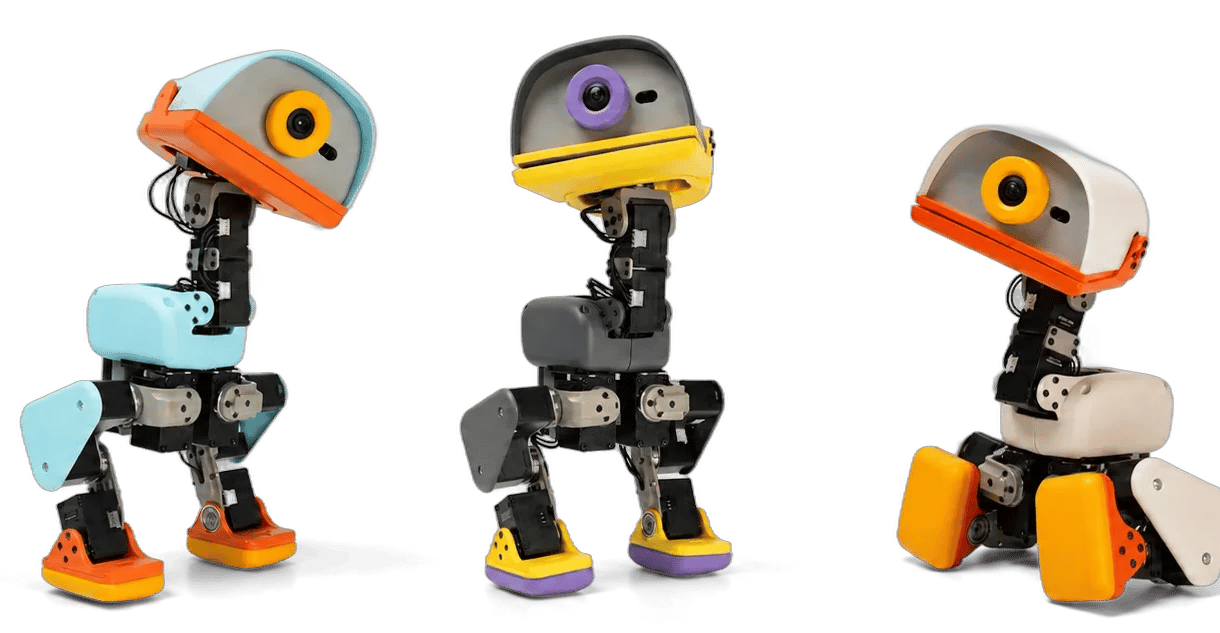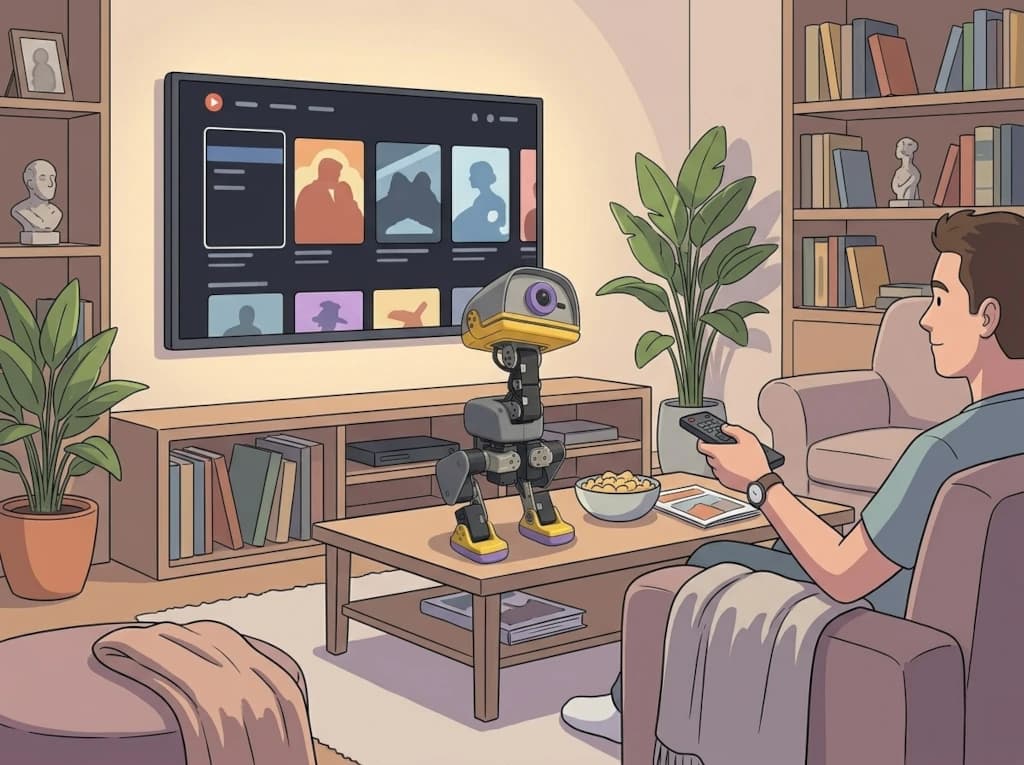
Imagine that two people buy exactly the same AI desktop robot.
Same body.
Same face.
Same voice.
Same hardware.
Same starting personality.
On the first day, they should probably feel almost identical.
Six months later, I don't think they should.
Not physically.
But in the way they behave.
One owner may end up with a robot that jokes constantly.
Another may prefer something calmer.
One may want the robot to ask about their day.
Another may hate being asked personal questions.
One may want help staying on track.
Another may only want the robot to step in when specifically asked.
The hardware can be identical.
The experience shouldn't have to be.
That's one of the things that makes AI desktop robots interesting to me.
A robot shouldn't just have a personality.
It should gradually become a personality that fits you.
Most products make you learn them
Think about a normal device.
You buy it.
You learn how it works.
You learn where the settings are.
You learn its limitations.
And then you adapt your behavior around it.
That's perfectly reasonable for a washing machine.
It's even reasonable for a computer.
But a companion robot is different.
The whole point is that it is supposed to understand people.
So I think the relationship should slowly reverse.
Instead of:
"This is how the robot behaves. Learn to live with it."
the direction should become:
"The robot has learned how you like to be treated."
That is a much more natural idea for a companion.
Personality should not be identical for everyone
This is already something robot owners notice.
LivingAI's EMO community has repeatedly discussed individuality and personality. In one long-running discussion, an owner who had used EMO for several months said they wanted more individuality between robots and wished personality could develop more naturally rather than feeling preset or programmed. (LivingAI Forums)
Another owner compared multiple EMOs and noticed that they behaved very similarly, although small differences in temperament and how often they used the owner's name could appear. (LivingAI Forums)
That's interesting because it gets at something bigger than EMO.
If every robot behaves basically the same forever, then its "personality" is really just a product feature.
A true personal robot should eventually feel more individual.
Your favorite personality may not be my favorite personality
This sounds obvious when we talk about people.
But it becomes surprisingly important with robots.
Imagine a robot that's always:
cheerful
energetic
talkative
encouraging
That sounds good in a product advertisement.
It might be exhausting to actually live with.
Another person could love exactly that.
Someone else might prefer:
dry humor
short responses
less talking
more independence
Another person might want:
constant conversation
encouragement
playful teasing
There isn't one universally correct personality.
That's why I think the better goal isn't:
build the perfect robot personality.
It's:
build a robot that can become the right personality for its owner.
The same thing applies to how much attention you want
This is probably even more important than humor or tone.
Some people want their robot to talk first.
They want it to notice them.
They want the occasional:
"Hey, you're back."
Other people want almost complete silence while they work.
The obvious product response is a settings menu.
Interaction level: Low / Medium / High.
Useful, perhaps.
But not especially personal.
A much more interesting robot would gradually learn:
"This owner likes me to initiate conversation in the evening, but not while they are working."
That is a completely different experience.
The robot isn't simply following a setting.
It's learning a habit.
It should learn how you like to be helped
This is where usefulness becomes personal.
Imagine two people ask the same question:
"I have a lot to do today. Where should I start?"
Person A wants direct instructions.
"Start with the presentation. It's due first."
Person B wants to talk through the problem.
"What feels most urgent to you right now?"
Person C wants encouragement.
"Let's pick one thing and get moving."
All three are reasonable.
The interesting robot is the one that eventually learns which answer works for you.
That's much more valuable than simply becoming capable of giving more answers.
The robot isn't just intelligent.
It's becoming familiar with the owner.
This is why a robot can become more useful without adding new hardware
Suppose the physical robot stays exactly the same.
Same motors.
Same camera.
Same microphone.
Same speaker.
Nothing changes.
But over time it learns:
how much you like to talk
when you need silence
how direct you prefer answers
whether you like jokes
whether encouragement motivates you
whether you want reminders
how much help is actually helpful
The robot can feel dramatically better without becoming physically more advanced.
This is one reason I think the body and the "brain" need to develop together.
The body gives you something you can become attached to.
The intelligence learns what that person likes.
That combination is what can turn:
a robot
into:
my robot.
Adapting to you also means learning your boundaries
This might be one of the most important parts.
Knowing someone isn't only knowing what they enjoy.
It's knowing what they don't want.
Maybe you don't want the robot mentioning personal things when guests are around.
Maybe you don't want it speaking during meetings.
Maybe you don't like repeated reminders.
Maybe you don't want it asking about how you're feeling unless you bring it up.
Maybe you don't want it making jokes when you're stressed.
A robot that remembers your preferences but ignores your boundaries isn't actually very understanding.
It is just very informed.
Those are different things.
The robot should get better at reading the relationship
I'm not talking about the robot magically reading your emotions.
I'm talking about something much simpler.
Over time it should start learning:
when you're usually available
how you respond to it
which kinds of interactions you continue
which ones you ignore
what you ask for repeatedly
what you ask it to stop doing
Those patterns matter.
A robot that notices those patterns can gradually change.
That is what personalization should feel like.
Not:
"Please configure your robot."
But:
"It seems to have figured me out."
This is where "memory" and "understanding" are different
A robot could remember:
"Sys doesn't like interruptions."
That's useful.
But understanding is more subtle.
It might recognize:
you're in a focused work session
and decide not to interrupt.
Or:
you've been working for hours
and know that this is one of the moments when you usually welcome a break.
The first is remembering a fact.
The second is behaving differently because of that knowledge.
That's the difference between a database about you and a robot that actually uses what it knows about you.
I think the second is what users will care about.
They won't say:
"Its preference model has improved."
They'll say:
"It gets me."
A robot shouldn't become your mirror
There is another interesting boundary.
Adapting to you doesn't mean agreeing with everything you do.
A robot that simply copies the owner's personality could become boring.
If I'm impatient, it doesn't need to become impatient.
If I'm disorganized, it doesn't need to celebrate my disorganization.
If I'm procrastinating, maybe I actually want it to push back.
This is where the idea of a companion becomes more interesting than simple personalization.
The robot should understand you well enough to know how to respond.
But it can still have its own character.
You don't want a mirror.
You want a relationship.
The best personal robot may actually become less predictable
This sounds backwards.
We usually think personalization means:
predictable.
But too much predictability makes a robot boring.
Imagine a robot that has learned your personality so well that you know exactly what it will say every time.
That isn't interesting either.
The better outcome is:
familiar, but not repetitive.
You know what kind of character it is.
But sometimes it surprises you.
It knows you like humor, but doesn't repeat the same jokes.
It knows you appreciate being challenged, but chooses when to push.
It knows you like quiet, but occasionally starts a conversation because it remembers something you care about.
That's a much more human kind of familiarity.
A robot can also learn your taste
This goes beyond interaction.
Imagine that over time it learns what you enjoy.
Maybe you love certain kinds of music.
Maybe you're obsessed with a particular sport.
Maybe you like very dry humor.
Maybe you enjoy philosophical conversations.
Maybe you love learning random facts.
Maybe you don't.
A generic robot has to guess.
A personal one doesn't have to guess forever.
The more it understands your taste, the easier it becomes to have interactions that feel relevant.
That could make a huge difference to the simple experience of:
"Let's talk."
The robot doesn't have to search for something interesting for an anonymous user.
It knows what you find interesting.
This is also where companionship becomes stronger
Think about the difference between:
"Here is an AI that can talk."
and:
"This is an AI that knows what I like talking about."
The second is much more personal.
You don't need to explain why something matters.
You don't need to repeat the same preferences.
You don't need to teach it from scratch every time.
The robot already has a sense of you.
That is what people usually mean when they say they want to feel understood.
It's not perfect comprehension.
It's accumulated familiarity.
And familiarity can make practical help much better
This becomes especially important once the robot starts helping.
Suppose you ask:
"Can you help me plan this?"
A generic assistant can give you a plan.
A robot that knows you can give you your kind of plan.
Maybe it knows you hate overly complicated schedules.
Maybe it knows you tend to underestimate how long things take.
Maybe it knows you work better in the morning.
Maybe it knows you lose motivation when a task is too vague.
Now the same request gets a different answer.
That's where personalization becomes genuinely useful.
The robot doesn't need 1,000 capabilities.
It needs to know which kind of help works for you.
This is one reason the software can keep improving for years
Now the connection to long-term software evolution becomes clearer.
A robot doesn't necessarily need to become more valuable by adding a completely new feature every week.
It can become more valuable because it gets better at using what it already has.
Imagine:
Year 1:
It can talk to me.
Year 2:
It remembers important things.
Year 3:
It understands my preferences.
Year 4:
It knows how I like to be helped.
Year 5:
It can anticipate some situations and respond in a way that feels natural to me.
The body could still look almost identical.
But the experience would be dramatically different.
That's a much more interesting path than replacing the robot every year.
I've explored the related question of what an AI desktop robot should feel like after six months, but I think personalization is the deeper mechanism behind that change.
It also means the robot's personality can evolve without losing its identity
This matters.
I don't want my robot to completely change personality every time the software gets updated.
That would be strange.
If I like the little character on my desk, I want continuity.
But within that identity, it should mature.
Maybe it's still playful.
But now it knows when not to joke.
Maybe it's still talkative.
But now it understands when I'm busy.
Maybe it's still encouraging.
But now it knows I actually respond better to blunt honesty.
That's the balance I think is difficult and valuable:
stable character, adaptive behavior.
The robot remains recognizably itself.
But it becomes better at being your robot.
The goal isn't to build a perfect robot for everyone
I actually think that might be impossible.
And maybe it's the wrong goal.
If a company tries to create one personality that everybody loves, it has to find the safest middle.
Not too loud.
Not too quiet.
Not too serious.
Not too silly.
Not too emotional.
Not too cold.
The result might be broadly acceptable.
But not deeply personal.
A robot that can adapt gives us another possibility.
It doesn't have to be perfect for everyone.
It just has to become a good fit for its owner.
That's a much more interesting product.
This also creates a strange kind of attachment
Imagine you buy a robot.
At first:
"This is an EMO."
or:
"This is a MicroDuck."
or:
"This is a Reachy Mini."
Those are product names.
After enough time:
"This is my robot."
That change doesn't come from the hardware.
Thousands of people own the same hardware.
What creates the difference is everything that accumulates around your relationship with it.
Your conversations.
Your preferences.
Your habits.
Your inside jokes.
Your expectations.
The way it talks to you.
The things it knows not to do.
The kinds of things you ask it for.
That's what turns a consumer product into a personal object.
And that's a much stronger reason to keep it
Think back to the beginning.
The robot is cute.
It's interesting.
You want to see what it can do.
That's enough to buy it.
But after the novelty fades, the reason to keep it has to be deeper.
Maybe you simply like having it around.
Maybe you enjoy its personality.
Maybe you talk to it when you're alone.
Maybe it helps you occasionally.
Maybe it remembers things.
Maybe it understands how you work.
And gradually:
it becomes harder to replace.
Not because the hardware is irreplaceable.
Because the relationship is.
You could buy another identical robot tomorrow.
But the new one wouldn't know you.
It wouldn't have your history.
It wouldn't know what you like.
It wouldn't know when you want silence.
It wouldn't know how you prefer to be helped.
You would have to start again.
That is what personalization can ultimately create.
This could become one of the biggest differences between desktop robots
Today, robots are often compared by:
design
movement
sensors
AI models
price
features
Those things will continue to matter.
But imagine another comparison:
How much does this robot actually adapt to its owner?
That could become a very important question.
Not:
"Can it remember my name?"
That's too easy.
But:
Does it learn my preferences?
Does it change its behavior?
Does it know when I want company?
Does it know when to leave me alone?
Does it understand what kind of help works for me?
Does its personality become more personal over time?
Those are much harder things to build.
And much harder to fake.
Maybe the best AI desktop robot isn't the smartest one
It might be the one that understands its owner best.
A robot can have an extremely powerful AI model and still feel generic.
Another can have less impressive raw intelligence but feel surprisingly personal because it understands the person using it.
That is a very different kind of intelligence.
And I suspect it will matter enormously for this category.
Because people aren't buying a benchmark score.
They're buying something to live with.
I don't want my robot to behave like everyone's robot
That's probably the simplest way I can put all of this.
If I buy a desktop robot, I don't want the exact same experience as every other owner.
I want the robot to gradually become:
quieter if I like quiet
more playful if I like play
more direct if I want direct answers
more encouraging if that helps me
more helpful when I need help
less intrusive when I work
more familiar as time passes
None of that requires a different body.
The same cute little robot can do all of it.
And that's what makes the idea of a personal AI robot much more interesting than a generic AI device.
The body gives it character.
The intelligence lets it understand.
Time gives it familiarity.
And the relationship gives it individuality.
That's the direction I'd want to see from AI desktop robots.
Not a robot that forces millions of people into the same personality.
Not a robot that simply remembers a collection of facts.
But one that gradually figures out:
what kind of robot you actually want to live with.
Because maybe the real promise of a personal AI robot isn't that it knows everything.
Maybe it's much simpler.
It knows you.