The first day with an AI desktop robot is easy to imagine.
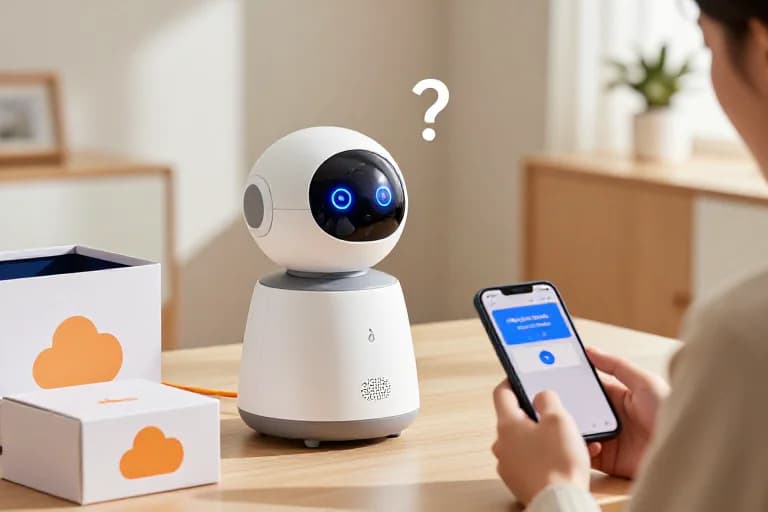
You open the box.
You see it move.
You talk to it.
It reacts.
You try everything.
You laugh at some of the things it does.
Maybe you show somebody else.
For a few days, the robot feels new almost automatically.
But six months is a completely different test.
By then, you've already seen the obvious movements.
You've already heard the same kinds of jokes.
You've already tested the things you were curious about.
The robot isn't new anymore.
So what should still make you want it on your desk?
I think the answer is much more interesting than:
more features.
A really good AI desktop robot should feel different after six months.
Not because the body changed.
Not because it has a hundred new tricks.
Because it knows you better.
Six months should not feel like day one
Imagine using a robot every day for half a year.
Now imagine saying:
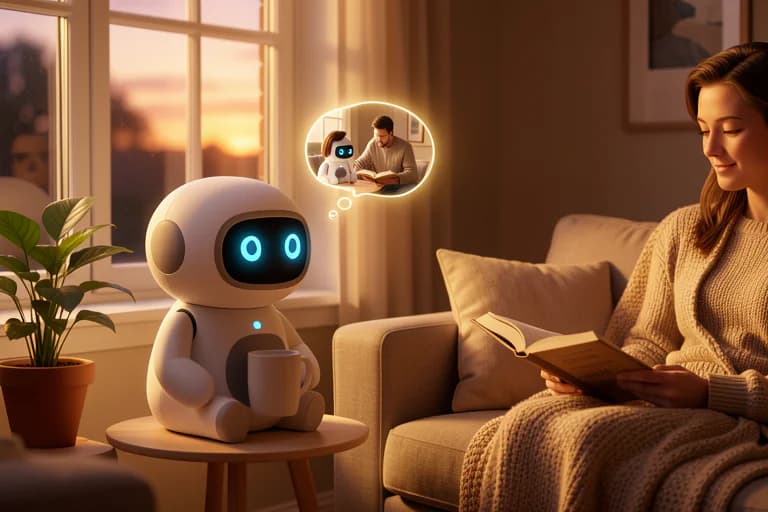
"You remember what I told you last week?"
And the robot genuinely does.
You don't have to explain your preferences again.
It knows how you like to interact.
It understands when you're busy.
It knows the kinds of things you actually enjoy.
It has learned what kind of help you find useful.
Maybe it even knows that some things you originally asked it to do were actually annoying.
That is what I mean by progress.
The robot doesn't just have more information.
The relationship has changed.
And if nothing about that relationship has changed after six months, I think something important is missing.
The body can stay the same
This is the part I think is easy to misunderstand.
I don't need the robot to look different after six months.
I don't need a new shell.
I don't need another screen.
I don't need twenty more physical behaviors.
The body is already doing something important.
It gives the AI a physical presence.
It makes it cute.
It gives it character.
It gives me something to look at.
It makes its reactions feel physical.
That's valuable.
In fact, that's probably the reason I wanted the robot in the first place.
But the body doesn't need to change every few months.
The relationship does.
That's a much more scalable kind of progress.
The first thing that should change is how well it knows you
Think about the difference between meeting someone today and knowing them for six months.
The second relationship has more history.
You know their habits.
You know what annoys them.
You know what they like.
You know when they're joking.
You know when they are busy.
You know what they've been talking about recently.
A robot should eventually develop some version of that familiarity.
Not in a creepy way.
Not by collecting every detail.
Just enough to make interactions feel less generic.
Maybe it learns:
you like short answers when working.
you don't want interruptions in the morning.
you enjoy talking at night.
you are preparing for something important next week.
you like the robot being playful when you're taking a break.
The important part isn't the individual facts.
It's the feeling that:
I don't have to keep introducing myself.
That's a very different kind of AI experience.
I've written about why this continuity matters in Why Does an AI Desktop Robot Need Memory?.
Here, I'm more interested in what that continuity should feel like from the owner's side.
It should stop treating you like a stranger
This is probably the simplest way to describe it.
A brand-new robot has to guess.
It doesn't know you.
It doesn't know what you like.
It doesn't know whether you want conversation or silence.
It doesn't know whether you think jokes are funny.
It doesn't know whether you enjoy being reminded about things.
So on day one, some awkwardness is normal.
But six months later?
I don't want it to still behave as if we've just met.
That would be disappointing.
A person would have learned something about me after spending that much time around me.
A robot with a continuously improving AI should be capable of something similar.
Not human memory.
Not human emotions.
Just familiarity.
Familiarity is more valuable than endless novelty
This is where I think a lot of product design can go wrong.
The easiest way to show progress is:
Here are five new things the robot can do.
That's easy to market.
But I'm not sure that's what makes a companion better.
I would rather have a robot that has become noticeably better at understanding me than one with fifty additional games I never asked for.
New experiences are great.
But there is another type of improvement that is harder to advertise:
the robot now understands what kind of interaction I actually want.
That's much more valuable over time.
One is:
"Look what it can do now."
The other is:
"It knows me better now."
The second is much closer to companionship.
Users are already noticing when that doesn't happen
This isn't just a theoretical concern.
A LOOI owner wrote that they were tired of the robot repeatedly presenting itself as endlessly sweet and wanted something more like a sidekick that could actually adapt to them instead of repeating the same personality routine. (Reddit)
That's an important complaint.
The problem isn't that the robot has a personality.
The problem is that the personality can feel fixed.
If the robot acts exactly the same way with everyone, after enough time it starts feeling like a character you bought rather than a companion you got to know.
That's a subtle but important difference.
Your robot should gradually become "your" robot
Take two people.
Give them exactly the same robot.
Same hardware.
Same starting personality.
Same basic capabilities.
Six months later, I think they should ideally feel like different robots.
Not physically.
Experientially.
One owner might end up with a robot that is:
more playful
more talkative
more encouraging
Another might prefer:
quieter
more direct
more work-focused
Another might want:
more jokes
more curiosity
more spontaneous interaction
The product doesn't necessarily need a giant settings panel asking you to configure all of this.
The robot should gradually learn.
That's what makes personalization feel natural.
It should also learn what you don't like
This is just as important.
People often think personalization means:
remember what I like.
I think it also means:
remember what I don't like.
Maybe you hate constant interruptions.
Maybe you don't want the robot talking during meetings.
Maybe you don't like being reminded about something more than once.
Maybe you don't enjoy a certain type of joke.
Maybe you don't want it asking personal questions.
A robot that learns only your preferences but never learns your boundaries isn't actually understanding you very well.
That's why a good companion needs restraint.
The more it knows you, the less it should need to bother you.
The robot should get better at being quiet
This is one of the strongest signals from actual owners.
One LOOI owner described turning their robots off when they weren't actively using them because unwanted movement and speech could become distracting. (Reddit)
That's not a failure of physical robots.
It's a failure of knowing the person and the situation.
A robot that has spent six months around you should understand more than:
"The owner is here."
It should eventually learn:
"The owner is working."
Or:
"The owner wants company."
Or:
"The owner isn't in the mood."
Or simply:
"Nothing needs to happen right now."
That's a much more mature form of intelligence.
It should know when you want a friend and when you want help
This is where your relationship with the robot can become much richer.
One moment:
"Did anything interesting happen today?"
You talk casually.
Twenty minutes later:
"I need to finish this presentation."
The robot changes gears.
Maybe it helps you practice.
Maybe it reminds you about something you wanted to cover.
Maybe it asks you a difficult question.
Then you're done.
You go back to talking about something random.
That isn't two separate products.
It is the same relationship.
That's the part I think makes the desktop robot category interesting.
The robot doesn't need to choose one identity forever.
It can be:
companion
secretary
coach
friend
helper
depending on what you need at that moment.
The personality stays.
The role changes.
That's very different from adding productivity features
This distinction matters.
I don't think the goal is to turn the robot into:
a calendar
task manager
email client
project-management tool
That misses the reason to have the physical robot in the first place.
I already have a computer.
What I want is for the robot to sit alongside it and help when that help actually matters.
Maybe:
"What was I supposed to remember today?"
Maybe:
"Can you help me prepare for this?"
Maybe:
"Tell me when I've been working for too long."
Maybe:
"What did we decide yesterday?"
Maybe:
"I can't figure out where to start."
These are human requests.
The robot's job isn't to replace the software on my computer.
Its job is to understand the situation well enough to help me through it.
And this is where continuous improvement becomes important
Imagine two robots.
After six months:
Robot A has received lots of new features, but every interaction still feels basically the same.
Robot B hasn't changed much physically, but it:
remembers your preferences better
understands your requests more accurately
knows when to interrupt
knows when not to
gives better answers
helps with more situations
behaves more naturally around you
Which one feels like it has improved more?
I would choose Robot B.
Because that's the kind of progress you actually feel.
The product hasn't merely accumulated functions.
It has become better at being with you.
This is where the software has to keep evolving
I know this article isn't really about software.
From the owner's perspective, it shouldn't be.
The owner shouldn't have to care what model is running, how the memory system works, or how the underlying architecture is designed.
They should simply notice:
"It gets me better than it used to."
That's the real meaning of software evolution in a consumer robot.
Not:
version 3.2
Not:
17 new APIs.
Not:
another developer feature.
The owner experience should be:
Yesterday it understood me. Today it understands me a little better.
That's the improvement that matters.
A good robot should also become more useful because it knows you
This is where familiarity turns into practical value.
Suppose the robot learns that you always prepare presentations the night before.
At first, it can only respond when you ask for help.
After months of knowing you, perhaps it can recognize the pattern.
Not by bossing you around.
Just by noticing:
"You're preparing that presentation again."
That can lead to a much better interaction.
It might remember how you prepared last time.
It might know what you struggled with.
It might know that you prefer being challenged rather than encouraged.
Now the help is personalized.
That's very different from simply having "presentation assistance" as a feature.
The robot isn't just capable of helping.
It knows how to help you.
This is also why the robot can become more interesting without becoming more complicated
A lot of people assume that a more capable robot has to be more complicated to use.
I think the opposite could happen.
The smarter it gets, the simpler the interaction should feel.
Today:
explain what you want
Tomorrow:
say half a sentence
Eventually:
the robot understands what you mean.
That's real progress.
Not because the user learned how to operate a smarter system.
Because the robot learned enough that the user doesn't have to explain everything.
I don't think a robot should try to "know everything" about you
There is an important boundary here.
I wouldn't want a robot collecting every detail of my life just because it can.
Knowing someone isn't the same thing as recording everything.
The robot should remember things that improve the relationship or help in useful situations.
And it should give the owner meaningful control over what is retained.
That's particularly important because companion robots can become much more personal than ordinary gadgets.
They may hear conversations.
They may observe the environment.
They may know routines.
They may learn preferences.
So the more personal the relationship becomes, the more important it is that the user remains in control.
The goal isn't:
the robot knows everything.
It's:
the robot knows enough to understand me better.
The first six months should feel like the beginning of something
This is probably the biggest thing I'd want from a future AI desktop robot.
I wouldn't want day one to be the peak.
I'd want day one to be the beginning.
The robot arrives.
It's cute.
It's fun.
You play with it.
Then you start talking to it.
Then it learns how you like to interact.
Then it starts remembering things.
Then it helps occasionally.
Then it becomes part of your routines.
Then it surprises you.
Then one day you realize you've stopped thinking of it as:
"the robot I bought."
You're thinking:
"my robot."
That's a huge difference.
The body gives you the first reason to care
This is why I don't think software should replace the physical side of the product.
The body matters enormously.
A cute robot is easier to love than a black box with a speaker.
A robot that looks at you feels different from a chatbot.
A small movement can make a response feel personal.
A strange little habit can become part of its character.
Those things matter.
The body is what makes the relationship possible in the first place.
But it cannot carry the entire relationship forever.
The brain is what allows the relationship to grow
This is where the other half comes in.
A smart robot shouldn't just know more facts.
It should understand you better.
It should gradually learn:
what you like
how you communicate
when you want help
when you want company
what you are working on
what you don't like
what matters to you
And it should use that understanding to make future interactions better.
That is what makes an AI desktop robot different from a cute animated object.
The body creates the character.
The intelligence creates familiarity.
And familiarity creates the possibility of a relationship.
Six months later, I want to notice the difference
That's the test.
Not:
How many features were added?
Not:
How many updates did the company ship?
Not:
How many applications exist?
I'd ask something much simpler:
If I used this robot every day for six months, would it feel like it knows me better than when I first bought it?
And:
Would it actually make my life easier in ways that are specific to me?
And finally:
Would I still enjoy having it there?
If the answer to all three is yes, then I think something special is happening.
The robot hasn't just become smarter.
It has become more familiar.
It has become more useful without becoming less fun.
It has remained a companion instead of turning into a boring tool.
And that, to me, is what long-term AI desktop robot ownership should look like.
The hardware can stay almost the same.
The little body can still be cute.
It can still make you laugh.
It can still sit quietly on the desk.
But six months later, when you talk to it, you shouldn't feel like you're meeting the same robot everyone else bought.
You should feel like you're talking to yours.