A robot can talk to you without knowing you.
It can answer questions.
It can tell jokes.
It can recognize your face.
It can even have a personality.
And yet, after a few days, something can still feel wrong.
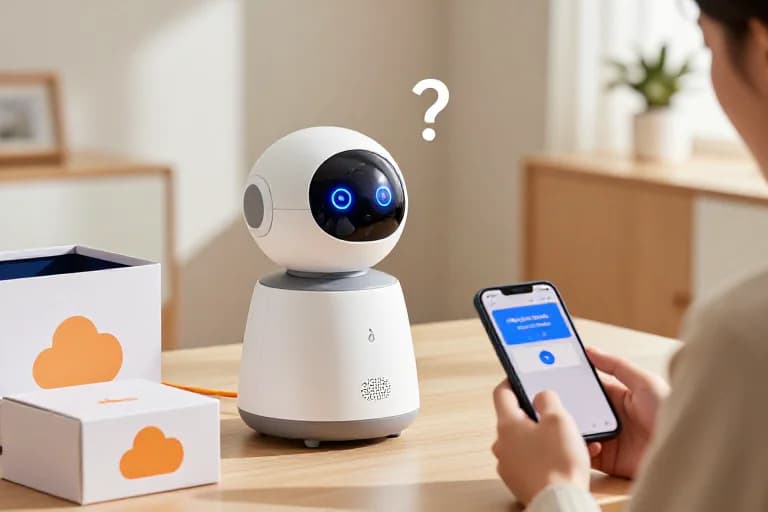
You tell it something on Monday.
On Tuesday, it acts like you've never mentioned it.
You explain the same preference again.
Then again.
Eventually, you stop thinking:
"This is my robot."
and start thinking:
"This is a machine I talk to sometimes."
I think memory is one of the biggest differences between those two experiences.
Not because memory makes a robot smarter in some abstract AI benchmark.
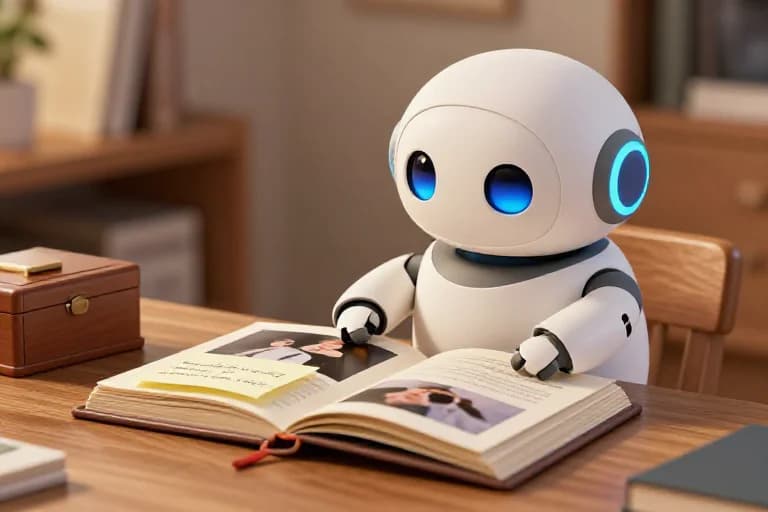
Because memory gives interactions continuity.
And continuity is what makes a long-term relationship possible.
A robot that forgets everything has a strange problem
Imagine meeting someone who has an excellent conversation with you every time.
They're funny.
They're knowledgeable.
They understand what you say.
They always respond quickly.
But every morning they forget your name.
Every afternoon they forget what you talked about earlier.
Tomorrow they won't remember that you hate pineapple.
Next week they won't remember the thing you were excited about.
Would you say that person knows you?
Probably not.
They are good at conversation.
They just don't have continuity.
That's basically the problem an AI robot can have.
The robot might be extremely capable at the moment you are talking to it.
But if every interaction is isolated, the experience never really accumulates.
It doesn't build on yesterday.
It doesn't learn what matters to you.
It doesn't become more familiar.
It keeps resetting.
And for a robot that is supposed to live on your desk for months or years, that seems like a pretty serious limitation.
Memory is different from context
This distinction is worth making because the two are often mixed together.
Suppose you tell an AI:
"I'm working from home today."
It can use that sentence to answer your next question.
That's context.
Now imagine you come back three days later and the robot still knows that you usually work from home on Fridays.
That's memory.
The difference is time.
Context helps with:
this conversation.
Memory helps with:
your ongoing relationship.
A desktop robot needs both.
And the second one is much harder.
What should a robot actually remember?
This is where I think the discussion gets more interesting.
"Memory" sounds like one feature.
It isn't.
There are many different things a robot could remember.
For example:
Basic identity
Your name.
What you call the robot.
Who the other people around you are.
Preferences
Your favorite music.
Whether you like reminders.
Whether you want the robot to talk a lot or stay quiet.
Routines
When you usually work.
When you normally go to sleep.
When you tend to interact with the robot.
Important past events
Something you were worried about.
A trip you were planning.
An important appointment.
Something you told the robot you wanted to do.
Relationship history
An inside joke.
A recurring topic.
A nickname.
Something the robot did that you liked.
That last category is easy to underestimate.
A memory doesn't always have to be "useful" in the traditional sense.
Sometimes remembering a small thing is what makes the interaction feel personal.
The problem with remembering everything
But here is where I think AI products can go wrong.
More memory isn't automatically better.
Imagine a robot storing every sentence you have ever said.
Every random thought.
Every joke.
Every conversation.
Every background sound.
Every question.
Every complaint.
That sounds impressive until you actually think about living with it.
What happens when you say something casually and the robot brings it up six months later?
What happens when it remembers something you expected to disappear?
What happens when it remembers the wrong thing?
What happens when its memory is so large that it starts pulling irrelevant information into every conversation?
You don't want a robot that remembers everything.
You want a robot that remembers the right things.
That's much harder.
Good memory is selective
Think about how people remember each other.
You probably don't remember every sentence a friend has ever said to you.
You remember:
important things
repeated preferences
meaningful events
habits
jokes
things that changed the relationship
And you forget a lot of meaningless detail.
A useful robot probably needs something similar.
Not human memory.
Not fake human memory.
Just a practical system for deciding:
What should be kept?
What should be forgotten?
What should be temporary?
What should be easy for the user to correct?
Those are product questions, not just AI questions.
Memory could change how a robot behaves
This is where memory becomes much more interesting than a simple profile.
Imagine you tell your robot:
"I usually don't want to be interrupted while I'm working."
A basic assistant can store that as a preference.
A better robot could use it as part of its behavior.
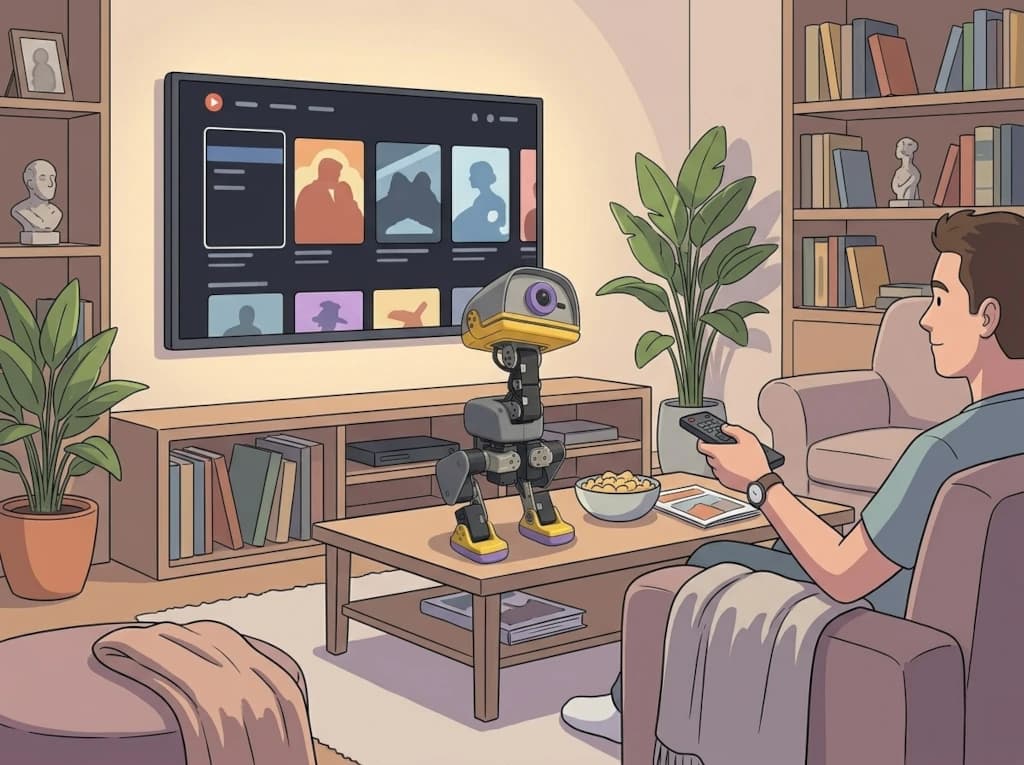
You sit down at your desk.
The robot sees you are working.
It doesn't immediately start talking.
Then later, you stand up.
Maybe that's a better moment to interact.
The information itself isn't complicated.
The important part is that the robot uses it when deciding what to do.
That changes memory from:
stored information
into:
behavioral context.
And I think that distinction is very important for physical robots.
A robot doesn't just need to remember facts.
It needs to use those facts when deciding how to behave.
This is where memory starts connecting to personality
People often talk about personality as though it is just a prompt.
For example:
"You are a funny robot."
That's a starting point.
It isn't enough.
Imagine two robots with the exact same base personality.
One remembers that you like dry humor.
The other keeps making jokes you don't like.
One remembers that you prefer short conversations in the morning.
The other acts exactly the same at 8 AM and 11 PM.
One remembers your favorite movie.
The other asks you again every week.
Eventually, they will feel like different personalities.
Not necessarily because their underlying model changed.
Because their history is different.
That history changes how they interact with you.
So I think personality and memory are much more connected than the usual product pages make them sound.
This is already a real issue in AI companions
You don't have to own a robot to see the problem.
AI companion users talk about it constantly.
Across companion communities, recurring complaints include memory failures, personality drift, repetitive conversations, and the feeling that an AI becomes a different character after an update or after enough time has passed.
One recent discussion was almost exactly about this problem:
an AI remembers facts, but still doesn't feel like the same person over time.
Another recent thread described users becoming attached to an AI companion's particular personality and then feeling that something was wrong when an update changed how it talked or what it remembered.
I find that useful because it shows something important.
People don't necessarily care about:
"Does this product have a memory feature?"
They care about:
"Does this thing still feel like the same thing tomorrow?"
That's a much better question.
A desktop robot makes the problem even bigger
An AI companion living inside an app can survive with weak memory for a while.
A physical robot is different.
It is sitting in your environment.
You see it every day.
It may recognize you.
It may have a specific place on your desk.
It may develop routines.
It may react to what is happening around it.
That makes the absence of memory more noticeable.
Imagine your robot greeting you every morning.
At first, that's cute.
After several months, you expect it to know something about your routine.
Not everything.
Just enough.
If it continually behaves like today is the first day you met, the physical presence starts working against it.
The body says:
"I've been here the whole time."
The software says:
"Who are you again?"
That's a weird combination.
LOOI is a good example of where the category is going
LOOI currently markets an "Empathetic Memory" feature as part of its companion experience, alongside conversation, personality and visual awareness.
Its privacy policy goes further and explains that conversation history and LOOI's memory are handled as an integrated memory system associated with the user's account, with relevant memory potentially being provided to its cloud AI service when generating responses.
That detail is actually more interesting than the marketing phrase "memory."
Because once memory becomes persistent, you immediately get other questions:
Where is it stored?
Who controls it?
What can the robot remember?
Can I delete individual memories?
Can I see what it remembers?
Does an update change how old memories are interpreted?
What happens if the company shuts down?
Memory isn't just a feature.
It's part of the relationship architecture.
There are already people building around this problem
And this isn't limited to commercial robots.
The DIY AI companion community keeps arriving at the same architecture independently.
One recent project described a companion system built around long-term memory, voice, personality and autonomous behavior, with the creator concluding that memory and continuity were much more important than simply making the conversation model larger.
Another project explicitly started because its creator was frustrated that AI companions forgot important details across conversations, then built persistent memory as the central part of the system.
And one of the more interesting discussions was from someone building an AI companion with a robot body, where the software stack included long-term memory, face tracking, voice, tasks, and eventually a mobile robot body.
I don't think all of these approaches are necessarily correct.
That's not the point.
The interesting part is that different people keep arriving at the same problem:
How do you make an AI system continue from yesterday instead of starting from zero?
That is not going away.
Memory also creates a privacy problem
The more useful the memory becomes, the more personal it becomes.
A robot that remembers:
your name
is one thing.
A robot that remembers:
your habits
is more personal.
A robot that remembers:
your conversations
is more sensitive.
A robot that combines memory with:
camera
microphone
home information
location
smart-home access
becomes something else entirely.
At that point, "Does the robot have memory?" is no longer enough.
You need to ask:
Whose memory is it?
That sounds philosophical.
It is actually a product question.
Can the owner inspect it?
Can the owner correct it?
Can the owner delete it?
Can the owner export it?
Is it stored locally?
Is it stored in the cloud?
Which parts are sent to an external AI provider?
For a robot that lives in your home, I think these questions will eventually be as important as whether it has a good camera.
A robot should probably let you edit its memory
This is something I would personally want.
Imagine the robot says:
"You don't like coffee."
You reply:
"Actually, I do now."
The system should not continue treating the old information as truth forever.
Or:
"Don't remember that."
You should be able to say that.
Or:
"What do you remember about me?"
The robot should be able to tell you.
That sounds obvious.
But it changes the relationship.
The robot isn't secretly building an invisible profile that you have no control over.
You are participating in the memory.
There is even current research in human-robot interaction looking at more transparent and co-constructed robot memory, specifically because memory affects continuity, trust, and the user's ability to control what the robot remembers.
I think that is the right direction.
Memory doesn't need to mean a giant database
This is another misconception.
A good memory system doesn't necessarily need to store everything.
It could be a small number of useful layers.
For example:
Short-term
What is happening right now?
Recent
What happened during the last few interactions?
Long-term
What should the robot continue to know about you?
Relationship
What has become meaningful over time?
Preferences
How do you like the robot to behave?
The implementation can be complicated.
The user experience should not be.
A normal person shouldn't have to know what a vector database is.
They should be able to say:
"Remember that I work late on Tuesdays."
and have the robot understand what that means.
That's the product.
Not the database.
And memory alone still isn't enough
This is important.
A robot can have perfect memory and still be annoying.
Imagine it remembering:
everything.
But never knowing when to use it.
Or constantly saying:
"You told me three months ago that..."
That wouldn't feel intelligent.
It would feel like being monitored by a database.
Memory only becomes valuable when it improves behavior.
That means the robot needs some concept of:
relevance.
Something you said three months ago shouldn't be injected into today's conversation just because the system found a semantic match.
It should matter.
That's a harder problem.
And it connects memory directly to:
context
personality
timing
decision-making
initiative
This is why I don't think the future "robot brain" can just be an LLM with a memory plugin.
There is a larger system underneath it.
What should a robot remember about me?
I think a useful rule is:
Remember things that make future interactions better.
Not:
Remember everything you possibly can.
That could include:
Things I explicitly ask it to remember
This should be the easiest category.
"Remember my birthday."
"Remember that I prefer the lights dim after 10 PM."
Stable preferences
Things that are likely to remain useful.
favorite music
preferred interaction style
recurring routines
Repeated patterns
Things the robot has observed often enough to become useful.
But this should probably require more confidence than a single observation.
Important events
Things that have a clear reason to matter later.
Relationship context
Inside jokes.
Names.
Shared experiences.
Things that make interactions feel less generic.
And there should also be things the robot deliberately does not remember.
That's just as important.
Maybe the real feature isn't memory
This is where I would take the idea one step further.
Maybe users don't actually want:
a robot with memory.
Maybe they want:
a robot that knows what matters.
Those sound similar.
They are not.
A database can remember.
A useful robot needs to decide:
what matters,
how long it matters,
when it should be used,
when it should be ignored,
and when it should be forgotten.
That is much closer to intelligence.
And it is also much closer to what makes a robot feel like it is developing a relationship with you.
Think about the difference after six months
This is the test I would use.
Don't ask:
"How impressive is the first conversation?"
Ask:
"What happens after six months?"
Imagine two robots.
Robot A
Amazing first conversation.
Great voice.
Great LLM.
Funny responses.
Beautiful expressions.
But every week, it feels roughly the same.
Robot B
Good conversation.
Nothing spectacular on day one.
But after six months:
It knows your habits.
It remembers your preferences.
It has learned when you like to interact.
It knows which jokes work.
It recognizes familiar situations.
It has developed patterns that are specific to you.
The second robot might actually feel more special.
Not because its AI model is necessarily better.
Because your history with it has become part of the software.
That is a powerful idea.
This could become especially important for physical AI
A chatbot can already remember you.
So why put the memory inside a robot?
Because the robot can connect memory to the physical world.
Imagine:
"You usually work here in the afternoon."
That's a memory.
Now the robot sees you sitting at that desk.
That's perception.
Now it decides:
"Probably don't interrupt."
That's context.
Then later:
you leave the desk.
Maybe the robot knows that's a better moment to say something.
That's behavior.
The pieces connect:
memory → perception → context → decision → action
Now memory isn't just a database.
It is part of the robot's ongoing behavior.
That is where things start getting interesting.
The community is already moving in this direction
One recent project used long-term memory, voice, personality and autonomous behavior together rather than treating memory as an isolated feature.
Another described the goal of building an AI companion that doesn't constantly reset its relationship after every conversation.
And current consumer products are beginning to advertise persistent memory directly as part of the companion experience. LOOI, for example, currently describes memory as part of its core interaction system.
That doesn't mean the problem is solved.
Actually, I think it means the opposite.
The market is starting to discover that memory matters.
We're still figuring out what good memory should look like.
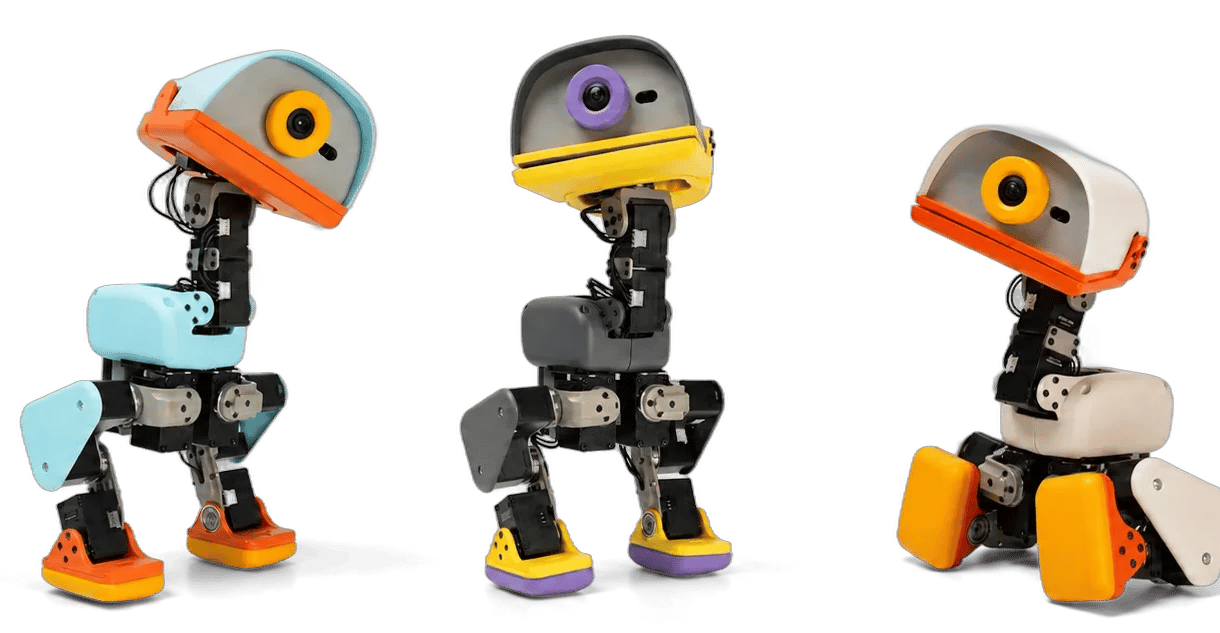
What about MicroDuck?
I would be careful here.
MicroDuck's current appeal is still much more strongly tied to its physical capabilities, learned behaviors, open software stack and what people might eventually build around it. Pollen has not positioned the current preorder product as a finished AI companion with a mature long-term personal memory system.
So I wouldn't look at MicroDuck and say:
"It needs memory right now."
That's not really the point.
The more interesting question is:
"If a physical robot eventually becomes a companion, what would allow that relationship to persist?"
Memory is probably one of the answers.
And MicroDuck is a particularly interesting platform to think about because its open software architecture leaves room for other systems to sit above the physical robot. Pollen's architecture explicitly describes external software, including higher-level programs such as LLMs, observing and controlling the robot.
That makes the software layer unusually important.
My take
I don't think memory is the single most important feature of an AI desktop robot.
But I do think it is one of the features that becomes much more important the longer you keep the robot.
On day one, you care about:
Does it move?
Does it talk?
Is it cute?
What can it do?
After six months, different questions start to matter:
Does it know me?
Does it remember what matters?
Does it behave consistently?
Has it become more useful?
Does interacting with it feel different from interacting with a generic AI?
That's when memory becomes important.
Because the value of a desktop robot may not come from one amazing interaction.
It may come from hundreds of ordinary interactions slowly adding up.
That's something a chatbot can do.
A physical robot can potentially do it in a much more interesting way.
The question I'd actually ask
Forget:
"Does this robot have memory?"
Ask:
"Does its memory make tomorrow's interaction better than today's?"
That's the real test.
A robot that remembers everything but behaves exactly the same isn't particularly interesting.
A robot that remembers the right things, uses them at the right time, and gradually becomes more familiar with you is much closer to what I think people actually mean when they say:
"I want a companion robot."
And that is why I think memory deserves to be treated as part of the robot's brain, not just another checkbox on the product page.