Let's start with an uncomfortable question.
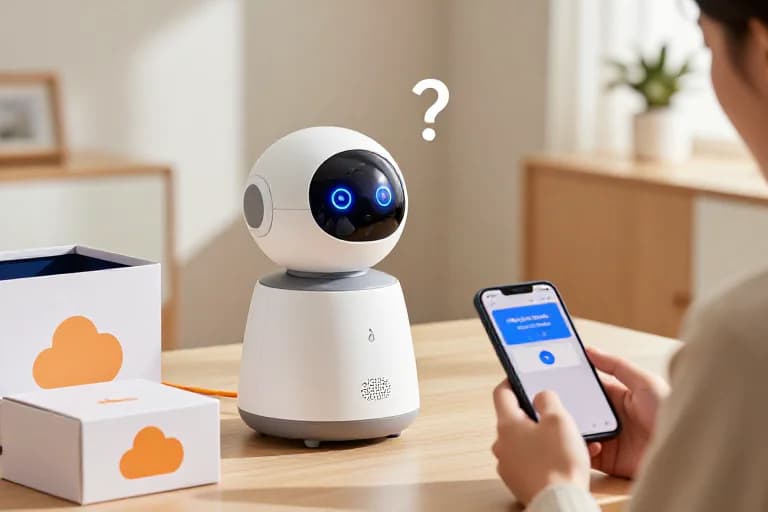
Why would anyone want a robot sitting on their desk?
You already have a phone.
You probably have a laptop.
You can talk to ChatGPT whenever you want.
You can buy a smart speaker for much less than a robot.
And if you need something genuinely useful, there are plenty of devices that will do a better job.
So why a robot?
I think the answer starts somewhere other than usefulness.
Maybe you just want one
This sounds like a bad argument for buying something that costs hundreds of dollars.
But consumer products are not always purchased because they solve a problem.
Sometimes you see something and immediately think:
"That's cute."
Then:
"I want one."
That's a real reason.
It may not be enough to justify a purchase by itself, but it is enough to make you stop scrolling.
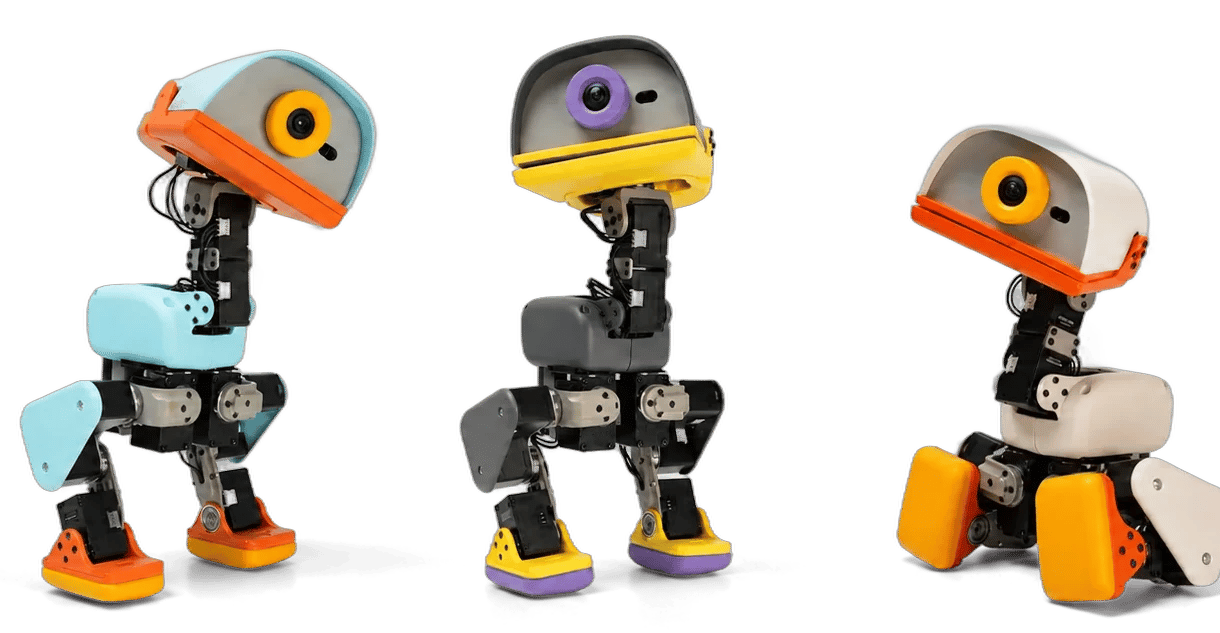
And this matters for desktop robots because they occupy a strangely personal space.
You're not looking at a robot in a factory.
You're not watching a humanoid robot demonstrate some impressive task ten meters away.
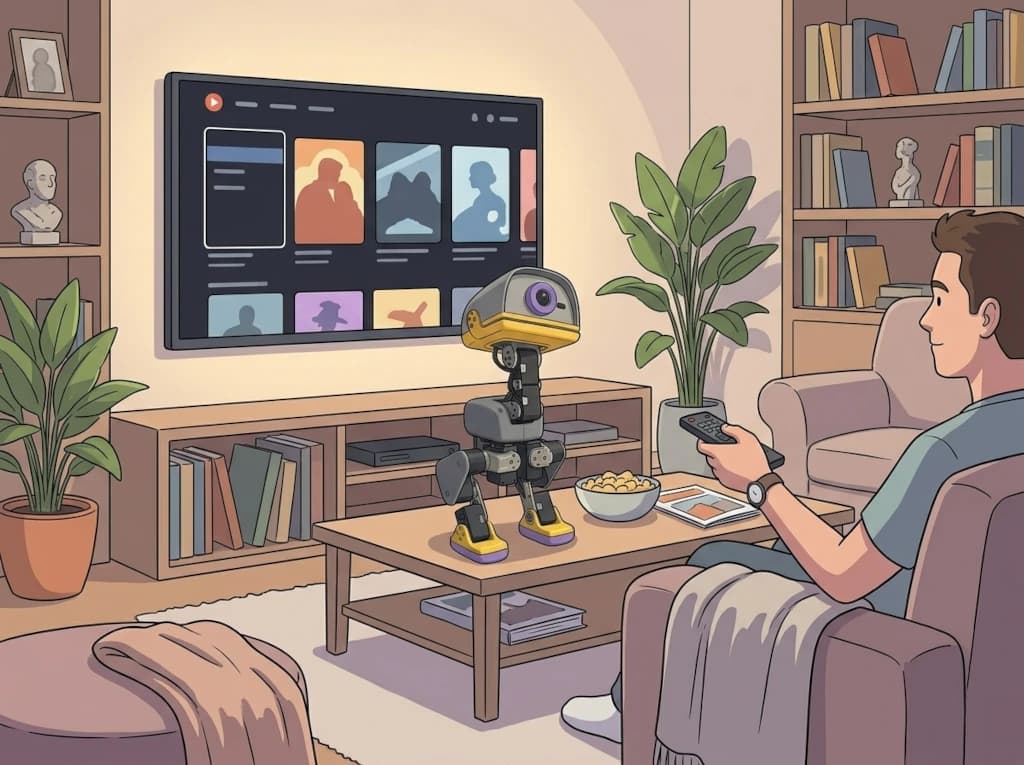
It is sitting next to your monitor.
It is small enough to become part of your desk.
That changes how you think about it.
The first attraction is probably not AI
This is where I think some robot companies overcomplicate things.
They talk about:
- AI models
- computer vision
- autonomous navigation
- sensors
- neural networks
- large language models
All of those things can be interesting.
But if a normal person sees a small robot for the first time, they may not think:
"Interesting multimodal embodied intelligence."
They think:
"That thing is adorable."
And that's fine.
Cuteness can be the front door.
The AI can be what keeps the door open.
Movement changes the equation
A picture of a cute robot is one thing.
Watching the same robot turn around, walk toward you, fall over, get back up, or react to something is different.
Movement gives the object a sense of presence.
It doesn't necessarily make the robot intelligent.
It doesn't automatically make it useful.
But it makes it harder to think of the object as just another screen.
A static AI device waits for you.
A physical robot can exist in the same space as you.
That difference is small technologically and surprisingly large psychologically.
Then comes play
This is the stage that a lot of people forget.
Before you expect a robot to become useful, you probably want to play with it.
You want to see what it does.
You want to discover what makes it react.
You want to try something and see what happens.
That is particularly important for consumer robots.
A robot needs to give you a reason to interact with it before it has earned your attention.
A good first interaction might be completely pointless.
Maybe it dances.
Maybe it rolls around.
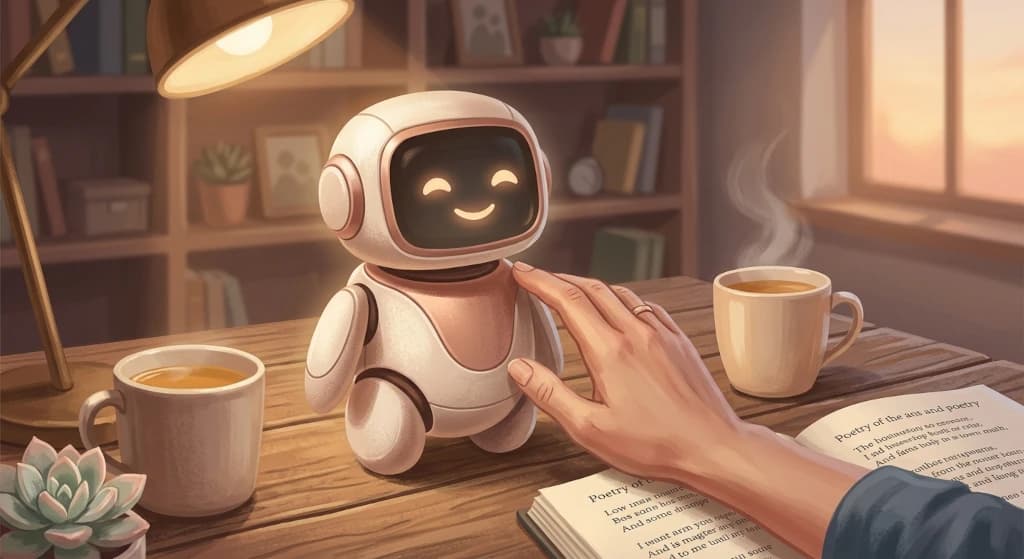
Maybe it reacts when you touch it.
Maybe it follows something.
Maybe it just makes a funny sound.
None of these things are going to change your life.
They don't need to.
They're there to make the robot interesting enough that you want to come back.
Then something more interesting can happen
If you keep interacting with it, the relationship can change.
At first:
"This thing is cute."
Then:
"This thing is fun."
Then:
"I know what it usually does."
Then:
"I want it to do something different."
And eventually:
"This is my robot."
That last step is where desktop robots have the potential to become a very different category from ordinary gadgets.
A gadget belongs to you because you bought it.
A companion can start to feel like it belongs with you.
That's where AI becomes much more interesting
AI can give a physical robot a much richer range of behavior.
Instead of a robot having ten fixed responses, imagine it understanding what you say.
Instead of playing the same animation every morning, imagine it remembering your routine.
Instead of simply detecting movement, imagine it understanding why something is happening.
Instead of responding to a button, imagine it deciding how to respond.
Those capabilities are still evolving across the consumer robot market.
But they point toward a different kind of device.
Not:
"A speaker with a face."
Not:
"A toy with an app."
But:
A physical object that can develop a relationship with its owner.
That is a much more interesting proposition.
Why not just have a virtual companion?
This is the obvious counterargument.
And for some people, a virtual companion is enough.
There is no reason everyone needs a physical robot.
But physical presence gives you something software can't completely reproduce.
You know where your robot is.
You can see it sitting there.
You can physically pick it up.
It has a place in your room.
It can move through your environment.
It becomes part of your surroundings.
That's why I don't think the future of companion robots is simply:
ChatGPT, but inside a cute shell.
The shell matters.
The body matters.
The physical space matters.
A desktop robot is also a strange kind of personal object
Think about the things people put on their desks.
Plants.
Photos.
Figures.
Small collections.
Toys.
Stuffed animals.
Things that have absolutely no practical purpose.
But they make the space feel like yours.
A desktop robot can occupy the same territory while adding something those objects can't:
behavior.
It doesn't just sit there.
It can react.
It can move.
It can interact.
It can change over time.
That combination is what makes the category interesting.
But there is a catch
A robot cannot survive forever on cuteness.
At some point the novelty wears off.
You've seen it walk.
You've made it roll around.
You've tried the funny behavior.
You know what happens when you push it over.
Then comes the real test:
Why do I want to keep this?
That's where companionship, personality, new behaviors, personalization, and usefulness start to matter.
A robot that is cute gets your attention.
A robot that is interesting gets repeated interaction.
A robot that feels personal gets a permanent place on your desk.
And a robot that eventually becomes useful has a reason to stay there.
That's how I think about desktop robots
I don't think the strongest argument for a desktop robot is:
"It will make you more productive."
At least not initially.
The stronger argument is:
You may want something intelligent to exist in your space, rather than only on your screen.
That is a much more emotional proposition.
And it explains why a small robot can be interesting even when it can't yet do very much.
The technology still has a long way to go.
But the basic idea is already easy to understand:
You don't always want another app. Sometimes you want something to be there.