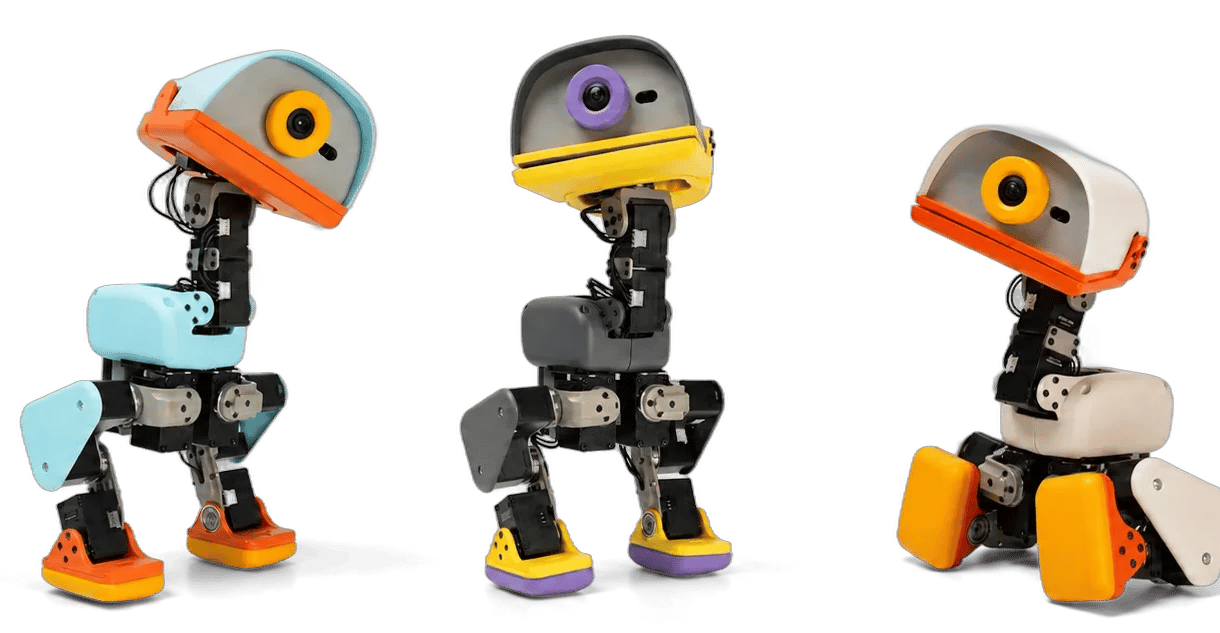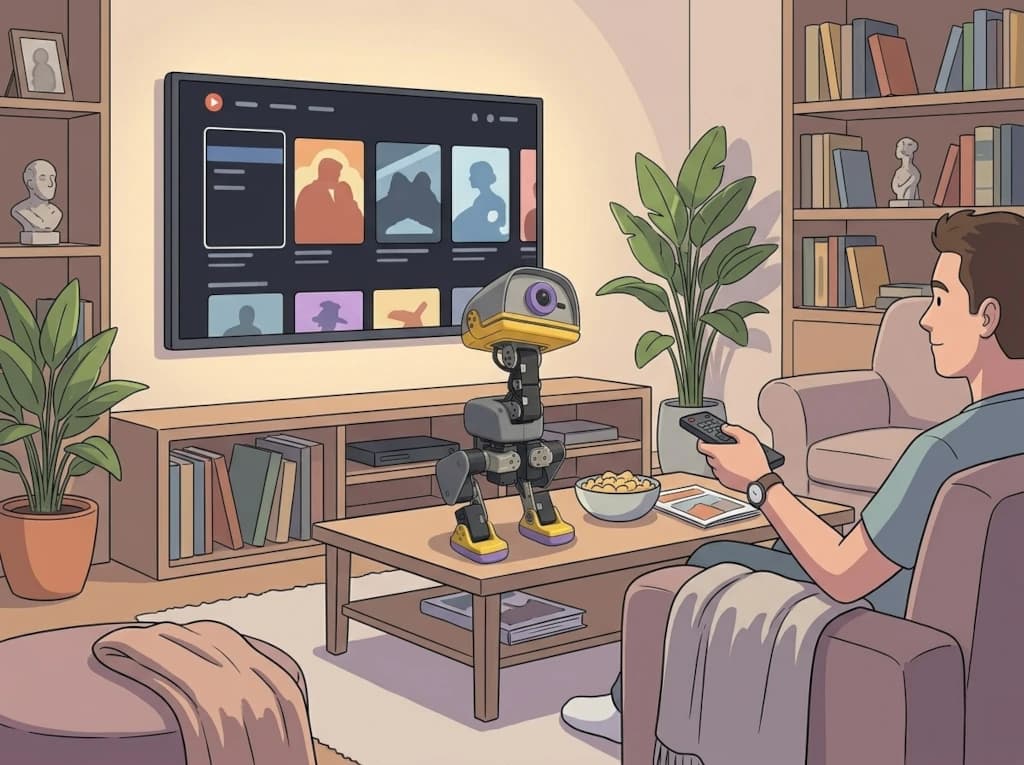
An AI desktop robot can impress you in about thirty seconds.
It moves.
It looks at you.
It reacts.
Maybe it dances.
Maybe it speaks.
Maybe its head turns when you walk past.
The first time you see that happen, it feels different from using a phone or talking to an AI chatbot.
There is an actual object sitting in front of you.
It has a body.
It has a presence.
And that is exactly why I think hardware matters.
But there is a problem.
After you've seen the robot move for the hundredth time, moving is no longer enough.
The same dance is still the same dance.
The same reaction is still the same reaction.
The novelty wears off.
And this is where I think software becomes much more important than most robot discussions make it sound.
The body gets the robot onto your desk.
Software gives you reasons to keep using it.
A robot can have impressive hardware and still become boring
Imagine a robot with:
- beautiful movement
- expressive eyes
- good speakers
- cameras
- microphones
- impressive gestures
You unpack it.
You spend a few days trying everything.
You show your friends.
You make a few videos.
You ask it questions.
You watch it react.
And eventually you know what it does.
That's the dangerous point.
Not because the robot is bad.
Because you have exhausted the obvious things to try.
This is where some desktop robots risk turning into very expensive toys.
A toy is often fun because of the experience built into it.
Once you understand the experience, there isn't necessarily somewhere else to go.
Software changes that equation.
It means the robot doesn't have to remain one experience.
It can become many experiences.
Your phone is a good example
Think about what actually makes a smartphone useful.
It has a screen.
A camera.
Speakers.
Microphones.
A processor.
Sensors.
A battery.
That's the hardware.
But none of that explains why you can use the same phone for:
messaging
maps
banking
games
music
photography
video editing
work
translation
learning
The hardware provides the platform.
Software keeps giving the platform new jobs.
You didn't buy a piece of glass because you wanted glass.
You bought it because of everything the software lets you do with it.
I think AI desktop robots will eventually have to work the same way.
Not necessarily through smartphone-style apps.
Not necessarily through one centralized store.
But through software that keeps answering a simple question:
What else can this robot do?
The same robot can become a completely different product
This is the part I find most interesting.
Take the same physical robot.
Without changing the hardware, software could turn it into:
a game
Then:
a language tutor
Then:
a cooking assistant
Then:
a telepresence device
Then:
an office assistant
Then:
a storyteller
Then:
a camera operator
Then:
something you haven't thought of yet.
That's not theoretical anymore.
Reachy Mini's current application ecosystem already contains examples ranging from cooking and meal planning to arcade games, language learning, storytelling, telepresence, office assistance and voice interaction. (Pollen Robotics)
The interesting thing isn't that Reachy Mini has these particular applications.
It's that the same piece of hardware can host completely different experiences.
The robot didn't need another motor for each one.
It needed software.
This is why physical movement alone has a ceiling
Movement is valuable because it gives AI something a screen can't give it.
A physical robot can turn toward you.
It can move around its environment.
It can physically react.
It can express something through its body.
That creates a kind of presence that software on a flat screen doesn't have.
I've already explored that difference in Why Does a Robot Feel Different From ChatGPT?.
But movement itself doesn't create unlimited value.
Think about a physical toy.
You can make it:
wave
dance
look left
look right
make a funny noise
Those things can be charming.
But eventually the user asks:
"Okay. What can I actually do with it?"
That's the turning point.
The robot's body creates the possibility.
Software determines how much of that possibility gets used.
Software is what creates repeatability
There is a big difference between:
something being impressive
and:
something giving you a reason to come back.
Suppose your robot can perform ten beautiful movements.
That's ten things you can watch.
Now suppose the software lets you create a game where the robot reacts differently every time.
That's no longer ten demonstrations.
It's an activity.
Now imagine another program that lets the robot help you plan your day.
That's another activity.
Another one lets it tell stories.
Another uses its camera.
Another lets it control something in your room.
Now the robot isn't just showing you what it can do.
It is becoming a tool for other experiences.
That distinction matters enormously.
A robot becomes interesting when software connects its body to a goal
This is where I think the idea of "robot intelligence" becomes much more useful.
A robot that sees something is interesting.
A robot that sees something and knows what to do about it is much more interesting.
A robot that can hear:
"Remind me about this later"
and then actually do something with that instruction is another step.
A robot that can:
observe
decide
use a tool
perform an action
remember the outcome
starts to behave less like a gadget.
It becomes a little computer with a body.
And software is what connects all those steps.
The hardware makes the action physical.
The software defines why the action happens.
This is where AI changes the software equation
Traditional robot software often meant:
program a behavior
The developer decides exactly what happens.
AI introduces another possibility.
The software can define:
goals
tools
context
rules
capabilities
and let an AI system decide how to combine them.
That means you don't necessarily have to build one giant feature for every possible use.
You can give the robot a set of capabilities and let a higher-level AI combine them.
This is already starting to show up in current robot software.
Reachy Mini's ecosystem, for example, includes tools that can extend what its conversational system can do through MCP. Pollen's own example shows a robot gaining access to external tools such as weather information without rebuilding the entire robot application around each new capability. (Pollen Robotics)
That is an important shift.
The robot is no longer just executing a fixed list of behaviors.
It can start becoming a place where different capabilities are combined.
The user doesn't care how complicated the software is
This is something robot developers need to remember.
The user doesn't think:
"I need a Python SDK."
They think:
"Can this thing help me?"
They don't think:
"I need a new inference pipeline."
They think:
"Can my robot understand what I want?"
They don't think:
"I need to configure an MCP server."
They think:
"Can my robot check something for me?"
That distinction matters because a lot of robotics software is still designed around the developer.
The developer sees:
SDK
API
repository
model
package
runtime
The ordinary user sees:
robot
button
voice
result
The future of consumer robot software probably depends on closing that gap.
Hugging Face's recent Reachy Mini work is particularly interesting here because its agent-based approach explicitly tries to let people describe what they want in plain language and have an AI agent create the application without requiring traditional robotics development knowledge. (Hugging Face)
That's a very different model of software.
Instead of:
learn robotics → build robot software
it moves toward:
describe what you want → robot software gets created.
That could matter a lot for ordinary users.
Software also creates play
This part shouldn't be underestimated.
Not every piece of software needs to "increase productivity."
A robot can simply be fun.
But software makes that fun much more expandable.
Consider games.
A physical robot can play:
Simon
rock paper scissors
music games
guessing games
interactive stories
One of Reachy Mini's current community applications is an arcade collection, while others turn the robot into a music quiz host or interactive storyteller. (Pollen Robotics)
The physical body makes those experiences more interesting because the robot can react physically.
But the game itself is software.
Without the software, you just have a robot that moves.
With the software, the movement has a reason.
That is a huge difference.
And software can create useful work
This is where I think the market gets much more interesting.
A robot that dances is entertaining.
A robot that helps you accomplish something is different.
Imagine a desktop robot that can:
watch for a specific event
remind you about something
summarize something you are working on
help manage a simple routine
act as a visual timer
control a service
monitor something
help with a repetitive task
interact with another application
None of those require the robot to become a humanoid.
None require dramatically better motors.
The robot needs enough physical capability to interact with its environment.
The rest can come from software.
This is why I don't think the future of desktop robots is necessarily about making them physically more complicated.
Sometimes the better product may be the same robot with much better software.
One robot can become personal in completely different ways
There is another advantage.
Hardware is generally standardized.
You buy the same robot as everyone else.
Software can be personalized.
One person might want:
a study assistant
Another:
a game partner
Another:
a creative tool
Another:
an office helper
Another:
a voice companion
Another:
an automation interface
The physical robot doesn't need to change.
The software does.
This creates something that traditional hardware has always struggled with.
A single product can become different things for different people.
That's one reason I think the software layer could become the real differentiator between desktop robots.
This is also why I don't think "more features" is the answer
There's a trap here.
A company could respond to this by adding 100 robot features.
I don't think that's necessarily useful.
The goal isn't:
more features.
The goal is:
more meaningful things to do.
Those are different.
Ten capabilities that nobody uses are not better than three things people come back to every week.
The best software doesn't just make a robot technically more capable.
It gives the owner a reason to interact with it.
That could be:
"I want to play this."
Or:
"I need help with this."
Or:
"I want to see what my robot can do today."
That is what keeps the physical object connected to the user.
The hardware creates the novelty. Software determines how long it lasts.
This is probably the simplest way I can describe the relationship.
The first attraction usually comes from the physical object.
You see it move.
You hear it talk.
You watch it react.
That's the moment that makes you think:
"I want one."
But a month later, the question changes.
You are no longer asking:
"Is this cool?"
You are asking:
"What am I going to do with this today?"
That's where software earns its place.
If the answer is:
"Nothing, I already tried everything."
the robot starts moving toward the shelf.
If the answer is:
"There are five new things I can try."
the robot gets another chance.
If the answer is:
"This actually helps me do something."
the relationship changes again.
Now the robot has become part of your routine.
This is why I keep comparing robots to phones
Not because robots should become phones with arms.
They shouldn't.
A robot's physical presence is precisely what makes it different.
But the smartphone demonstrated an important product principle:
Hardware creates the platform. Software creates the possibilities.
The iPhone didn't become important because Apple kept adding new shapes of glass.
Its value exploded because developers found new things to do with the hardware.
Desktop robots may follow a similar path.
The physical machine could remain relatively stable.
What changes is what people build on top of it.
One year, a robot might mostly be:
a novelty
The next:
a game platform
Later:
an AI interface
Then:
a personal tool
Eventually:
an agent with a physical body.
The hardware doesn't necessarily need to be replaced every time that happens.
The software can change the meaning of the same machine.
This changes what I think a good robot should be
I used to naturally look at hardware first.
How does it move?
How expressive is it?
What sensors does it have?
How good does it look?
Those things still matter.
But now I'd ask another question much earlier:
What can other software make this robot become?
Not:
How many things does the manufacturer say it can do?
But:
How many different experiences can this hardware support?
That is a much harder question.
And probably a much more important one.
Because a robot that supports only the experiences designed at launch has a natural ceiling.
A robot that can become a platform for new software has a much higher ceiling.
The interesting robot may be the one that keeps finding new uses
This is where I think AI desktop robots could become something genuinely new.
A phone lets software change what a piece of hardware is good for.
A desktop robot can do something similar, but with a physical body.
That means software can change not just what the robot displays or computes.
It can change:
how it moves
what it says
what it sees
what it listens for
what tools it uses
what decisions it makes
how it responds to people
what tasks it performs
The body stays.
The possibilities don't have to.
And that may be the real opportunity.
Not building a robot that can perform the most impressive demo on launch day.
Building a robot where the owner keeps discovering new reasons to use the machine sitting on the desk.
That is a very different product philosophy.
A robot shouldn't need a new body every time you want something new
I think this is ultimately where software wins.
Imagine if every new smartphone capability required a new phone.
Want a calculator?
Buy Phone 2.
Want a camera?
Buy Phone 3.
Want maps?
Buy Phone 4.
That would be ridiculous.
We accept software precisely because it lets existing hardware do new things.
AI desktop robots should eventually work the same way.
You shouldn't need a new robot every time somebody comes up with a better idea.
The robot you already own should be able to gain new experiences.
Maybe a game.
Maybe a new assistant.
Maybe a tool.
Maybe an AI agent.
Maybe something nobody has thought of yet.
That's the promise of software.
The real question isn't whether the robot is smart enough
It is tempting to judge an AI desktop robot by its intelligence at launch.
How good is the model?
How fast is the conversation?
How expressive are the movements?
Those measurements matter.
But there's another question I think is just as important:
What can people build on top of this thing?
Because the answer determines whether the robot has a future beyond its original feature set.
A beautiful body can attract attention.
A clever demo can sell a product.
But software is what can keep creating new reasons to use the same machine.
That is why I think the most valuable part of an AI desktop robot may eventually be the part you can't see when you first open the box.
Not the motors.
Not the shell.
Not the eyes.
The layer that lets someone say:
"I wonder if my robot could do this."
And then actually make it happen.