I think there is a big difference between a robot that can see and a robot that understands what is happening around it.
A camera can show the robot what's in front of it.
That's useful.
But it isn't the same thing as understanding.
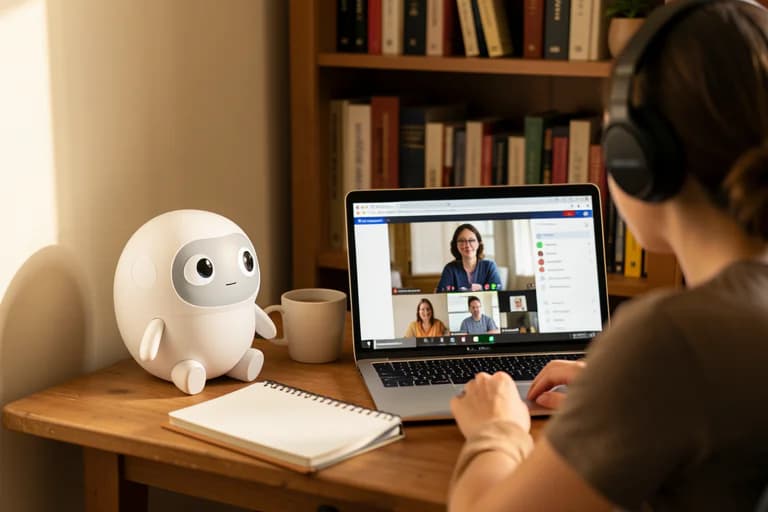
Imagine I sit down at my desk with a coffee, open my laptop, and start a video call.
A camera can see:
a person
a laptop
a cup
a screen
another person on the screen
But a robot that actually understands the situation should be able to recognize something much more useful:
I'm working.
That sounds obvious to a human.
It is much harder for a robot.
And I think this difference is going to matter a lot for AI desktop robots.
Because if the robot is going to live with you every day, it shouldn't only understand the words you say to it.
It should gradually understand the world you are living in.
A camera is not the same thing as awareness
This is something I think robot marketing can make confusing.
A robot has:
a camera
Therefore:
it can see.
But what does "see" actually mean?
Can it identify the objects around you?
Can it tell that you just sat down?
Can it notice that you're busy?
Can it recognize that something changed?
Can it connect what it sees with what you told it earlier?
Can it understand whether that change is important?
Those are very different levels of capability.
And I think the last few are much closer to what people actually mean when they imagine a smart robot.
They don't really want:
a robot with a camera.
They want:
a robot that seems to notice things.
EMO users have already pointed out this gap
There's a particularly useful discussion in the LivingAI community about exactly this problem.
One owner said that although EMO has cameras and obstacle avoidance, it can still feel more like a robotic vacuum than a robot that genuinely understands the environment.
The owner pointed out that EMO can describe what it sees when explicitly asked, but after that interaction it seems to go back to behaving as though it doesn't really understand the surrounding world. (LivingAI Forums)
I think that's a very good way of describing the current gap.
The robot can answer:
"What am I looking at?"
But that's not necessarily the same as:
"I know what's happening."
The second is much more interesting.
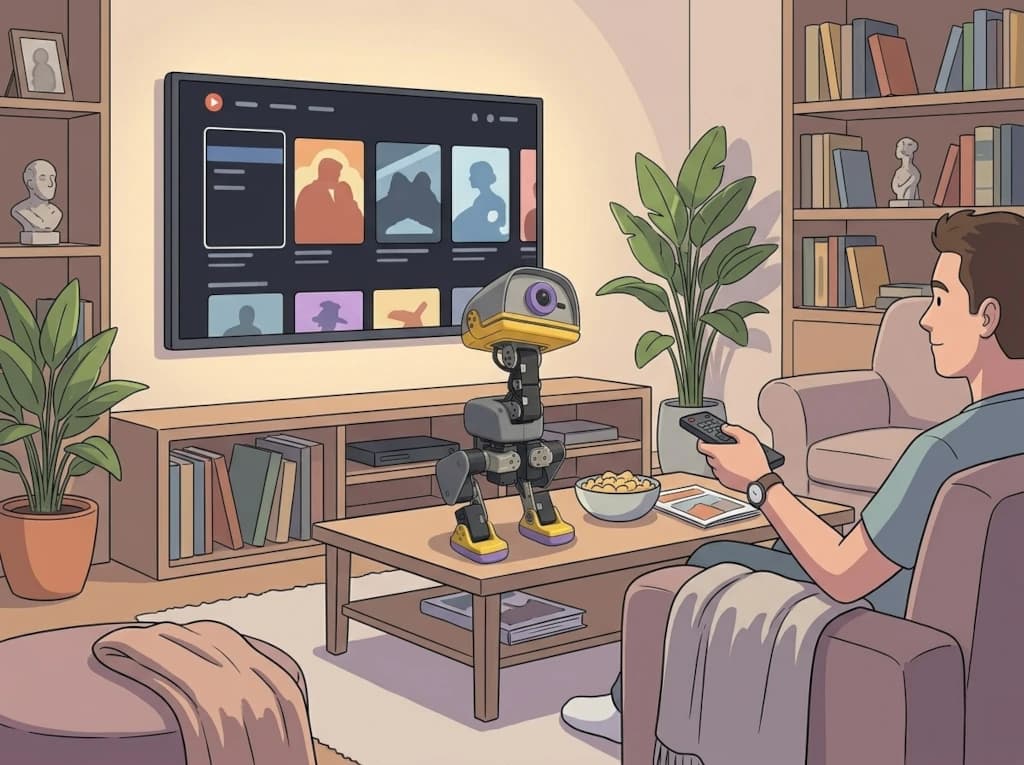
Imagine the difference at your desk
Let's say you are working.
A friend walks into the room.
The robot sees them.
A basic system might simply recognize:
another person.
A more capable system could understand:
someone has joined you.
Maybe it's someone the robot already knows.
Maybe it's a person you often work with.
Maybe it's the same person you mentioned yesterday.
That context could change the interaction.
Maybe the robot says hello.
Maybe it stays quiet because you're obviously busy.
Maybe it only reacts if you look at it.
The physical action hasn't changed.
The understanding behind the action has.
That's what makes the robot feel smarter.
The robot doesn't need to understand everything
This is important.
I'm not saying a desktop robot needs to become a general-purpose visual intelligence system that understands every object in your house.
That would be overkill.
I think it needs something much more practical.
It should gradually understand the parts of the environment that matter for its relationship with you.
For example:
this is your desk.
this is usually where you work.
this is the mug you always use.
these people are familiar to you.
this is the time you normally have meetings.
you usually don't want interruptions when this happens.
you just came back from a meeting.
Those pieces of awareness can be much more useful than identifying a thousand random objects.
The question isn't:
"How much can the robot see?"
It's:
"Does what it sees help it understand what is going on?"
This could make companionship much more natural
Think about what makes another person feel present.
They don't wait for you to explicitly describe every situation.
If you're sitting quietly at your desk with headphones on, they can usually tell you are busy.
If you walk into a room looking excited, they might ask what happened.
If you are carrying a package, they might notice.
If you put on a headset and start a meeting, they understand that you're probably not looking for a conversation.
That's not magic.
It's context.
And I think this is one of the areas where an AI desktop robot can eventually become much more interesting.
Instead of:
you speak → robot responds
it becomes more like:
something happens → robot understands → robot decides whether it matters.
That feels much closer to having a presence in the room.
This could also make the robot less annoying
This sounds counterintuitive, but better awareness could actually mean less interaction.
Imagine your robot sees that you're:
wearing headphones
typing quickly
on a video call
visibly focused on the screen
It doesn't need to say:
"Hello!"
It doesn't need to ask:
"Would you like to talk?"
It can simply stay quiet.
Then ten minutes later, when your meeting ends and you take your headphones off, the situation changes.
The robot might notice.
Now a short interaction makes sense.
That's much better than relying on a fixed schedule.
The robot isn't quiet because you manually selected "quiet mode."
It's quiet because it understands what is happening.
This is also consistent with a real LOOI user complaint: one owner wanted a more reliable way for the robot to remain still and quiet during work, while separately asking for better awareness of its surroundings. (Reddit)
Those two requests are actually connected.
The more a robot understands the situation, the less it needs to behave blindly.
Awareness could make small interactions much more meaningful
Imagine that you come back to your desk after being away.
The robot sees you.
A generic robot says:
"Welcome back!"
That's fine.
But imagine it knows that you were preparing for an important presentation earlier.
Maybe it says:
"How did the presentation go?"
That's a tiny sentence.
But now the robot isn't just reacting to your arrival.
It understands why your arrival might matter.
That's a much more personal experience.
And notice what happened.
The robot didn't need a new physical feature.
It didn't need another animation.
It simply connected:
what it sees now
with:
what it already knows about you.
That is where awareness becomes valuable.
The environment can also tell the robot when to help
Suppose you're working on something and the robot notices a change.
Maybe you just finished a call.
Maybe you stopped typing.
Maybe you are repeatedly looking away from the screen.
Maybe somebody has entered the room.
Maybe you moved from one activity to another.
Those things don't automatically mean the robot should intervene.
That's important.
But they give the robot context.
And context can help it decide:
now is a good moment.
or:
leave them alone.
That is much more intelligent than treating every moment the same.
This becomes especially interesting when the robot knows your habits
Imagine the robot has been with you for six months.
It already knows:
you normally work from nine to noon.
you usually have a break around eleven.
you tend to prepare meetings shortly before they begin.
you don't like interruptions during focused work.
Now add environmental awareness.
The robot doesn't just know:
"This is usually your work time."
It can also see:
"You are actually working right now."
That's much stronger.
One piece comes from knowing you.
The other comes from knowing what is happening.
Together, they let the robot behave more naturally.
That's the combination I think matters.
This is how "it understands me" could become much more than memory
We've talked a lot about robots remembering preferences.
That's important.
But imagine a robot that remembers:
"I don't like interruptions while working."
That alone isn't enough.
It also needs to recognize:
I'm working right now.
Otherwise the preference has no practical effect.
This is why I think a truly personal robot needs both:
knowledge about you
and:
awareness of the moment you're currently in.
One without the other is incomplete.
If it knows everything about you but doesn't understand the current situation, it can still behave badly.
If it understands the environment but knows nothing about you, it remains generic.
Put them together and the robot can start feeling much more personal.
The robot doesn't need to constantly watch you
There is an important privacy issue here.
The more a robot understands its surroundings, the more uncomfortable people may become with the idea of constant observation.
I think this is one of the biggest challenges the category will have to solve.
A robot that is supposed to understand its owner may end up seeing and hearing things that were never intended for it.
So "better awareness" cannot simply mean:
collect everything.
The owner should be able to understand:
what the robot sees
what it keeps
what it forgets
what it uses immediately
what gets stored
And there should be clear ways to control that.
Otherwise the feature that makes the robot feel more intelligent could also become the thing that makes people uncomfortable having it around.
Awareness should serve the relationship
This is the rule I'd use.
The robot doesn't need to understand the room because understanding everything is impressive.
It should understand the room because that can help it be a better companion.
For example:
noticing when you want quiet
noticing when you have returned
noticing when someone you know is nearby
noticing when something relevant has changed
noticing that you're about to start something important
noticing that a situation is different from normal
Those can all improve the experience.
But if the robot recognizes every object in the room and does nothing useful with that information, what's the point?
Again, the user doesn't care that the robot has "better computer vision."
They care that:
it noticed.
I think this could make physical robots much better than voice assistants
A voice assistant mostly knows what you tell it.
A robot potentially has access to another source of information:
what is happening around you.
That's a major difference.
Imagine asking:
"What's going on?"
A normal assistant may have no idea.
A robot that can see and understand its environment may be able to answer:
"Your friend just arrived."
or:
"You're still on your meeting."
or:
"You left your headphones on the other side of the desk."
Those examples are simple.
But they point toward something important.
The robot isn't just another place where an AI can talk.
It can become an AI that is situated in your physical world.
That phrase sounds technical.
The actual experience is simple:
It knows what is going on around me.
This also opens the door to better help
Once the robot understands the environment, its ability to help becomes more natural.
Imagine you're about to leave your desk.
The robot notices something relevant.
Maybe you had previously told it:
"Remind me not to forget this."
Now it can actually understand the moment when the reminder matters.
Or imagine you're preparing for a meeting.
The robot sees that you have started setting things up.
It remembers what you wanted to discuss.
It can help.
The important part isn't that the robot suddenly has a new "meeting feature."
It's that the robot can connect:
person
place
time
situation
history
and respond appropriately.
That's what makes intelligence visible to the user.
It could even change the way the robot feels when nobody is talking
This might be the most interesting part.
A robot doesn't need to be talking to be aware.
Imagine you're sitting at the desk reading.
The robot notices.
It remains quiet.
Then you get up.
It looks toward you.
You return five minutes later.
It moves slightly.
Maybe you smile.
Maybe it says nothing.
That tiny interaction can communicate:
"I noticed."
That's enough.
The robot feels present without constantly demanding attention.
And I think this is much closer to what people mean when they say they want a companion.
This is one reason physical behavior still matters
None of this means the "brain" should replace the body.
Quite the opposite.
The body is how the robot expresses what it understands.
If it notices you're back, it can turn toward you.
If it realizes you're busy, it can remain still.
If something catches its attention, it can look.
If you're talking to it, it can physically respond.
The intelligence gives meaning to the movement.
The movement makes the intelligence visible.
That's the combination that makes a desktop robot different from ordinary AI software.
And this could make the robot more fun too
Awareness isn't only about work.
Imagine the robot noticing something unexpected.
Maybe it sees a new object on your desk.
Maybe it reacts to something you've brought home.
Maybe it notices that you've rearranged its usual space.
Maybe it recognizes something associated with a hobby you often talk about.
The robot doesn't need to make a huge production out of it.
A small reaction can be enough.
That's where awareness can create new kinds of play.
The robot isn't simply performing an animation because somebody pressed a button.
It is reacting to something actually happening in your world.
That feels much more alive.
The best reactions may be the ones you didn't ask for
This is probably the biggest difference between:
responsive
and:
aware.
A responsive robot waits for:
"Do this."
An aware robot can notice:
"Something just happened."
That doesn't mean it should always act.
It means it has the possibility of noticing.
And once it can notice, you can build much richer interactions around that ability.
That's where I think physical AI becomes interesting for ordinary users.
But awareness without judgment could become annoying
There is a catch.
Suppose the robot notices everything.
Then it reacts to everything.
That would be terrible.
You moved your coffee.
The robot says something.
You opened a package.
The robot says something.
Someone walked past.
The robot says something.
You changed your shirt.
The robot says something.
Very quickly you would stop wanting it around.
So awareness has to be paired with judgment.
The robot needs to understand:
this matters.
this doesn't.
this is worth mentioning.
this can wait.
this is private.
this is not my business.
Again, the user doesn't need to know how the robot makes that decision.
They just experience the difference between:
a robot that notices everything
and:
a robot that notices the right things.
This may eventually matter more than another better conversation model
I'm sure AI conversation quality will continue improving.
That's important.
But imagine two robots with equally good conversations.
One simply waits for you to talk.
The other also understands what is happening around you and can use that context naturally.
The second robot can have much richer interactions.
Not necessarily because it talks better.
Because it has more to talk about.
It has more context.
It can notice things.
It can connect moments.
It can understand why something matters.
That is a completely different kind of intelligence.
It also makes the robot's personality more believable
A personality isn't only how a robot talks.
It's how it reacts to the world.
Think about people.
A person who never reacts to anything around them doesn't feel very alive.
Someone who notices things has more character.
They might point something out.
They might laugh.
They might become curious.
They might ignore it.
They might remember it later.
A robot that understands its environment gets access to the same range of possibilities.
Its personality suddenly has something to work with.
Instead of:
"Tell a joke."
it can eventually become:
something happened → robot noticed → robot reacted in its own way.
That's much richer.
This is where I think the "body" becomes an advantage
A chatbot can understand what you write.
A robot can potentially understand:
what you say
what you do
what is around you
and then physically respond.
That gives AI a much richer interface with everyday life.
The robot doesn't need to walk around the whole house.
It doesn't need to perform complicated tasks.
Just being able to understand its small physical world could already change the relationship.
Your desk becomes a shared environment.
The robot knows that environment.
And gradually, it becomes familiar with the person using it.
That is something a purely digital assistant cannot reproduce in exactly the same way.
I think "understanding the room" is really about understanding context
That's why I wouldn't judge robots by:
How many objects can you recognize?
That isn't the important question.
I'd rather ask:
Can the robot tell when I'm working?
Can it recognize familiar people?
Can it notice relevant changes?
Can it connect what it sees with what it already knows?
Can it tell when something matters?
Can it use that understanding to behave differently?
Those are much harder questions.
And they are much closer to the experience of having a smart little companion sitting beside you.
The real promise isn't better vision
It's better understanding.
A camera gives a robot eyes.
A better AI gives those eyes meaning.
And a relationship gives that meaning context.
That's the combination I think AI desktop robots should be aiming for.
Because I don't want my robot to simply answer:
"What is that?"
when I point at something.
I want it to eventually be capable of something closer to:
"Oh, you moved that because you're preparing for tomorrow's meeting."
That's a much bigger leap.
And notice what makes it valuable.
Not the fact that the robot recognized the object.
Not the fact that it can describe the scene.
The value is that it understood why the scene mattered to me.
That's when an AI desktop robot starts to feel truly personal
Maybe that's the direction I'm most interested in.
Not a robot that can see everything.
Not a robot that talks constantly.
Not a robot that performs thousands of tricks.
A robot that gradually understands:
who I am
what I usually do
what is happening around me
what matters to me
when to speak
when to help
when to simply watch and stay quiet
The body makes that awareness visible.
The intelligence makes it possible.
Time lets it become personal.
And the result is something much more interesting than a robot that can answer questions.
It's a robot that actually feels like it is there with you.
That's probably the level of intelligence I'd care about most.
Not:
"How smart is the robot?"
But:
"How much does it actually understand about the little world we share?"
Because once a robot can understand that world, it can do something much more difficult than answering you.