Is MicroDuck a toy?
It's a reasonable question.
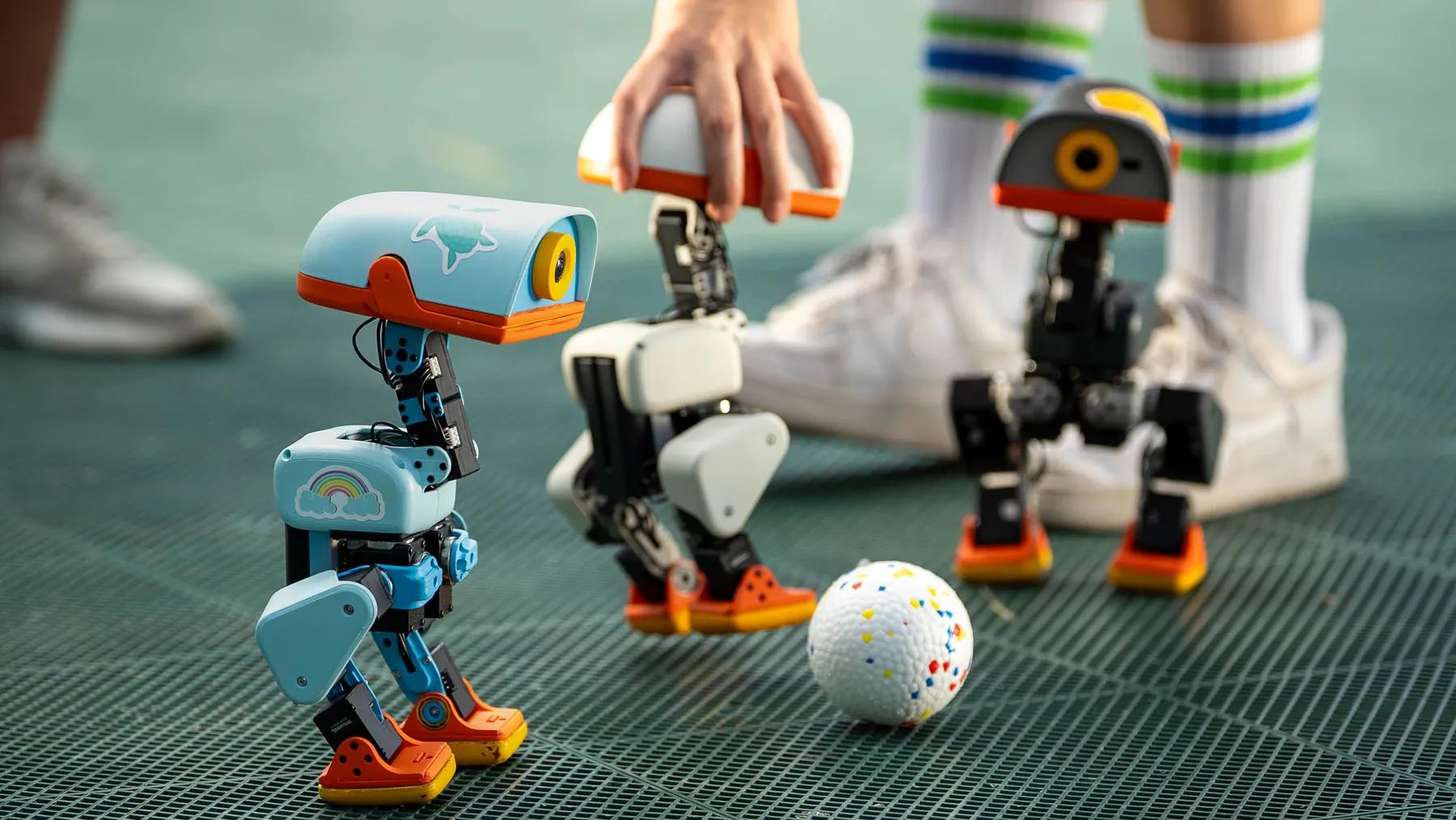
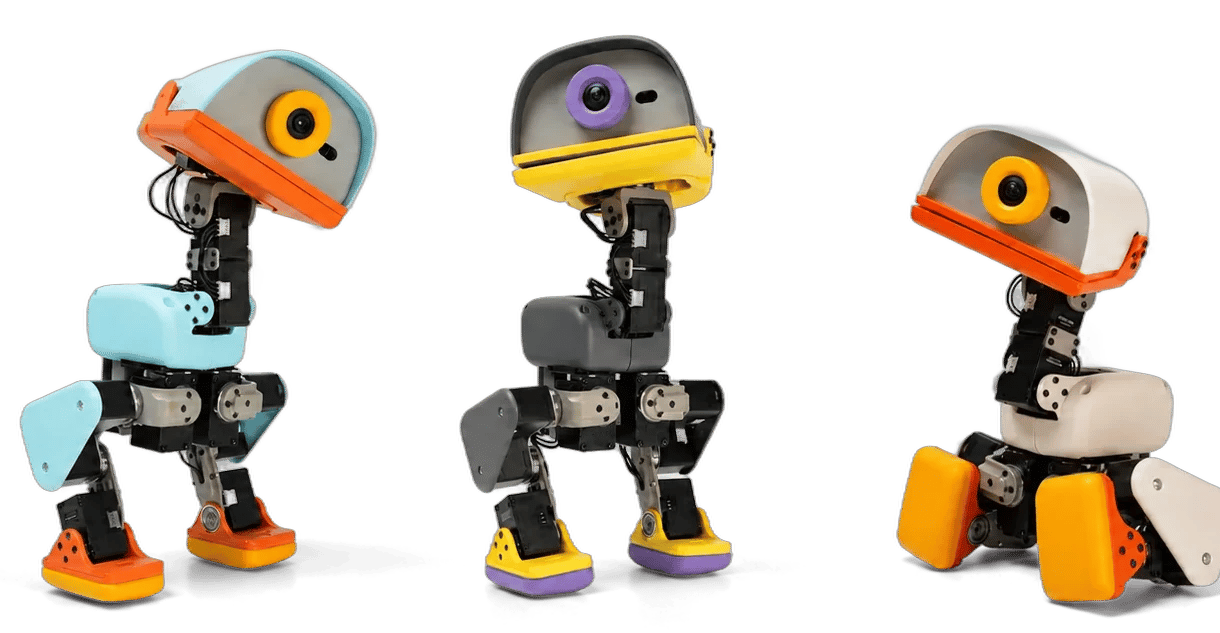
The robot is tiny. It looks like a duck. It rolls around on wheels. It kicks a ball. It makes duck-like sounds.
You could absolutely buy one because you think it looks fun.
But "toy" does not really explain the whole product.
If you define a toy by appearance, MicroDuck looks like one
There is nothing particularly intimidating about a tiny yellow duck-shaped robot.
That is probably part of the appeal.
Most people do not want a robot that looks like an industrial machine sitting next to their monitor.
MicroDuck is approachable.
It looks more like something you want to pick up than something you expect to program.
That is useful for a consumer robot.
But the software tells a different story
Underneath the appearance is a fairly serious robotics stack.
MicroDuck has 15 motors, onboard sensing, a camera and LiDAR, and a control loop running learned neural policies. Its public software repository includes the runtime, movement policies, simulation and tools for working with the robot.
The reinforcement-learning stack is not a cosmetic feature.
It is part of how the robot actually moves.
That makes it much harder to classify as "just a toy."
But calling it a robot does not mean it is a general-purpose machine
This is where some descriptions go too far.
MicroDuck is a real robot in the literal sense that it senses, computes, actuates, and moves through the physical world.
That does not mean it can do everything people imagine when they hear the word "robot."
It does not currently replace a human assistant.
It does not do household chores.
It does not magically become an autonomous agent because it has a camera and a model.
There is a large gap between:
"This is a real robot."
and:
"This is a useful home robot."
Those are different claims.
So where does MicroDuck actually sit?
Our take is that MicroDuck sits in an interesting middle ground.
It is a consumer-facing physical robot.
It is playful enough to feel like a toy.
It is technically serious enough to function as a robotics platform.
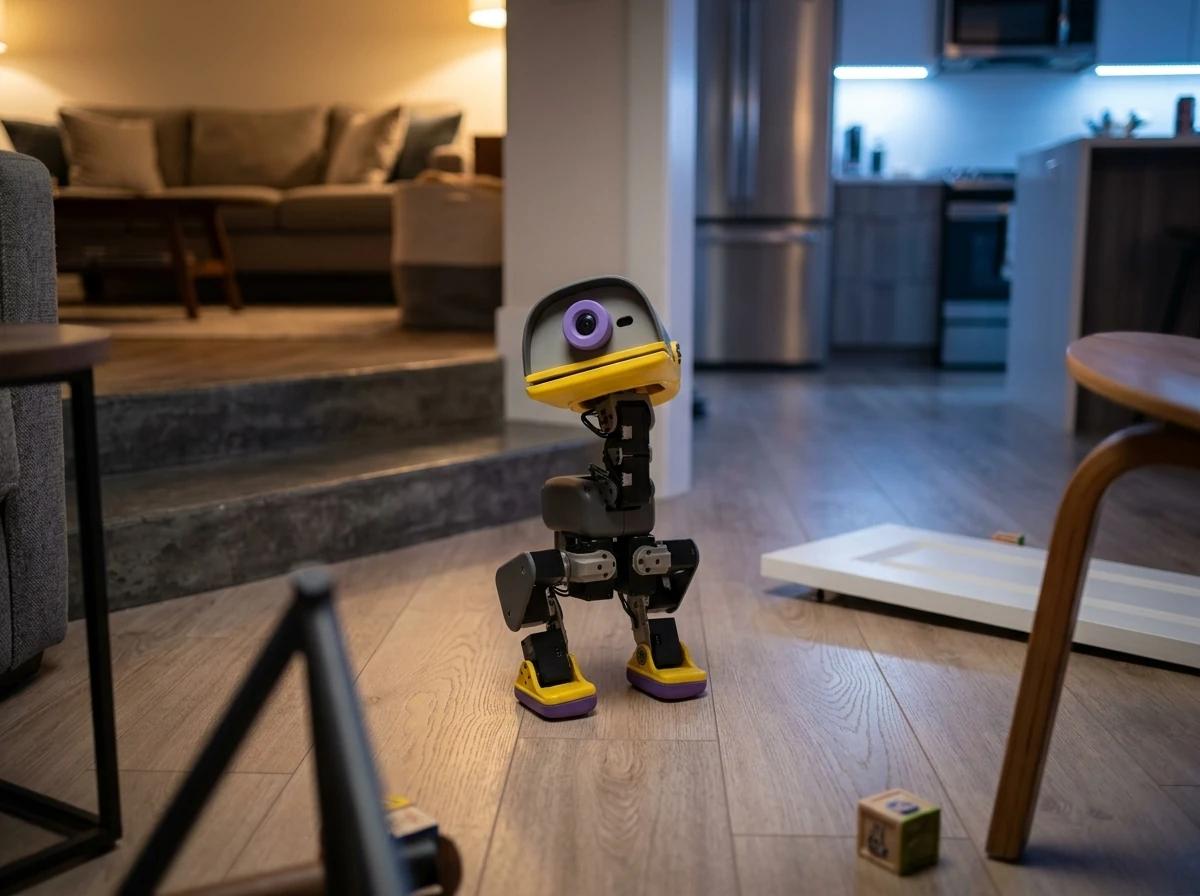
And it is small enough that the experience is much closer to owning a desktop companion than owning a traditional robotics kit.
That combination is probably more important than the label.
The interesting part is what happens next
The biggest mistake would be to judge MicroDuck only by its launch-day feature list.
A physical robot becomes much more interesting when its software can keep changing.
Pollen is explicitly building the software and training stack in the open, with behaviors that can be retrained and shared.
That gives the robot something most toys do not have:
room to evolve.
Our take
I would not call MicroDuck a toy.
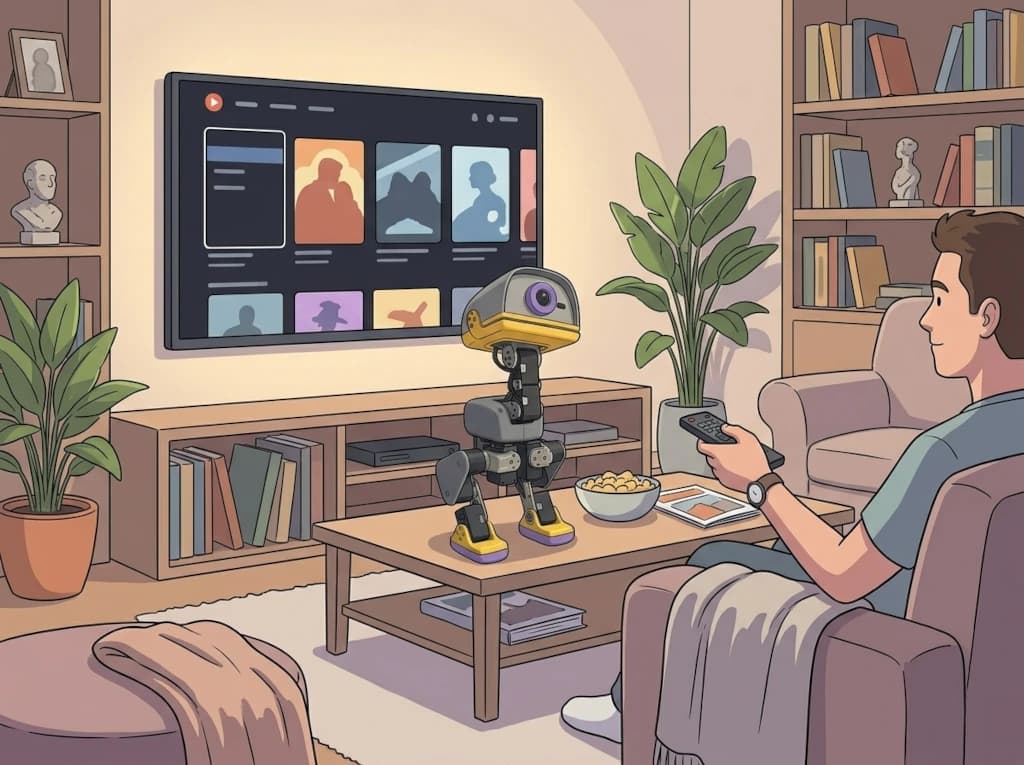
I would call it a desktop robot with a playful personality.
You can use it like a toy.
You can experiment with it like a robotics platform.
And, eventually, its value may depend on whether the software ecosystem makes it feel more like a companion than a gadget.
That is a much more interesting proposition.