Can a personal AI actually manage your to-do list?
I think it should be able to do more than turn a sentence into a checklist. But I also think the phrase "AI task manager" hides a much harder problem than most demos suggest.
Creating a list is easy to demonstrate. Following through is harder.
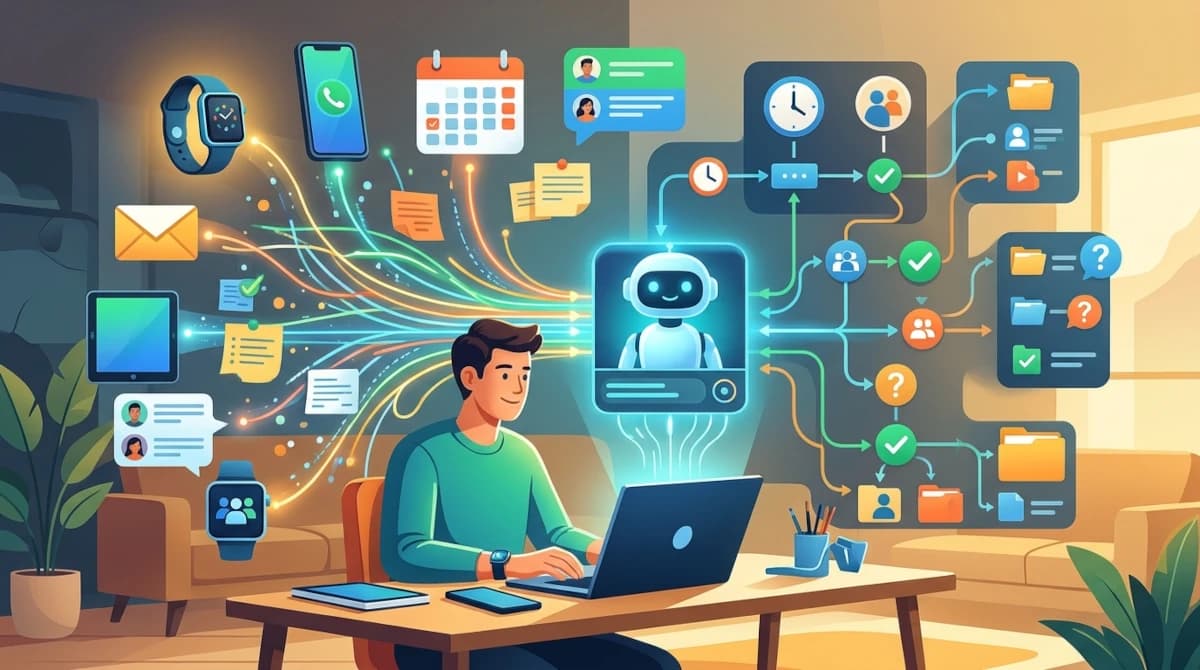
A real day is full of loose ends. Someone sends an email that needs a reply. A meeting creates three actions. You remember something while walking to the kitchen. A delivery needs to be rescheduled. A note in one app refers to a project in another. By the end of the day, the tasks are spread across places that do not share much context.
The problem is not always that people cannot write down what they need to do. It is that they have to keep the whole system organized themselves.
The real problem is not making a list
A basic AI assistant can take a message like "prepare for the meeting, reply to Alex, and book a table" and format it as three tasks.
That is convenient, but it does not solve the more difficult questions:
- Which meeting does "the meeting" refer to?
- Is Alex waiting for a reply, or did you already respond in another conversation?
- Is booking the table something to do today or after someone confirms the time?
- If the plan changes, which reminders should change with it?
- What should happen if you do not complete the task?
A useful personal AI needs to understand relationships between tasks, people, projects, and time. Otherwise, it is just a nicer input box for the same manual system.
Community discussions point to a familiar frustration
In a September 2026 r/AIToolBench discussion, a user described having tasks spread across notes, email, Slack reminders, and Notion pages. They wanted an assistant that could connect those sources, help plan the day, and nudge them about follow-ups without becoming another job to maintain. One reply argued that available setups still tend to handle only part of the problem, often leaving the task list manual. [1]
A separate October 2026 discussion in r/todoist asked whether AI can manage tasks rather than simply write a to-do list. One commenter described a powerful personal setup connecting Claude with Todoist, email, calendar, messages, contacts, and document storage. They said the context across those sources helped with project reviews and next steps. Another commenter immediately raised the privacy concern of giving a service access to personal messages, calendars, and financial information. [2]
I find both discussions useful because they show two sides of the same product challenge.
The more context an assistant can access, the more useful it may become. But every new integration adds setup, permissions, privacy questions, and another possible point of failure. A sophisticated setup is not automatically a good consumer experience.
These are individual community reports, not market-wide research. They do, however, reveal the kinds of trade-offs people are already trying to solve.
Three things a real personal AI task manager needs
1. Capture should be easier than opening a task app
People should be able to express a task in the way they naturally think or speak.
"Remind me to ask Mia about the invoice when she gets back from her trip."
That sentence contains a person, an action, and a condition. The system should preserve those details rather than reducing it to "Ask Mia about invoice" with an arbitrary date.
A personal AI device could make capture more convenient through voice or a quick interaction. A small robot on a desk might be useful when the user is already nearby. A wearable could be useful when the thought arrives away from the desk.
But the hardware is only the entry point. If the system loses the information, misunderstands the timing, or forces the user to correct every detail later, the convenience disappears.
2. It needs context, not just memory
Remembering that a person named Mia exists is not enough. The assistant needs to know which project or conversation the task belongs to, what has already happened, and what the user means by "when she gets back" if that information is available.
This is where personal memory becomes practical. The point is not to store every sentence forever. It is to retain the information that helps the assistant interpret the next action.
Context should also be visible and editable. Users need to know why the system linked a task to a project, where a date came from, and how to correct a mistaken assumption.
For a broader look at the difference between memory and simple personalization, see why an AI desktop robot needs memory and what it should remember.
3. It has to follow through, not just summarize
This is the part I would test first.
If I say that I need to follow up next Thursday, does the assistant actually remind me next Thursday? If the other person replies before then, can it recognize that the task may already be complete? If the date changes, can I update it in one step?
A useful assistant should support a loop:
- Capture the commitment.
- Confirm the interpretation when something is ambiguous.
- Put it somewhere the user trusts.
- Bring it back at the right time.
- Let the user complete, postpone, or cancel it.
- Update its context so the same task does not keep resurfacing.
That is a much stronger promise than "AI can make a to-do list."
Why the assistant must not become another job
There is a trap in building a powerful personal assistant: each improvement can create more configuration.
Connect your calendar. Choose which emails it can read. Import your notes. Set up project structures. Define priorities. Create recurring rules. Review permissions. Fix a task when the model misunderstands it.
Some people enjoy designing this kind of personal system. Many consumers just want the task to stop slipping through the cracks.
The September 2026 discussion mentioned earlier captured this tension directly: the original poster wanted consolidation and follow-up, but did not want another system that required constant care. [1]
For a consumer product, setup time is part of the product's cost. If the assistant saves five minutes but requires ten minutes of daily maintenance, the value proposition is upside down.
I would rather see a small system do one workflow reliably than a broad assistant claim to manage every part of someone's life.
Privacy becomes more important as the assistant becomes more useful
A task assistant may need access to sensitive context: calendars, messages, work documents, contact details, and sometimes financial or household information.
That creates a real trade-off. More context can improve the system's understanding, but users should not have to grant unlimited access just to get a reminder.
A trustworthy product should explain which sources it reads, what it stores, whether data is sent to external services, how long information is retained, and how to delete or export it. Permissions should be granular. The user should be able to approve consequential actions before the assistant sends a message, books something, or changes an important record.
This is also why I would not make a camera or always-listening microphone the default requirement for a personal assistant. The product should collect only the context needed for the job the user has chosen.
Our AI companion robot privacy guide explores the same trust questions from the perspective of physical devices.
Does this need to be a robot?
Not necessarily.
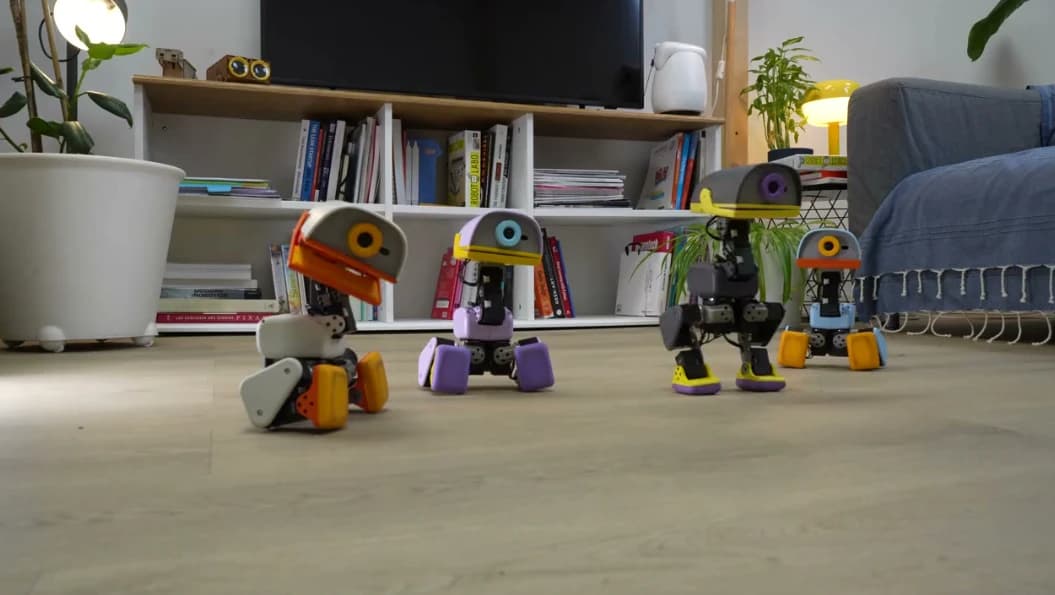
A phone app may be the best place to review a list or approve an action. A desktop application may be better for managing projects. A voice interface may be better for capturing a thought while your hands are busy. A small robot may make reminders more visible or give the assistant a physical presence in a room.
The form factor should follow the moment of use.
If the task is to organize a complicated project, a screen is probably useful. If the task is to capture a quick thought while cooking or walking, voice may be easier. If the task is to give a subtle cue at a desk, a small physical device could make sense.
I would not force every capability into a robot simply because the brand is about robots. The software should work across the places where people already spend their time, and the hardware should add something that a phone or laptop cannot provide as naturally.
What would I build first?
I would not start with a universal AI life manager.
I would start with one repeated problem: remembering a commitment and following up at the right time.
A first version might let someone speak a messy thought, extract the action and timing, ask one clarifying question if needed, and bring the task back when agreed. It should support completion, postponement, and deletion without making the user explain the whole situation again.
That sounds modest. But it tests the foundations of a useful personal AI: low-friction capture, meaningful context, dependable reminders, and user control.
Once that loop works, it can expand into meeting follow-ups, household tasks, shopping lists, personal plans, and other recurring needs. The expansion should come from evidence that people want those workflows, not from a long feature list.
My view: the best personal AI reduces the work of managing your life
I do not think consumers need another chatbot that can talk about productivity. They need an assistant that can take a small amount of responsibility for the loose ends they have already told it about.
But it has to earn that responsibility. It must remember accurately, follow up reliably, explain what it is doing, and make it easy for the user to stay in control.
A robot body may make that experience more present. A wearable may make it more accessible. Neither makes weak software useful.
For MeraBots, this is one of the more interesting questions behind the next generation of small AI devices: not simply what the robot can say, but what it can help a person remember, decide, and actually finish.
Sources and community notes
The community discussions below are examples of individual users describing their own workflows and frustrations. They should not be read as representative surveys or proof that every AI task tool has the same limitations.
- r/AIToolBench: Best AI personal assistant for everyday tasks and work — September 2026 discussion about fragmented tasks across notes, email, Slack reminders, and Notion, and the desire for follow-up without adding another system to maintain.
- r/todoist: Anyone actually using AI to manage their tasks? — October 2026 discussion showing both a complex connected workflow and concerns about sharing private data with an AI service.