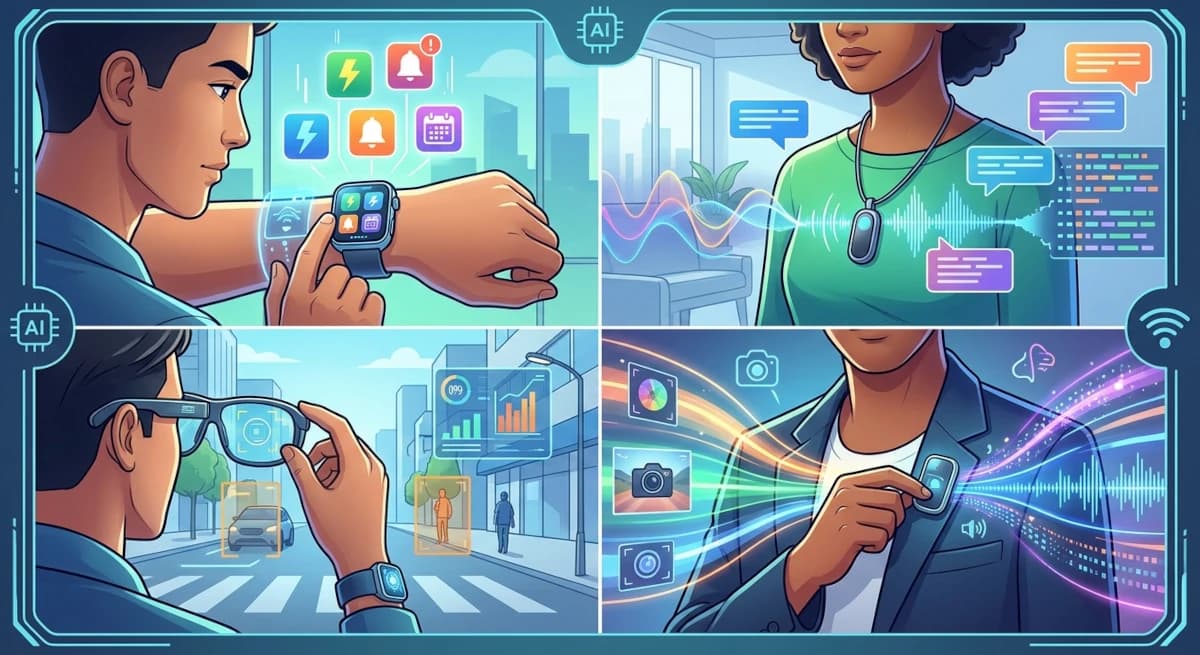
AI pins, smartwatches, and AI pendants can all be described as wearable AI. That does not mean they are interchangeable.
A smartwatch is usually built around quick actions, notifications, health-related features, and a small screen on your wrist. An audio pendant is more likely to focus on capturing speech and turning it into notes, summaries, or searchable memories. An AI pin can describe a clip-on device, but the label says very little about what the product can actually do.
The easiest way to waste money in this category is to buy a shape before identifying the job.
First, separate the form factor from the function
The word "pin" describes how something is worn. "Pendant" describes another way of carrying it. Neither tells you whether the device is a recorder, a general assistant, a camera, a notification screen, or a companion.
This distinction matters because some marketing language makes different products sound like they are all versions of a personal AI that understands your life. In practice, many current devices are much narrower.
| Device type | Typical interaction | What it is most useful for | What it does not automatically provide |
|---|---|---|---|
| Smartwatch | Touch, short voice requests, haptics, notifications | Timers, reminders, calendar actions, quick responses | Reliable capture of every conversation or deep personal memory |
| Audio pendant or pin | Button or voice-triggered recording, then app review | Meeting notes, lectures, ideas, spoken commitments | Visual understanding, perfect transcription, autonomous follow-through |
| AI glasses | Voice, camera, open-ear audio | First-person photos/video, visual questions, hands-free audio | A private conversation recorder that is socially invisible |
| Screenless AI pin | Varies by product | Depends on its actual sensors, software, and service | A standard set of capabilities shared by all AI pins |
The categories overlap, but the overlap is not the product. The job is.
A smartwatch is the practical baseline
Before buying a dedicated AI wearable, look at what a smartwatch you already own can do.
Apple's support documentation, for example, describes using Siri on Apple Watch to add reminders, create calendar events, set alarms and timers, send messages, make calls, and get directions. Those are not science-fiction features. They are everyday actions that may already be available from a device on your wrist. [1]
That makes a smartwatch a sensible first choice when your main problem is that you need quick access to information or a small action while your phone is in your pocket.
It is also usually a better fit for short, structured interactions. A timer does not need a permanent memory of your conversations. A reminder does not need an audio archive of the room. A calendar action does not need a camera.
A smartwatch becomes less suitable when the job is to preserve a conversation you cannot stop to write down, or when you need the assistant to understand a scene beyond what you can describe verbally.
An AI pendant is closer to a wearable memory tool
Audio pendants and wearable recorders are designed around a different problem: people often forget details from conversations, meetings, classes, and passing ideas.
Plaud's NotePin S, for example, is marketed as a hands-free AI note taker. Its official page lists a physical button, multiple wearing options, 64 GB of storage, up to 20 hours of continuous recording, and a free monthly transcription allowance. The product turns captured audio into transcripts, summaries, and action items. [2]
Omi takes a related approach. Its official product information describes a pendant that records conversations, syncs with a phone app, and can turn them into searchable notes, memories, and tasks. Omi also states that the device can record offline and sync later. Its free and paid software tiers have different limits, so the practical cost depends on how intensively you use cloud features. [3]
These products are better understood as capture systems than as tiny universal assistants.
That can be valuable. If you regularly leave meetings wishing you had written down a decision, or if you think of useful ideas while walking, reducing the friction of capturing speech may help.
But a recording is not the same as remembering. The device still has to identify useful information, sync it, organize it, let you find it later, and avoid turning a short thought into a pile of low-value transcripts.
An AI pin is not one clear product category
The Humane Ai Pin helped popularize the idea of a screenless assistant worn on clothing. It combined a wearable form with voice interaction, a camera, and a projected interface. But its consumer service was discontinued, and the official shutdown FAQ said the device would stop connecting to Humane's servers on February 28, 2025. It should not be treated as a currently supported buying option. [4]
That history is useful for another reason. A small wearable can look like a self-contained object while relying on a company's servers for the experience that makes it valuable.
The phrase "AI pin" is now used more loosely for other clip-on devices. Some mainly record audio. Others are intended to offer assistant access. Some may be little more than a Bluetooth input device connected to a phone. Always check the actual product rather than assuming that every pin shares the original Ai Pin's concept.
I would ask four questions before buying one:
- What sensors does it actually have: microphone, camera, display, or only a button?
- What can it do without a phone or cloud connection?
- Does it perform a useful action, or does it mainly send information to an app?
- What happens to the product if the manufacturer changes its service or stops supporting it?
AI glasses solve a different problem again
AI glasses are worth including in this comparison because they can provide a first-person view of the world. They may combine a camera, microphones, speakers, and an assistant in a familiar-looking object.
Meta's July 2026 explanation of its AI glasses says a capture LED blinks when photos or videos are being captured, and that disabling or covering the LED automatically disables the camera. This is an important design detail, but it does not remove the wider social question of whether other people feel comfortable around a camera-equipped pair of glasses. [5]
Community reactions are mixed. One Ray-Ban Meta owner described being accused of secretly filming someone at a cafe even though they said they were not recording at the time. Other owners say they wear the glasses regularly without much reaction. These reports do not establish how most people feel, but they show that social acceptance can depend on the location, the people nearby, and how recognizable the device is. [6]
For a wearer, the camera may make the glasses more useful. For someone sitting across the table, it may make the interaction feel different. That is a real product trade-off, not merely a public-relations problem.
What about companion devices such as pocket robots and AI charms?
Not every wearable or small personal device is meant to capture conversations or manage tasks.
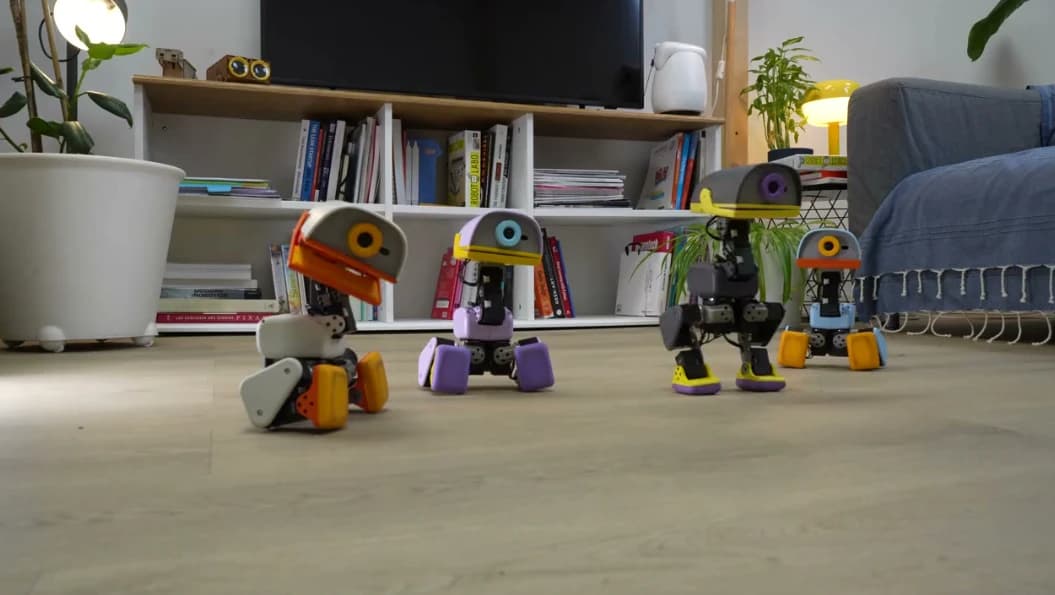
A pocket companion or interactive charm may focus on quick interaction, personality, play, and a feeling of connection. That is a different value proposition from a recording pendant.
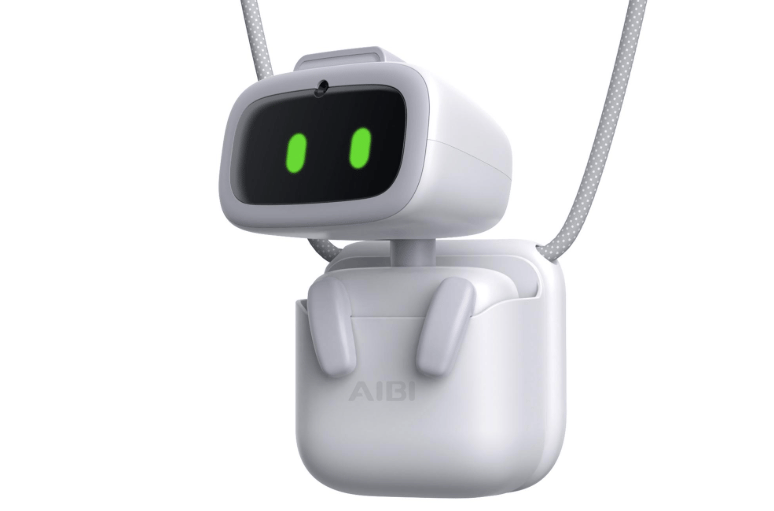
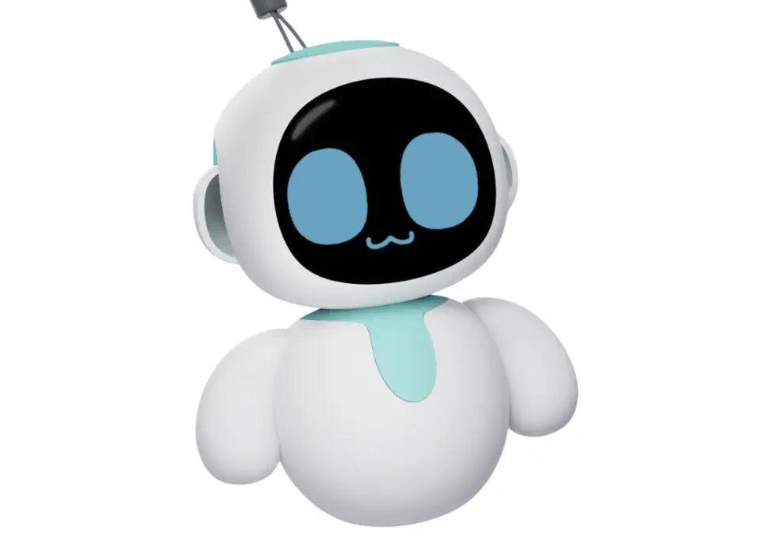
MeraBots covers small devices such as AIBI Pocket and Eiliko because the physical form can change how often and where a person interacts with an AI product. But I would not compare them with a NotePin by asking which one has the best transcription. Their intended jobs are different.
This is also why I would avoid one universal score for every wearable AI product. A device can be excellent at capturing a meeting and irrelevant to someone who wants a playful companion. Another can be delightful to carry and poor at turning spoken commitments into dependable tasks.
The buyer's checklist: what matters after the first week?
The initial demo usually happens in ideal conditions. Long-term use depends on the boring details.
1. Capture control
Does recording start with a physical button, a voice command, an automatic trigger, or a phone action? Can you tell when the device is recording? Can you stop it immediately?
A deliberate button can be useful because it gives the wearer a clear moment of control. Automatic capture may reduce missed moments, but it raises bigger questions about consent, battery life, and how to distinguish important conversations from background noise.
2. What happens after capture?
Can you search a transcript? Can you ask a question about a past conversation? Can the system identify decisions and tasks? Can you correct a bad transcript or remove a mistaken memory?
If all it produces is a long transcript, you may have moved the work from note-taking to note-cleaning.
3. Syncing and reliability
A wearable should not require a complicated ritual every time you want to retrieve something. In a September 2026 r/PLAUDAI discussion, a NotePin S owner complained about having to open the phone app and wait for the device to connect before transferring recordings. That is one user's experience, not proof of a general defect, but it illustrates how software friction can weaken the benefit of hands-free capture. [7]
4. Battery and carrying habits
Check continuous recording time rather than standby time alone. Consider whether you will charge it every night, whether it is comfortable with your usual clothes, and whether you will remember to put it on.
A device that lasts a long time but stays at home because it is uncomfortable has no practical battery life for your routine.
5. Data ownership and service dependency
Can you export recordings and transcripts in a usable format? Can you delete individual items and your whole account? Is local or offline use possible? Which features stop working if the company closes or changes its subscription?
The Limitless acquisition is a useful reminder that a product's future is not guaranteed by the hardware alone. Limitless announced that it had been acquired by Meta, stopped selling the Pendant to new customers, and would support existing Pendant customers throughout 2026. The company also provided a way to export data. As of this article's publication date, buyers should not assume support beyond the period the company has publicly committed to. [8]
Which one should you choose?
| If your main need is... | Start with... | Before spending money, check... |
|---|---|---|
| Quick reminders, timers, and small actions | Smartwatch | Whether your current watch already does it |
| Capturing meetings, lectures, and spoken ideas | Audio pendant or pin | Recording controls, transcription limits, syncing, and export |
| Understanding or capturing your visual surroundings | AI glasses | Camera controls, capture indicator, comfort, and social acceptance |
| A screenless assistant attached to your clothes | A specific AI pin | Its actual sensors, offline functions, phone requirements, and ongoing service |
| Playful, portable interaction | Pocket companion or AI charm | Whether you enjoy the interaction after novelty fades |
I would also test the workflow before buying. For a week, use the voice memo app on your phone or the voice features already on your watch. Notice when you forget to capture something, when taking out the phone is inconvenient, and whether you ever return to the notes afterward.
That small experiment can tell you more than a product launch video.
My view: the best wearable is the one that removes a repeated friction
I do not think consumers need to own a smartwatch, an AI pin, a pendant, and AI glasses just because each product has a different AI label.
A smartwatch is often the sensible starting point for quick actions. An audio pendant can be useful when the important information is spoken and hard to capture manually. Glasses make more sense when the visual world matters. A screenless pin needs to prove what it does beyond looking convenient.
The category will keep changing, but the buying question should stay simple: what repeated moment becomes noticeably easier because this device is with me?
If the answer is vague, wait. A new form factor is not a reason by itself to add another device to your life.
Sources and community notes
Manufacturer pages describe the features each company advertises. Product capabilities, plans, and availability can change. Community reports are anecdotal and not representative surveys.
- Apple Support: Take action with Siri on Apple Watch, accessed November 6, 2026.
- Plaud NotePin S official product page, accessed November 6, 2026.
- Omi official product page, accessed November 6, 2026.
- Humane consumer Ai Pin FAQ, archived copy, service end date stated as February 28, 2025.
- Meta: AI Glasses privacy and capture indicator FAQ, July 2026.
- r/RaybanMeta: Owner describes being accused of recording at a cafe, July 2026.
- r/PLAUDAI: NotePin S syncing experience, September 2026.
- Limitless: Announcement of its acquisition by Meta, including the company's statement on new sales and support for existing Pendant customers, accessed November 6, 2026.