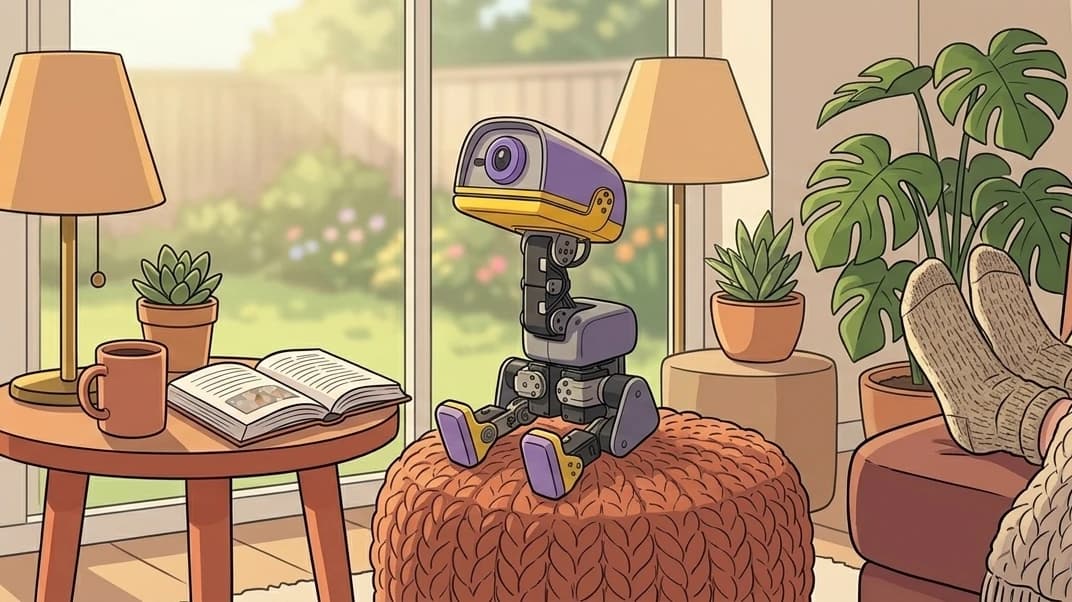
This is probably one of the first things I'd want to know about MicroDuck.
Not:
How many motors does it have?
Not even:
How good is the reinforcement learning?
I'd want to know:
Can I actually treat this thing like an AI companion?
Because that's a very different product from a little robot that simply performs tricks.
MicroDuck definitely has some of the ingredients
It has a microphone.
It has a speaker.
It has a camera.
It has LiDAR and motion sensors.
And, perhaps more importantly, it has a physical body that can move around rather than sitting completely still. (Pollen Robotics)
Pollen also gives every MicroDuck its own generated voice identity when the robot is first activated. (Pollen Robotics)
So the basic ingredients are there.
But that doesn't automatically mean:
"This is your tiny ChatGPT."
And I think it's important not to make that leap.
A microphone doesn't make a companion
This is an easy mistake.
A robot can hear you without actually understanding you in a way that feels natural.
It can have a speaker without having a meaningful conversation with you.
It can have an AI model connected to it and still feel like a machine you're operating.
For a real companion experience, I think you need more than voice input and output.
You need some combination of:
- personality
- context
- memory
- useful interaction
- recognizable behavior
- physical reactions
That's what turns:
"I can talk to this robot"
into:
"I like talking to this robot."
Those are very different experiences.
So what is MicroDuck right now?
At launch, MicroDuck is much more obviously a physical robot than a finished conversational companion.
Its strongest demonstrated behaviors are physical:
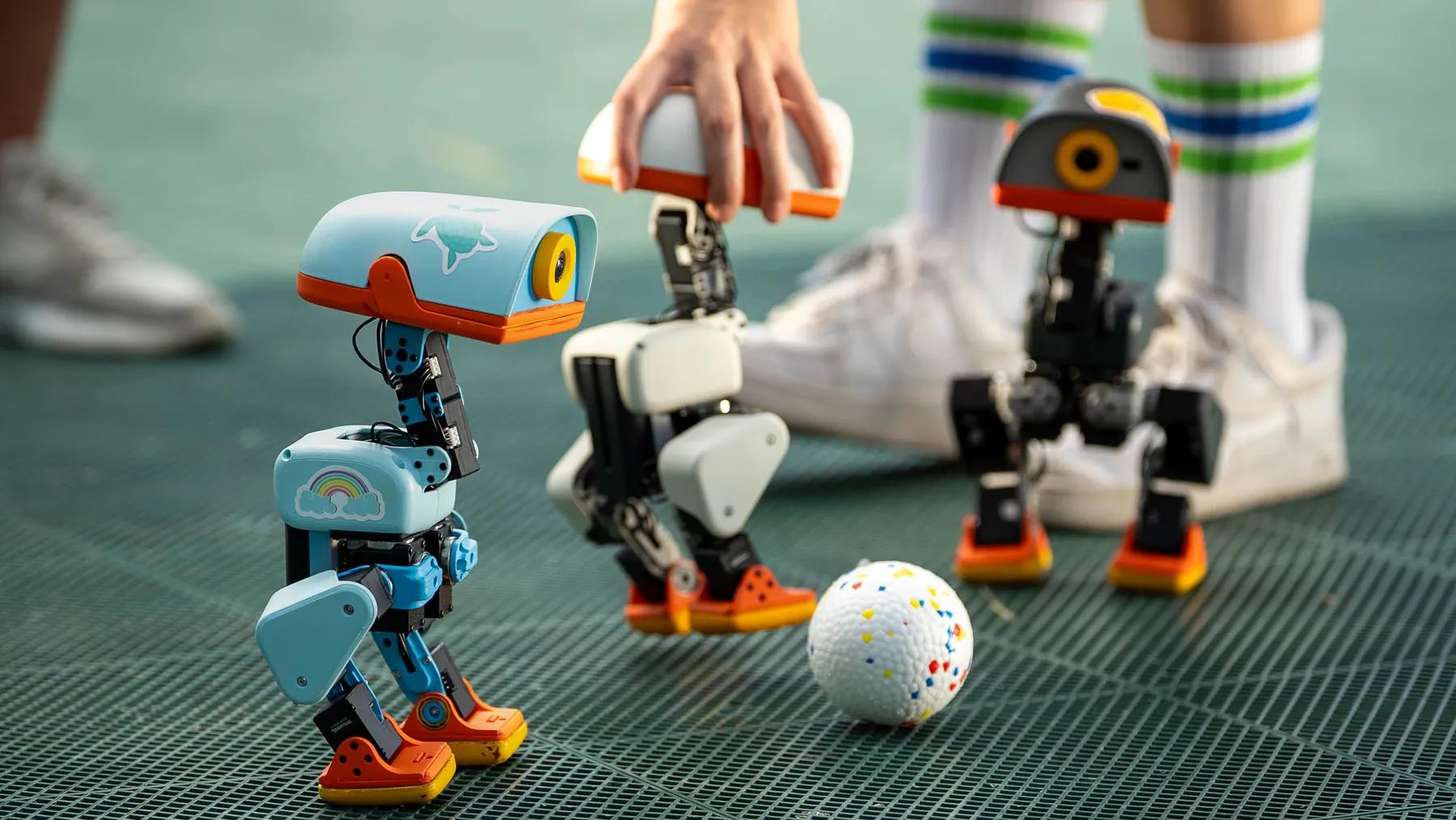
walking, sitting, crouching, grasping, kicking, roller-skating, and getting back up after falling. (Pollen Robotics)
That's where the product feels most concrete.
You can watch the robot do something.
You can interact with its body.
You can control it.
You can see what happens.
The conversational side is much less clearly established as a complete consumer experience.
And I'd rather say that than pretend otherwise.
But that's not necessarily a bad thing
Actually, I think this is one of the more interesting parts.
A companion doesn't have to begin with conversation.
Think about a pet.
You don't need to have a conversation with an animal for it to become part of your life.
Presence comes first.
Then familiarity.
Then interaction.
The same idea could apply to a robot.
Maybe you first enjoy seeing it move around.
Then you start recognizing its little behaviors.
Then you give it a name.
Then you start interacting with it more.
The relationship doesn't necessarily start with:
"Hello, please tell me today's weather."
It might start with:
"Come here, little guy."
This is where physical presence matters
I think this is something you miss when you compare a robot directly with ChatGPT.
ChatGPT can talk to you.
MicroDuck can physically exist beside you.
Those aren't the same thing.
If I'm sitting at my desk, I don't have to open a robot app to remember that the robot exists.
It's already there.
That may sound like a very small advantage.
I don't think it is.
A physical companion occupies a place in your life in a way software doesn't.
But I wouldn't call MicroDuck a finished AI companion yet
That's my biggest distinction.
I think MicroDuck is companion-friendly.
I wouldn't necessarily call the current product a fully developed conversational companion.
There is a difference.
The current product already has physical behaviors, sensors, sound, and software that can be extended. (Pollen Robotics)
But a deep companion experience depends on how all of those pieces actually come together for the person using it.
That's something I'd judge from the real ownership experience rather than a product description.
What would make me personally consider it a companion?
I'd want the robot to do more than answer a command.
I'd want it to recognize me.
I'd want it to remember things.
I'd want it to have a recognizable personality.
I'd want its physical behavior to match what is happening.
And I'd want the interaction to feel natural enough that I don't think about the technology every time I use it.
That last part is probably the hardest.
The best companion shouldn't constantly remind you that you're operating a computer.
MicroDuck already has one advantage: personality starts with the body
This is one reason I find its design clever.
It doesn't look like a miniature office assistant.
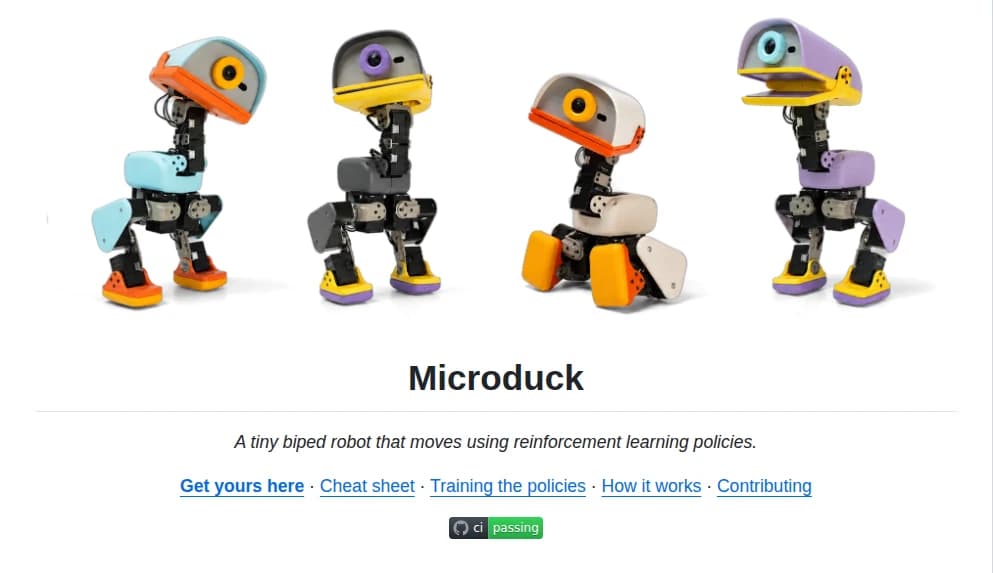
It looks like a little creature.
It has a duck-like body.
It makes duck-like sounds.
It moves in a slightly ridiculous way.
And it can skate.
That gives the robot a character before you even add sophisticated conversation.
A lot of AI products have to create personality through language.
A physical robot has another option:
behavior.
So can MicroDuck be your AI companion?
My answer would be:
Possibly, but that's not yet the strongest thing it proves today.
Today, the strongest part is the physical robot.
The companion part depends much more on how you interact with it and what software experience you put around it.
And I think that's actually the right way to look at it.
Don't buy MicroDuck expecting a tiny ChatGPT.
Buy it if the idea of having a cute, moving robot around you sounds appealing.
If the companion experience gets deeper, great.
But you should already like the robot that exists today.
The question I'd ask instead
Forget:
"Is MicroDuck an AI companion?"
Ask:
"Would I enjoy having this little robot around even if I never had a long conversation with it?"
If your answer is yes, MicroDuck makes sense to keep exploring.
Because companionship doesn't always start with talking.
Sometimes it starts with simply wanting the little thing to be there.